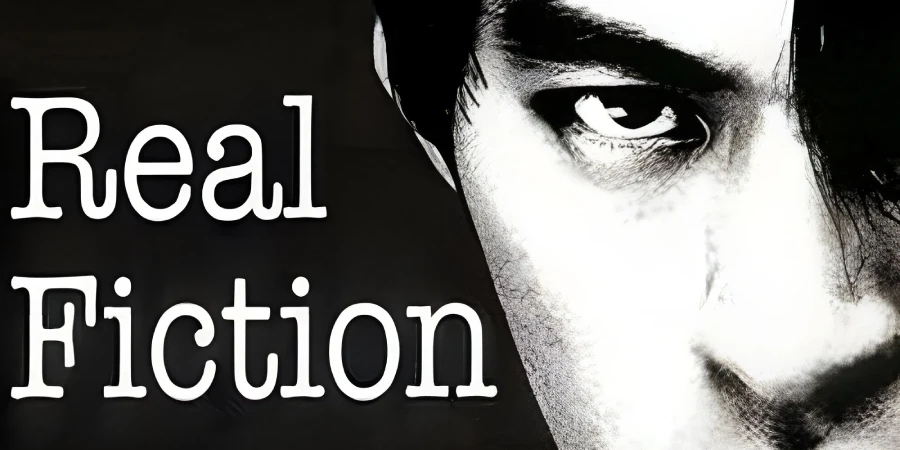
Real Fiction (original title: Real Fiction: The Cactus Flower) is a raw, confrontational South Korean film directed by Kim Ki-duk, a filmmaker famous for pushing moral, social, and psychological boundaries. Shot in real locations with an experimental approach, the film deliberately blurs the line between cinema and reality, making the viewer deeply uncomfortable on purpose.
This is not an easy film, but it is a memorable one.
Detailed Summary
A Painter at the Edge of Society
The story follows Joo-hyuk, a struggling painter who feels crushed by social hypocrisy, corruption, and everyday cruelty. He wanders through Seoul carrying emotional scars caused by humiliation, exploitation, and indifference. His anger is not sudden; it has been slowly fermented by society itself.
Reality as a Stage
What makes Real Fiction unique is its structure. Much of the film was shot guerrilla-style in real public spaces, with many passersby unaware that a movie was being filmed. As Joo-hyuk moves through the city, he begins confronting people who represent everything he despises: abusive men, greedy business owners, corrupt authority figures, and indifferent bystanders.
Escalation into Violence
The confrontations become increasingly aggressive. Verbal humiliation turns into physical violence. Joo-hyuk’s actions raise a disturbing question:
Is he exposing society’s ugliness, or becoming a monster himself?
The film intentionally avoids clear moral guidance, forcing the audience to sit with discomfort.
Art, Madness, and Moral Collapse
As the night progresses, Joo-hyuk’s behavior becomes more erratic. The boundaries between performance, protest, and psychosis dissolve. What began as personal rebellion transforms into something far darker and irreversible.
Movie Ending
Joo-hyuk’s violent spree culminates in complete social and moral isolation. He is no longer seen as an artist, a protester, or even a human being with pain. Instead, he becomes a spectacle, an object to be neutralized. The authorities close in, and his rebellion ends not with triumph or redemption, but with absolute futility.
The film closes by making one thing painfully clear:
Society does not listen to pain unless it turns into noise, and even then, it chooses silence over understanding.
There is no justice, no catharsis, and no heroic framing. Joo-hyuk’s downfall is total, leaving the audience questioning whether the system created him—or simply crushed him when he became inconvenient.
Are There Post-Credits Scenes?
No. Real Fiction does not include any post-credits or mid-credits scenes. The film ends definitively, reinforcing its harsh message without offering reflection, relief, or closure.
Type of Movie
Real Fiction is an experimental psychological drama that blends social realism with provocative performance art. It deliberately rejects traditional narrative comfort to confront viewers directly.
Cast
- Ju Jin-mo as Joo-hyuk
- Lee Yong-nyeo
- Kim Young-ho
- Seo Jeong
The performances lean toward raw realism rather than polished acting, which suits the film’s documentary-like atmosphere.
Film Music and Composer
The film uses minimal and sparse music, prioritizing ambient sound and silence. This choice amplifies discomfort and realism, making violent moments feel disturbingly grounded rather than cinematic.
Filming Locations and Their Importance
Real Fiction was shot almost entirely on real streets of Seoul, including cafés, alleys, and public squares.
These locations matter because:
- They remove the safety barrier between film and real life
- Unknowing bystanders add genuine reactions
- The city itself becomes a silent character, indifferent and complicit
The realism makes the film feel less like fiction and more like an uncontrolled social experiment.
Awards and Nominations
While Real Fiction did not win major international awards, it became one of Kim Ki-duk’s most discussed films, frequently cited in academic and critical discussions about ethics in cinema and guerrilla filmmaking.
Behind the Scenes Insights
- The film was shot in one continuous night
- Many civilians had no idea they were appearing in a movie
- Kim Ki-duk intentionally avoided permits to preserve authenticity
- Some scenes caused real police attention during filming
- The director viewed the film as a “social mirror,” not entertainment
Inspirations and References
- Social alienation in late-1990s urban Korea
- Performance art and public protest movements
- Kim Ki-duk’s own experiences with poverty and rejection
- Philosophical ideas about violence as communication
Alternate Endings and Deleted Scenes
There are no known alternate endings. The film was designed with a fixed, uncompromising conclusion. Some minor scenes were reportedly shortened, but nothing that alters the narrative or moral outcome.
Book Adaptations and Differences
Real Fiction is not based on a book. It is an original screenplay by Kim Ki-duk, conceived as an experiment rather than a traditional adaptation.

Memorable Scenes and Quotes
Key Scenes
- Joo-hyuk verbally humiliating a corrupt businessman in public
- The sudden shift from verbal confrontation to physical violence
- Bystanders watching events unfold without intervening
- The final confrontation with authorities
Iconic Quotes
- “Everyone pretends to be normal.”
- “This city taught me how to hate.”
(Simple lines, heavy meanings.)
Easter Eggs and Hidden Details
- Real street reactions were intentionally left unedited
- Camera shakes and framing errors were kept on purpose
- Several characters represent archetypes, not individuals
- The cactus flower symbolizes beauty surviving in cruelty
Trivia
- The film was shot in digital video, unusual at the time
- It is one of Kim Ki-duk’s shortest films
- Some scenes were filmed in a single take
- Audience reactions at early screenings included walkouts
Why Watch?
You should watch Real Fiction if you:
- Appreciate challenging, uncomfortable cinema
- Are interested in films that question morality and spectatorship
- Want to understand Kim Ki-duk’s rawest artistic phase
This is not a film to enjoy—it is a film to endure and reflect on.
Director’s Other Movies
- The Isle (2000)
- Bad Guy (2001)
- Spring, Summer, Fall, Winter… and Spring (2003)
- 3-Iron (2004)
- Pietà (2012)