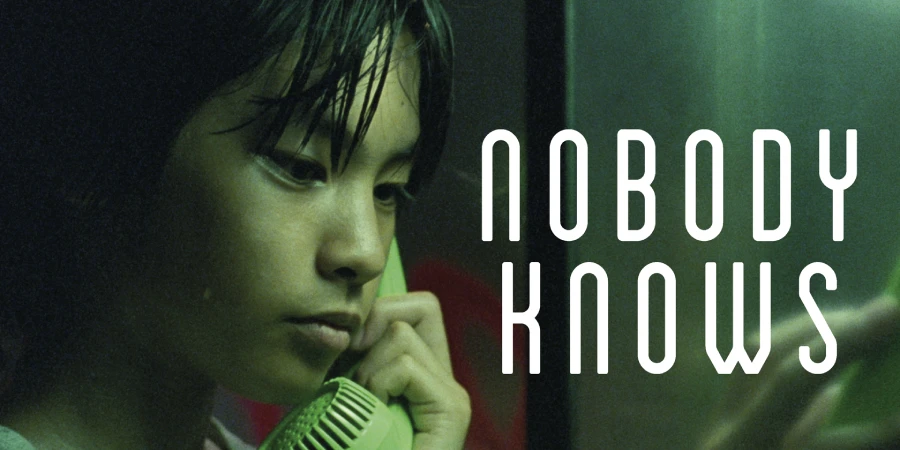

Nobody Knows (Dare mo Shiranai) is a quietly devastating Japanese drama directed by Hirokazu Kore-eda. Based loosely on the real-life Sugamo child abandonment case, the film blends docu-style realism, delicate performances, and Kore-eda’s signature observational style to tell a story that feels both intimate and universal.
Detailed Summary
The Arrival at the New Apartment
The film opens with Keiko (the mother) and her 12-year-old son Akira arriving at a new apartment. Very quickly, the audience learns the unsettling truth: Keiko has smuggled her other three children — Kyoko, Shigeru, and Yuki — into the apartment in suitcases, because the landlord doesn’t allow children. The older two can walk freely inside, but cannot leave; the youngest, Yuki, is extremely shy and completely dependent.
The Mother Disappears
Keiko’s behavior is erratic from the start, but the turning point comes when she leaves a small amount of money and disappears for what she says will be “a short while.”
It becomes clear that she has no intention of returning. Akira steps up as the de facto caretaker, using his limited resources to keep the family afloat. What follows is a slow emotional and physical deterioration, depicted with Kore-eda’s characteristic restraint.
Life Without Adults
Akira tries to maintain a sense of normalcy. He develops a friendship with a local boy, attempts to keep Yuki entertained, and even buys small gifts. But the money runs low, and the children begin slipping through the cracks of society. Akira eventually allows his siblings to leave the apartment, and the outside world becomes both freeing and dangerous.
Yuki’s Decline
The youngest child, Yuki, becomes the emotional core of the film. Her innocence and fragility contrast sharply with Akira’s forced maturity. As their situation worsens, Yuki becomes more withdrawn. The film builds a quiet dread around her well-being, and viewers sense that something tragic is imminent.

Movie Ending
Yuki, while playing on a bench with the other kids, falls and dies. The camera does not sensationalize her death; Kore-eda’s approach is understated but emotionally shattering. Akira refuses to notify authorities, fearing the family will be separated. Instead, he carries Yuki home in his arms, in a scene that is both tender and unbearable.
With the help of his friend Saki, Akira places Yuki’s body inside a suitcase — the same way the children were brought into the apartment. They take the train to a quiet field outside Tokyo and bury the suitcase under the earth, marking the spot with a simple stone. No ceremony, no adults, no closure.
The final scenes show Akira and the remaining siblings back in the apartment, trying to continue daily life as if nothing has changed. The film ends with Akira staring out into space. He is still a child, yet forced into a role no child should bear.
The ending offers no rescue, no resolution, no justice — only Kore-eda’s signature melancholic realism: life simply goes on, even when it shouldn’t.
Are There Post-Credits Scenes?
No, Nobody Knows does not include any mid-credits or post-credits scenes. The film ends intentionally and thematically on its final shot, and the credits roll in silence.
Type of Movie
This is a slice-of-life Japanese drama rooted in realism. The film blends fictional storytelling with documentary-like observation, creating an emotionally heavy but deeply human experience.
Cast
- Yuya Yagira as Akira (He won Best Actor at Cannes at just age 14)
- Ay uKita as Kyoko
- Hiei Kimura as Shigeru
- Momoko Shimizu as Yuki
- You as Keiko (the mother)
Film Music and Composer
The soundtrack is minimalistic, featuring mostly ambient pieces and atmospheric sound design. The composer Gontiti contributes soft, acoustic themes that enhance the film’s delicate emotional tone without overwhelming it. The understated music mirrors the children’s fragile world, making it both gentle and heartbreaking.



Filming Locations and Their Significance
The film was shot primarily in Tokyo, particularly in the Shibuya district. These locations emphasize themes of urban invisibility and societal neglect. Kore-eda intentionally uses tight indoor spaces and ordinary suburban streets to underscore how the children are physically close to millions of adults, yet entirely unseen.
Awards and Nominations
- Cannes Film Festival 2004 – Best Actor (won): Yuya Yagira, the youngest recipient in the festival’s history
- Nominated for the Palme d’Or
- Multiple wins at the Japan Academy Prize and Blue Ribbon Awards
Behind the Scenes Insights
- The film was shot over more than a year, allowing the children to age naturally and deepen the realism.
- Kore-eda encouraged improvisation, giving the children freedom to interact naturally, which is why many scenes feel spontaneous.
- The director avoided giving the child actors a full script, instead revealing scenes day-by-day to keep their reactions authentic.
- Much of the apartment’s deterioration was filmed gradually as part of the production process, not through set dressing.
- The film was inspired by the 1988 real-life abandonment case, but Kore-eda avoided sensational details to protect the dignity of the children involved.
Inspirations and References
- Loosely inspired by the Sugamo child abandonment case.
- Influenced by Kore-eda’s background in documentary filmmaking.
- The film reflects themes from works like The 400 Blows and Kes, focusing on childhood resilience amid neglect.
Alternate Endings and Deleted Scenes
Kore-eda originally shot additional scenes depicting the children attempting to seek help from neighbors and local shopkeepers, but these were cut to maintain the film’s core theme: the world simply didn’t notice them.
An alternate ending—never fully edited—showed Akira confronting his mother upon her brief return. Kore-eda discarded it because it shifted the focus away from the children’s experience.
Book Adaptations and Differences
While not directly adapted from a book, the film takes creative inspiration from news coverage and sociological studies of child abandonment cases in Japan. Kore-eda significantly softened the real-life story to create a more humanistic (yet still painful) narrative. In real life, the case was far darker and involved multiple children from different fathers and severe neglect.

Memorable Scenes and Quotes
Key Scenes
- Akira teaching Yuki to write her name, showing the tenderness he tries to maintain.
- The children going outside for the first time, capturing a fleeting moment of freedom.
- Yuki’s fall from the bench — understated but devastating.
- Akira carrying Yuki home, one of the film’s most iconic and heartbreaking moments.
Iconic Quotes
- “You must not go outside.”
- “We’re fine. We’re okay.” (Akira repeating a line he knows is untrue)
- “Nobody knows… except us.”
Easter Eggs and Hidden Details
- The children’s clothing becomes progressively worn, mirroring their emotional and physical decline.
- Yuki always carries small toys; the fewer she has, the more withdrawn she becomes.
- The mother’s handwriting appears multiple times on notes, becoming more rushed and messy, signaling her detachment.
- The suitcase motif (arrival and burial) intentionally bookends the film.
Trivia
- Yuya Yagira’s Cannes win was a surprise even to the director.
- Kore-eda cast non-professional actors for the children.
- The mother’s actress “You” had to reduce her screen time because the film was primarily about the children’s experience.
- Filming took 14 months — exceptionally long for a Japanese feature film.
Why Watch?
Because Nobody Knows is one of the most emotionally resonant and beautifully understated films about childhood ever made. Its power lies in its honesty, its quiet heartbreak, and its ability to make the ordinary feel monumental. If you appreciate films that explore human vulnerability with empathy rather than melodrama, this is a must-watch.
Director’s Other Movies
- Maborosi (1995)
- After Life (1998)
- Distance (2001)
- Still Walking (2008)
- Like Father, Like Son (2013)
- Our Little Sister (2015)
- Shoplifters (2018)
Recommended Films for Fans
- Shoplifters (2018)
- Grave of the Fireflies (1988)
- The 400 Blows (1959)
- A Brighter Summer Day (1991)
- Hana & Alice (2004)
- Nobody’s Home (2013)