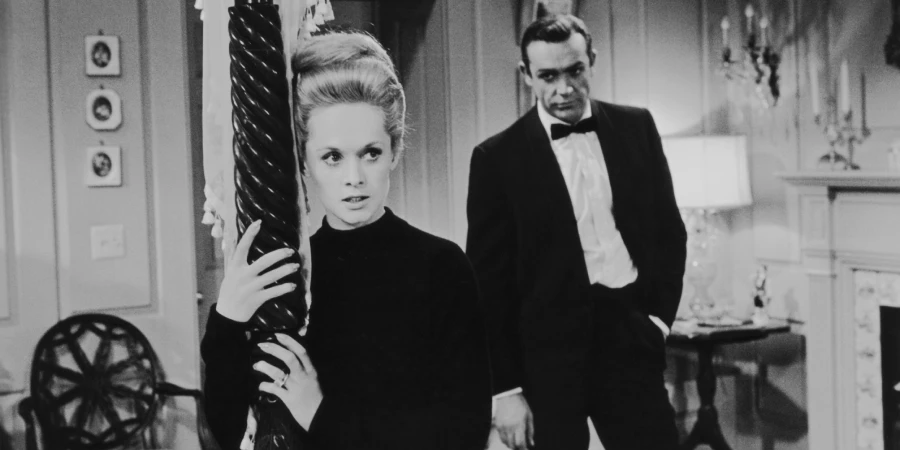

Alfred Hitchcock’s Marnie is not just a thriller; it is a celluloid psychoanalysis session disguised as a heist film. The camera acts as a psychiatrist’s couch, inviting us to dissect a beautiful thief whose secrets run deeper than a stolen dollar. Consequently, what unfolds is one of the director’s most controversial and psychologically dense pictures, a fascinating portrait of trauma and obsession.
Detailed Summary
The Compulsive Thief
The film opens on a mysterious woman, Margaret “Marnie” Edgar, checking out of a hotel with a suitcase full of cash. She has just stolen nearly $10,000 from her employer, Mr. Strutt. Afterward, she methodically changes her identity, dyeing her hair from black to blonde and discarding her old social security card.
Marnie’s pattern becomes clear. She uses her charm and skill to secure secretarial positions, only to gain access to the company safe and disappear with the money. This compulsion is deeply rooted in her troubled psyche.
Caught by Rutland
Marnie, now a blonde, applies for a job at Rutland’s, a publishing company in Philadelphia. The owner, Mark Rutland, recognizes her from a business visit to Strutt’s company. Intrigued by her, he hires her anyway, an act driven by a mix of curiosity and desire.
Mark observes her closely, noting her strange behaviors. She exhibits a profound fear of thunderstorms and an inexplicable revulsion to the color red. Despite these warning signs, his fascination with her only grows.
The Blackmail Marriage
Predictably, Marnie robs the Rutland company safe during an office party. Mark, however, anticipates this and confronts her at home. Instead of turning her over to the police, he presents her with a shocking ultimatum: marry him or go to jail.
Trapped and with no other option, Marnie agrees. Mark’s intentions are complex; he wants to possess her but also fancies himself her savior, determined to “cure” her of her psychological ailments through force.
A Traumatic Honeymoon
Their honeymoon is a disaster. On a cruise ship, Marnie’s frigidity and terror of physical intimacy become painfully obvious. Frustrated and feeling rejected, Mark rapes her in their cabin.
Following the assault, Marnie attempts to drown herself in the ship’s pool, but Mark saves her. The event only deepens her psychological wounds, solidifying her status as Mark’s prisoner rather than his wife.
Unraveling the Past
Back at Mark’s estate, he continues his amateur psychoanalysis. He discovers she has terrifying nightmares and suffers from kleptomania, stealing a small item from his sister-in-law, Lil. During a fox hunt, Marnie’s repressed empathy surfaces when she shoots her beloved horse, Forio, to end its suffering after a fall.
Determined to find the source of her trauma, Mark investigates her past. He travels to Baltimore and confronts Marnie’s mother, Bernice, who is cold and evasive. It is clear that the key to Marnie’s condition lies in a repressed childhood memory involving her mother.


Movie Ending
The climax occurs when Mark forces Marnie to confront her past by taking her to her mother’s house in Baltimore. A severe thunderstorm, a major trigger for Marnie, rages outside. Inside, under immense psychological pressure, Marnie’s repressed memory finally surfaces.
She remembers being a small child. Her mother, Bernice, worked as a prostitute, and a drunken sailor client was becoming aggressive with her. As the sailor manhandled her mother, a frightened young Marnie grabbed a fireplace poker and killed him to protect her. The sailor’s blood, a shocking splash of red, became the source of her lifelong phobia.
Bernice, to protect her daughter, took the blame and told everyone Marnie did it in self-defense, but she never explained the full context, causing Marnie to repress the traumatic event entirely. Notably, this revelation brings a sense of catharsis. As Marnie and Mark leave, she tells him she would rather stay with him than go to prison, suggesting the beginning of a genuine bond and the first step toward healing. The ending is left cautiously optimistic, not a complete cure but a promise of one.
Are There Post-Credits Scenes?
No, there are no post-credits scenes in Marnie. The film concludes after the final scene at Bernice’s house.
Type of Movie
Marnie is a psychological thriller with strong elements of romantic drama. Alfred Hitchcock delves deep into Freudian psychology, using the narrative to explore themes of trauma, sexual repression, and identity. Its tone is tense and unsettling, maintaining a dreamlike, almost suffocating atmosphere that reflects the protagonist’s inner turmoil.
Cast
- Tippi Hedren – Margaret “Marnie” Edgar
- Sean Connery – Mark Rutland
- Diane Baker – Lil Mainwaring
- Martin Gabel – Sidney Strutt
- Louise Latham – Bernice Edgar
- Bob Sweeney – Cousin Bob
- Alan Napier – Mr. Rutland Sr.
Film Music and Composer
The lush, romantic, yet deeply troubled score for Marnie was composed by the legendary Bernard Herrmann. It was, however, the final collaboration between Herrmann and Hitchcock, as they had a major falling out during the production of their next film, Torn Curtain.
Herrmann’s main theme is a powerful, sweeping piece that perfectly captures Marnie’s grand, tragic nature. The music swells with her deceptions and retreats into quiet, dissonant chords during her moments of panic, masterfully mirroring her fractured emotional state.
Filming Locations
Despite settings that include Philadelphia, Baltimore, and the Virginia countryside, Marnie was filmed almost entirely on soundstages at Universal Studios in California. Hitchcock deliberately employed artificial backdrops, obvious rear projection, and stylized matte paintings.
This artificiality was a stylistic choice. The fake-looking sets enhance the sense of a psychological prison, making Marnie’s world feel as unreal and constructed as her various false identities. For instance, the Baltimore street scene at the end is a famous example of a painted backdrop creating a claustrophobic, theatrical feel.
Awards and Nominations
Surprisingly for a Hitchcock film of this era, Marnie received no Academy Award nominations or other major awards. It has since, on the other hand, been re-evaluated by critics and is now considered a complex and important work in the director’s filmography.
Behind the Scenes Insights
- Alfred Hitchcock’s professional relationship with Tippi Hedren had severely deteriorated by the time of filming. His controlling behavior and obsession with her created an incredibly tense on-set atmosphere that mirrored the film’s themes of male control.
- The role of Marnie was originally written for Grace Kelly to mark her return to Hollywood after becoming Princess of Monaco. Ultimately, the citizens of Monaco objected to their princess playing a psychologically disturbed thief, and she withdrew from the project.
- Hitchcock meticulously used color to signal Marnie’s psychological state. Red is the obvious trigger for her trauma, but yellow is also significant, often associated with the stolen money she carries in her iconic yellow handbag.
- Sean Connery reportedly felt uneasy about his character, particularly the controversial rape scene. He questioned Hitchcock about Mark’s motivations, struggling to find a heroic angle for a character who engages in blackmail and sexual assault.
Inspirations and References
Marnie is a direct adaptation of a novel, which is detailed in a later section. Beyond that, the film’s primary inspiration is Freudian psychoanalytic theory, which was highly popular in the mid-20th century. Mark Rutland’s attempts to “cure” Marnie by uncovering a single repressed childhood trauma is a classic, albeit simplified, application of Freudian concepts.
Alternate Endings and Deleted Scenes
There are no known alternate endings or significant deleted scenes for Marnie. The theatrical cut released in 1964 is considered the definitive version of the film. Hitchcock maintained tight control over the final edit, and no alternative footage has ever surfaced.
Book Adaptations and Differences
The film is based on the 1961 novel Marnie by Winston Graham. While the core plot is similar, there are major differences in tone and characterization. The novel is significantly darker and more sexually explicit.
Specifically, Mark Rutland is a far more predatory and unsympathetic character in the book, with his motivations being more overtly selfish and cruel. Furthermore, the novel’s ending is much more ambiguous and bleak, lacking the film’s therapeutic breakthrough and hopeful conclusion. Hitchcock’s adaptation softens Mark and provides a more conventional Hollywood ending where psychological healing appears possible.


Memorable Scenes and Quotes
Key Scenes
- The Opening Shot: The film begins with a tight shot on a yellow handbag, following its owner from behind. This immediately establishes the themes of theft, mystery, and hidden identity.
- The Office Robbery: Marnie, a single cleaning woman in an empty office at night, calmly cracks the safe. The tension is pure Hitchcock, amplified when she drops her shoe and has to retrieve it without being heard.
- The Fox Hunt: During a hunt, Marnie’s horse, Forio, suffers a terrible fall. In a moment of pained empathy, Marnie shoots the horse, a shocking act that reveals a deeper compassion beneath her cold exterior.
- The Final Revelation: The climactic scene in Bernice’s house, where a storm, a tapping tree branch, and the color red converge to unlock Marnie’s repressed memory of killing the sailor.
Iconic Quotes
- Marnie: “I’m a cheat and I’m a liar and I’m a thief. And I’ve got to be punished.”
- Mark Rutland: “Oh, I’m an amateur zoologist. I was just interested in a strange, wild, and beautiful animal.”
- Lil Mainwaring: “Who are you? What are you?”
- Mark Rutland: “When I was a kid, I used to love to watch thunderstorms. I’d climb a tree to get closer to them. I’d watch the lightning. I’d listen to the thunder. I was not afraid of them then. I’m not afraid of them now.”
Easter Eggs and Hidden Details
- Hitchcock’s Cameo: The director makes his signature cameo about five minutes into the film. He can be seen walking out of a hotel room and glancing at the camera as Marnie walks down the corridor.
- The Rutland Safe: The safe Marnie robs is a “Mosler,” the same brand of safe featured in Hitchcock’s earlier film, Dial M for Murder (1954).
- Rear-Screen Projection: In the scene where Marnie is riding Forio, the obvious rear-screen projection was a deliberate choice. It was meant to give Hitchcock more control over the visuals and highlight the artifice of Marnie’s “happy” moments.
Trivia
- Sean Connery made Marnie between two of his most famous James Bond films: From Russia with Love (1963) and Goldfinger (1964).
- The author of the source novel, Winston Graham, is also famous for writing the Poldark series of historical novels.
- This was Hitchcock’s last film with many of his key collaborators, including composer Bernard Herrmann, cinematographer Robert Burks, and editor George Tomasini.
- Actress Louise Latham, who played Marnie’s aging mother Bernice, was actually only three years older than Tippi Hedren.
Why Watch?
Watch Marnie for its daring psychological complexity and stunning visual language. It is a challenging, controversial masterpiece that reveals a master director grappling with dark themes of trauma and control, making it essential viewing for any serious fan of cinema.
Director’s Other Movies
- The 39 Steps (1935)
- Rebecca (1940)
- Notorious (1946)
- Rear Window (1954)
- Vertigo (1958)
- North by Northwest (1959)
- Psycho (1960)
- The Birds (1963)
Recommended Films for Fans
- Spellbound (1945)
- Belle de Jour (1967)
- Persona (1966)
- The Three Faces of Eve (1957)
- Repulsion (1965)