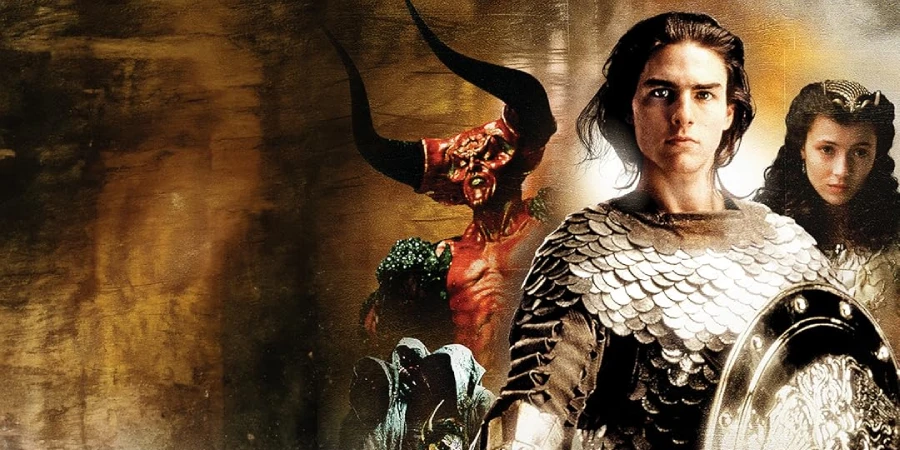

Legend (1985) is one of those films that feels like a beautiful dream and a strange nightmare at the same time. Directed by Ridley Scott, this visually hypnotic fantasy became a cult classic despite a troubled release and multiple versions.
Detailed Summary
A World Where Light and Darkness Are Perfectly Balanced
The story takes place in a mythical forest world where unicorns maintain the balance between light and darkness. As long as they live, the world remains pure, innocent, and untouched by evil. This fragile harmony is immediately established as something sacred—and dangerously easy to destroy.
Jack and Lily: Innocence Meets Temptation
Jack is a forest dweller raised by nature itself, while Princess Lily is fascinated by darkness despite her royal upbringing. Jack repeatedly warns Lily never to touch the unicorns, but curiosity and temptation prove stronger than wisdom.
This moment is critical: Lily touches a unicorn, indirectly allowing evil to enter the world. Darkness spreads instantly—winter consumes the land, and night falls permanently.
The Rise of Darkness
The Lord of Darkness, one of fantasy cinema’s most iconic villains, emerges from the shadows. His goal is absolute: kill the unicorns and plunge the world into eternal night. One unicorn is slain, the other captured, tipping the balance completely.
Darkness manipulates Lily psychologically, exploiting her vanity and curiosity. He doesn’t just want her obedience—he wants her choice.
Capture, Corruption, and Resistance
Lily is taken to Darkness’ lair, where she is seduced not through force but through illusion, luxury, and power. Meanwhile, Jack allies with elves, fairies, and dwarves to stop Darkness and restore the unicorns.
This contrast—Jack’s raw goodness versus Lily’s temptation—drives the emotional core of the film.

Movie Ending
The final act takes place in the lair of Darkness, a hellish cathedral of shadows and fire. Jack confronts Darkness directly, but cannot defeat him through strength alone. Darkness is nearly invincible in direct combat.
The turning point comes with Lily.
Darkness offers Lily a crown, symbolizing her acceptance of darkness and her role as his queen. For a brief moment, it appears she may accept. This is one of the film’s most important psychological moments: evil doesn’t force her—she must choose it.
At the last possible second, Lily rejects Darkness and throws the crown into the shadows. This act restores light into the chamber. Darkness, weakened by light and Lily’s refusal, is ultimately defeated when he is impaled by his own falling structure and consumed by shadows.
Jack rescues the surviving unicorn, restoring balance to the world. Winter recedes, sunlight returns, and nature is reborn. Lily reunites with Jack, having fully rejected darkness—not because she was told to, but because she understood it.
The film ends with harmony restored, innocence regained, and evil banished—but not destroyed forever, reinforcing the idea that darkness always exists, waiting for weakness.
Are There Post-Credits Scenes?
No. Legend does not include any post-credits or mid-credits scenes. The story concludes definitively within the film’s final moments.
Type of Movie
Legend is a dark fantasy fairy tale blending mythological storytelling with romance and psychological symbolism. It leans more toward visual atmosphere and archetypal themes than conventional action-driven fantasy.
Cast
- Tom Cruise as Jack
- Mia Sara as Princess Lily
- Tim Curry as The Lord of Darkness
- David Bennent as Gump
- Alice Playten as Blix
Tim Curry’s performance is especially notable, often cited as one of the greatest practical villain portrayals in fantasy cinema.
Film Music and Composer
The film has two different scores, depending on the version:
- Jerry Goldsmith composed the original orchestral score (European cut)
- Tangerine Dream created an electronic score for the U.S. theatrical release
Both versions dramatically change the tone of the film, making Legend a rare case where music reshapes the entire viewing experience.

Filming Locations
- Pinewood Studios, England – primary soundstage work
- Buckinghamshire forests – exterior woodland scenes
A massive fire destroyed the original forest set during production, forcing Ridley Scott to rebuild the environment from scratch, which ironically enhanced the film’s dreamlike visuals.
Awards and Nominations
- Nominated for Best Original Score (BAFTA – Jerry Goldsmith version)
- Won Best Costume Design at several fantasy-focused film festivals
The film gained more recognition after its release, becoming a cult favorite rather than an awards-season success.
Behind the Scenes Insights
- Tim Curry spent up to 5 hours a day in prosthetic makeup
- The Lord of Darkness costume weighed over 100 pounds
- Tom Cruise performed many of his own stunts
- Ridley Scott insisted on minimal CGI, relying on practical effects
- The fire that destroyed the set nearly shut down production permanently
Inspirations and References
- Traditional European fairy tales (Brothers Grimm–style)
- John Milton’s Paradise Lost
- Mythological depictions of Satan and fallen angels
- Romantic-era fantasy artwork
Alternate Endings and Deleted Scenes
- Early cuts featured a much darker ending, implying Darkness might return
- Several scenes deepening Lily’s internal conflict were removed
- Some versions emphasize romance; others emphasize myth and symbolism
This explains why different audiences remember Legend slightly differently.
Book Adaptations and Differences
Legend is not directly based on a novel, but rather on original mythology created by Ridley Scott. However, its narrative structure closely mirrors classic fairy tale traditions rather than modern fantasy novels.

Memorable Scenes and Quotes
Key Scenes
- Lily touching the unicorn
- Darkness emerging from the shadows for the first time
- Lily dancing alone in Darkness’ lair
- The crown rejection scene
Iconic Quotes
- “Darkness is my ally.” – The Lord of Darkness
- “I am all that is evil.” – The Lord of Darkness
- “You’re all illusions.” – Lily
Easter Eggs and Hidden Details
- Darkness’ horns are modeled after a ram and a devil, symbolizing temptation
- Lily’s white dress slowly darkens as she is tempted
- Light sources subtly disappear as darkness gains control
- Jack never uses a conventional weapon—symbolizing purity
Trivia
- Tim Curry could barely see while wearing the Darkness mask
- The film inspired visual elements in later fantasy games and anime
- Multiple versions of the film exist, confusing first-time viewers
- Ridley Scott considers Legend one of his most personal films
Why Watch?
You should watch Legend if you appreciate atmosphere over exposition, myth over logic, and visual storytelling that feels like a living painting. It’s imperfect, bold, and unforgettable.