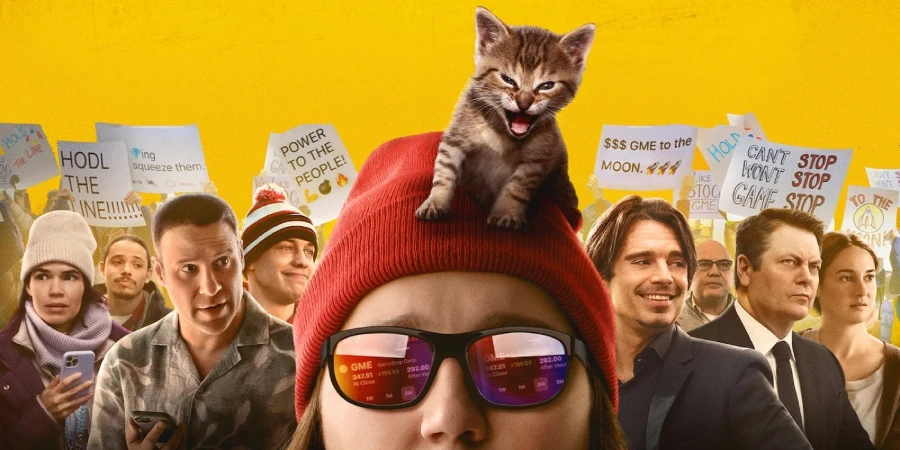

Dumb Money (2023) is a fast-paced, real-life-inspired financial drama that turns one of the strangest moments in modern stock market history into an entertaining, sometimes infuriating, sometimes uplifting film. Directed by Craig Gillespie, the movie dives straight into the GameStop short squeeze and the people caught on both sides of the financial battlefield.
Detailed Summary
The Rise of Roaring Kitty
The story centers on Keith Gill, a mild-mannered financial analyst and YouTuber who goes by the alias Roaring Kitty (Paul Dano). Keith believes GameStop stock is deeply undervalued and begins posting videos explaining why everyday investors should take it seriously. What starts as a small online community slowly grows into a movement fueled by Reddit’s WallStreetBets.
Wall Street vs. The Internet
As retail investors begin buying GameStop shares en masse, massive hedge funds that have heavily shorted the stock start bleeding money. Ken Griffin (Citadel) and Gabe Plotkin (Melvin Capital) dismiss the movement at first, convinced that “dumb money” can’t win against institutional power.
Lives Changed Overnight
The movie cuts between multiple ordinary investors: a struggling nurse, a GameStop employee, a college student, and others who see the stock as a once-in-a-lifetime chance. Some gain financial freedom; others risk everything. This human angle keeps the story grounded while the numbers skyrocket.
The System Pushes Back
As GameStop stock explodes, trading platforms suddenly restrict buying, allowing only selling. This moment becomes the emotional core of the movie, showing how quickly “free markets” can change rules when the wrong people start winning.

Movie Ending
GameStop stock reaches unimaginable highs, turning Keith Gill and many retail investors into millionaires on paper. However, when trading restrictions are imposed, momentum collapses. Some investors sell at huge profits, while others hold on too long and lose gains. Friendships strain, online communities fracture, and the movement loses its unity.
Keith Gill testifies before Congress, calmly explaining that he simply liked the stock. His composure contrasts sharply with the evasive answers of hedge fund executives. No major Wall Street figures face real punishment, reinforcing the movie’s message: the system bends, but rarely breaks.
Keith does not become a revolutionary leader. Instead, he returns to private life, financially secure but aware that the market remains fundamentally unequal. The film closes by emphasizing that while retail investors briefly shook the system, the rules were never rewritten. The victory was emotional, symbolic, and temporary—but unforgettable.
Are There Post-Credits Scenes?
No. Dumb Money does not include any post-credits or mid-credits scenes. Once the credits roll, the story is complete.
Type of Movie
Dumb Money is a financial drama with strong biographical and satirical elements, blending real events with sharp humor and social commentary. It balances tension, education, and character-driven storytelling.
Cast
- Paul Dano – Keith Gill / Roaring Kitty
- Pete Davidson – Kevin Gill
- America Ferrera – Jenny Campbell
- Seth Rogen – Gabe Plotkin
- Nick Offerman – Ken Griffin
- Sebastian Stan – Vlad Tenev
- Shailene Woodley – Caroline Gill
- Anthony Ramos – Marcos Garcia
Film Music and Composer
The score was composed by Will Bates, blending energetic electronic beats with subtle tension-building tracks. The soundtrack features early-2000s and 2010s rock and pop, reinforcing the internet-era chaos and meme-driven energy of the story.


Filming Locations and Their Importance
The movie was primarily filmed in New Jersey and Toronto, both doubling for various U.S. locations. These settings ground the story in realism, emphasizing that this wasn’t happening in glamorous Wall Street offices alone—it was unfolding in basements, living rooms, and ordinary workplaces across the country.
Awards and Nominations
While not a major awards-season juggernaut, Dumb Money received:
- Nominations for Best Ensemble Cast at regional critics’ awards
- Recognition for Paul Dano’s performance in several critics’ circles
Its impact was more cultural than trophy-driven.
Behind-the-Scenes Insights
- Paul Dano studied hours of Keith Gill’s real YouTube videos to match his calm tone and body language.
- The filmmakers consulted financial experts to ensure market mechanics were explained clearly without oversimplification.
- Reddit-style dialogue was carefully rewritten to remain understandable to non-investors.
- Many extras were encouraged to improvise reactions to mimic real online chaos.
Inspirations and References
- Real-life GameStop short squeeze (January 2021)
- Congressional hearing footage involving Keith Gill and Robinhood executives
- Online investor culture, especially Reddit’s WallStreetBets
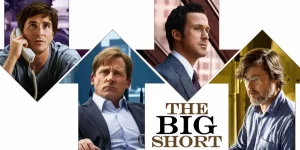
- Films like The Big Short for tone and structure
Alternate Endings and Deleted Scenes
No alternate ending has been officially released. However, several deleted scenes reportedly focused on deeper hedge fund consequences, which were cut to avoid overstating real-world outcomes. The filmmakers chose accuracy over fantasy.
Book Adaptation and Differences
The film is based on “The Antisocial Network” by Ben Mezrich.
Key differences include:
- The book places more emphasis on chaos and meme culture
- The movie humanizes individual investors more deeply
- Keith Gill is portrayed as calmer and more grounded in the film



Memorable Scenes and Quotes
Key Scenes
- Keith Gill calmly holding during massive losses
- Robinhood restricting trades and investor reactions
- The Congressional hearing showdown
- Investors refreshing stock prices in disbelief
Iconic Quotes
- “I am not a cat.” – Keith Gill
- “The system works… until it doesn’t.”
- “They never thought we’d notice.”
Easter Eggs and Hidden Details
- Real Reddit usernames appear briefly on screens
- Actual Roaring Kitty thumbnails are recreated
- Background news tickers reference unrelated market scandals
- Subtle visual callbacks to The Big Short
Trivia
- Keith Gill reviewed the script but did not influence the story
- Many hedge fund reactions were taken from real interviews
- The film was shot largely chronologically to help performances
- Several scenes were filmed using real trading interfaces
Why Watch Dumb Money?
Watch Dumb Money if you want:
- A clear, engaging explanation of a confusing real event
- A story about ordinary people challenging powerful systems
- A reminder that financial markets are emotional, not logical
- A film that respects your intelligence without preaching
Director’s Other Works
Recommended Films for Fans
- The Big Short (2015)
- Margin Call (2011)
- Wall Street (1987)
- Boiler Room (2000)
- Enron: The Smartest Guys in the Room (2005)