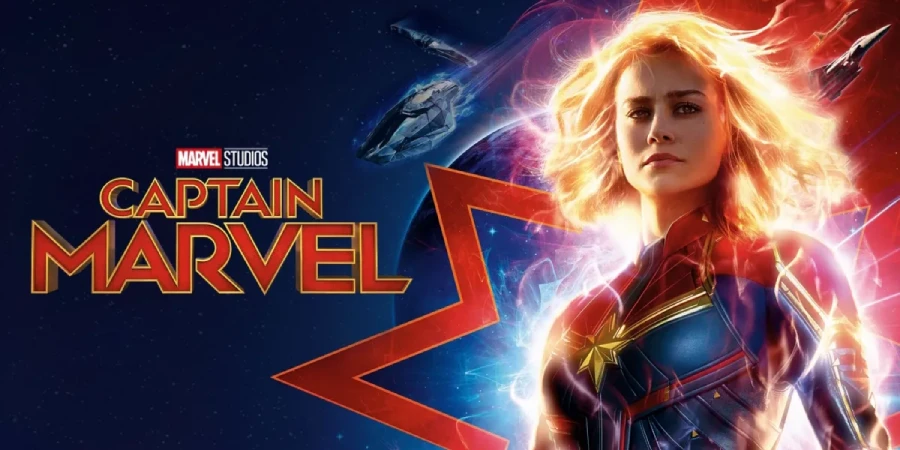

Captain Marvel is the 21st film in the Marvel Cinematic Universe and serves as an origin story for one of its most powerful heroes. Set primarily in the 1990s, the film explores identity, memory, war propaganda, and empowerment — all wrapped in a cosmic superhero adventure. Directed by Anna Boden and Ryan Fleck, the film introduces Carol Danvers before she becomes the powerhouse we later see in Avengers: Endgame.
This is a superhero action-adventure film with strong sci-fi elements and a 90s nostalgia backbone, blending intergalactic conflict with grounded character drama.
Detailed Summary
The Kree Warrior “Vers”
The film opens on the alien planet Hala, home of the Kree Empire. Carol Danvers, known as “Vers,” is a member of Starforce, an elite Kree military unit led by Yon-Rogg (Jude Law). She suffers from fragmented memories of a past life on Earth but has been trained to suppress emotion and control her immense energy powers.
Her mentor Yon-Rogg constantly reminds her to restrain herself, hinting early at one of the film’s key themes: control versus freedom.
Mission Gone Wrong and Arrival on Earth
During a mission to rescue a Kree operative from the Skrulls — a shape-shifting alien race — Vers is captured by Skrull leader Talos (Ben Mendelsohn). While probing her memories, the Skrulls discover Earth is central to her hidden past.
Vers escapes and crash-lands in 1995 Los Angeles, landing in a Blockbuster Video store in one of the film’s most charmingly 90s moments.
Meeting Nick Fury
On Earth, she encounters a young S.H.I.E.L.D. agent, Nick Fury (Samuel L. Jackson), long before he becomes the iconic eyepatch-wearing director. Their dynamic drives much of the film’s middle act.
Together, they investigate Project Pegasus, a secret U.S. operation studying an advanced light-speed engine developed by Dr. Wendy Lawson.
The Truth About Lawson and the Skrulls
Vers eventually learns that Dr. Lawson was actually Mar-Vell, a Kree scientist who defected and was helping Skrull refugees escape Kree oppression. In a major twist, the Skrulls are not terrorists but displaced survivors seeking safety from Kree genocide.
Talos is revealed to be far more sympathetic than expected, reframing the entire conflict.
Carol Danvers Remembers
Carol discovers she was once a U.S. Air Force pilot who worked alongside her best friend Maria Rambeau. During a test flight of Lawson’s experimental engine, Yon-Rogg shot Lawson to prevent her from destroying it. Carol destroyed the engine herself to stop Yon-Rogg — absorbing its energy and gaining immense powers in the process.
The Kree then kidnapped her, erased her memories, and manipulated her into becoming their weapon.
This revelation completely shatters her identity as “Vers.” She is Carol Danvers.
Movie Ending
In the final act, Carol rejects the Kree’s psychological control. When captured by the Supreme Intelligence — the AI ruler of the Kree — she is told she has only ever been powerful because of Kree intervention.
In a defining moment, Carol removes the inhibitor chip placed on her neck. Her powers surge to their full potential. She unlocks her “Binary” form, radiating cosmic energy and becoming virtually unstoppable.
She single-handedly destroys incoming Kree warships in Earth’s orbit. The visuals emphasize her transformation from controlled soldier to fully autonomous hero. She doesn’t just win — she dominates.
Yon-Rogg attempts to manipulate her one last time, challenging her to fight “without powers” to prove herself. Instead of playing into his ego, Carol blasts him effortlessly, declaring she has nothing to prove. It’s a pivotal thematic statement: she refuses validation from her oppressor.
Carol sends Yon-Rogg back to Hala with a warning to the Supreme Intelligence: she’s coming for them.
Before leaving Earth, she helps the Skrulls find a new homeworld. She parts ways with Fury, giving him a modified pager that can contact her in emergencies.
The film closes with Carol departing Earth to help the Skrulls, while Fury begins drafting the “Avengers Initiative,” inspired by Carol’s Air Force call sign: Avenger.
The ending firmly establishes her as one of the most powerful beings in the MCU and sets up her crucial role in the fight against Thanos.
Are There Post-Credits Scenes?
Yes, there are two post-credits scenes.
Mid-Credits Scene
Set after the events of Avengers: Infinity War, the surviving Avengers are monitoring Fury’s pager as it suddenly stops transmitting. Carol appears behind them and calmly asks, “Where’s Fury?” This directly sets up Avengers: Endgame.
Post-Credits Scene
A comedic moment reveals how Nick Fury lost his eye. The alien cat Goose — actually a Flerken — scratches him. The injury worsens, confirming the surprisingly mundane origin of the iconic eyepatch.
Cast
- Brie Larson as Carol Danvers / Captain Marvel
- Samuel L. Jackson as Nick Fury
- Jude Law as Yon-Rogg
- Ben Mendelsohn as Talos
- Lashana Lynch as Maria Rambeau
- Annette Bening as Mar-Vell / Supreme Intelligence
Film Music and Composer
The score was composed by Pinar Toprak, making her the first woman to compose a score for a Marvel Studios film. The soundtrack heavily incorporates 1990s hits, including tracks from No Doubt and Garbage, reinforcing the nostalgic setting.
Filming Locations and Their Importance
- Los Angeles, California – Used to recreate 1990s suburban America and urban environments.
- Edwards Air Force Base, California – Grounded Carol’s backstory in real military aviation culture.
- Louisiana – Maria Rambeau’s home scenes added emotional depth and warmth to Carol’s human connections.
These real-world locations contrast with CGI-heavy alien worlds like Hala, emphasizing Carol’s rediscovery of her humanity.

Awards and Nominations
- Nominated for several Teen Choice Awards and People’s Choice Awards
- Won Saturn Award for Best Comic-to-Film Motion Picture Actress (Brie Larson nomination category recognition)
- Recognized for visual effects and breakthrough representation in mainstream superhero cinema
Behind the Scenes Insights
- Brie Larson trained with the U.S. Air Force and met real fighter pilots for authenticity.
- The de-aging CGI used on Samuel L. Jackson was among Marvel’s most extensive digital rejuvenation efforts.
- Goose the cat was played by multiple trained cats plus CGI enhancements.
- The film became the first female-led MCU film, marking a major franchise milestone.
Inspirations and References
The film draws heavily from Marvel Comics’ Captain Marvel runs, especially Kelly Sue DeConnick’s 2012 comic series which redefined Carol Danvers for modern audiences.
The Skrull reinterpretation subverts decades of comic lore where they were typically villains.
Alternate Endings and Deleted Scenes
Deleted scenes include extended training sequences with Yon-Rogg and additional bonding moments between Carol and Maria.
No radically different alternate ending has been publicly confirmed, but earlier drafts reportedly emphasized the Kree-Skrull war more heavily before focusing tighter on Carol’s personal journey.
Book Adaptations and Differences
The movie adapts multiple comic arcs rather than a single storyline. In comics, Mar-Vell is traditionally male, and Carol gains powers differently depending on continuity.
The film simplifies decades of convoluted comic lore into a cohesive origin story and repositions the Skrulls as sympathetic refugees rather than conquerors.
Memorable Scenes and Quotes
Key Scenes
- Carol removing the inhibitor chip and fully unleashing her Binary form
- The “Just a Girl” fight sequence set to No Doubt during the climactic battle
- Fury discovering Goose’s true Flerken nature
- The final confrontation where Carol refuses to prove herself to Yon-Rogg
Iconic Quotes
- “I have nothing to prove to you.”
- “Higher, further, faster, baby.”
- “I’ve been fighting with one arm tied behind my back. What happens when I’m finally set free?”

Easter Eggs and Hidden Details
- Carol’s pager is modified Kree tech merged with 90s electronics
- The Avengers Initiative name comes from Carol’s pilot call sign
- Stan Lee appears reading a Mallrats script, referencing his cameo in Mallrats
- SHIELD is still spelled S.H.I.E.L.D., years before becoming fully established
Trivia
- The film grossed over $1 billion worldwide.
- It is chronologically one of the earliest MCU films in timeline order.
- Brie Larson insisted on performing many of her own stunts.
- The Supreme Intelligence appears differently to each viewer; Carol sees Lawson.
Why Watch Captain Marvel?
If you’re interested in a story about reclaiming identity, breaking manipulation, and discovering inner power, this film delivers. It also fills a crucial narrative gap between Infinity War and Endgame while providing a fresh 90s-era MCU experience.
Most importantly, it shows that true strength comes not from control, but from self-acceptance and autonomy.
Directors’ Other Works
Anna Boden & Ryan Fleck
- Half Nelson (2006)
- Sugar (2008)
- It’s Kind of a Funny Story (2010)
- Mississippi Grind (2015)