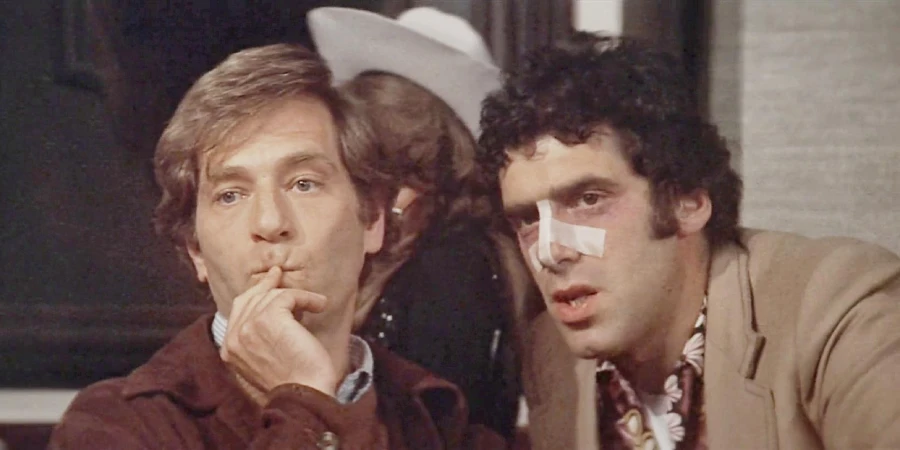

Robert Altman captures the desperate heartbeat of the gambling underworld with startling precision. Two drifters find themselves bound by the thrill of the bet and the crushing weight of the loss. This film strips away the glamour of Hollywood casinos to reveal the sweaty reality of addiction.
Detailed Summary
The Meeting at the Card Club
Bill Denny spends his days at a mundane magazine job and his nights losing money at low-stakes poker tables. During a tense game at a Southern California club, he meets the charismatic and chaotic Charlie Waters. Their night ends abruptly when a disgruntled player accuses them of collusion and lures them into a violent ambush outside.
Bloodied but energized, the duo bonds over beer and the shared trauma of the robbery. This chance encounter ignites a friendship built entirely on the unstable foundation of gambling. Consequently, Bill begins to abandon his professional responsibilities to chase the high that Charlie provides.
Life on the Fringes
Charlie lives with two prostitutes, Barbara and Susan, in a loose arrangement that feels more like a makeshift family than a business. Bill enters this world and quickly adapts to the irregular hours and constant search for action. However, debt collectors soon begin to pressure Bill, signaling that his casual hobby has become a dangerous obsession.
They spend their time betting on anything from professional boxing matches to trivial schoolyard games. Charlie remains unbothered by losses, seeing each defeat as a temporary delay before the next win. Conversely, Bill feels the physical toll of his mounting financial failures as he sinks deeper into despair.
The Reno Jackpot
Despair turns to frantic hope when Bill hocks his possessions to fund a trip to Reno. He believes a high-stakes poker game featuring a legendary gambler named Amarillo Slim is his only salvation. Charlie accompanies him, acting as a hype man and spiritual anchor during the grueling sessions at the table.
Bill displays an uncanny, almost supernatural winning streak that leaves the other professional players stunned. He moves from the poker table to the wheel of fortune and finally to the craps table. Ultimately, he accumulates a massive fortune of over eighty thousand dollars in a single, exhausting night of play.
Movie Ending
Bill stands over a literal mountain of cash in their hotel room, but the expected euphoria never arrives. He realizes that the win has not changed his life or cured his internal void. Rather, the massive success proves that the money was never the true objective of his quest.
He tells a confused Charlie that he is quitting the life forever. Charlie tries to joke about their newfound wealth, yet he cannot bridge the emotional distance between them. Bill simply gives Charlie half the winnings and walks away into the quiet Reno morning.
Specifically, the partnership dissolves at the moment of its greatest triumph. The final shot captures Charlie alone, still trying to find joy in the currency. Bill exits the frame, leaving behind the addiction and the only friend who truly understood his sickness.
Are There Post-Credits Scenes?
This film does not contain any post-credits scenes. The story concludes definitively before the credits roll. Once the screen goes dark, the narrative journey of Bill and Charlie has reached its absolute end.
Type of Movie
California Split fits firmly within the buddy comedy-drama genre. It features a naturalistic, improvisational tone that feels almost like a documentary at times. The atmosphere is gritty, authentic, and deliberately unsentimental about the hazards of its subject matter.
Cast
- George Segal – Bill Denny
- Elliott Gould – Charlie Waters
- Ann Prentiss – Barbara Miller
- Gwen Welles – Susan Peters
- Edward Walsh – Lew
- Joseph Walsh – Sparky
- Bert Remsen – Helen Brown
- Jeff Goldblum – Lloyd Harris
Film Music and Composer
The soundtrack features a unique blend of diegetic music and ragtime influences. Phyllis Shotwell provides much of the vocal atmosphere, performing live in the background of several scenes. Her gritty, bluesy style mirrors the weary environment of the gambling dens.
Interestingly, the film eschews a traditional orchestral score in favor of these organic sounds. This choice heightens the realism of the locations. The music feels like it belongs to the rooms where the characters lose their money.


Filming Locations
Altman shot the movie on location in Los Angeles and Reno to capture an authentic atmosphere. The California Club scenes utilize real gambling halls to provide a sense of claustrophobia and tension. These locations were vital because they allowed the actors to interact with actual patrons and professional dealers.
The Reno sequences took place at the Mapes Hotel, which was a landmark of the Nevada gambling scene. By filming in these functional spaces, the production avoided the artificiality of a Hollywood soundstage. Therefore, the grit on the walls and the smoke in the air are entirely real.
Awards and Nominations
While the film received critical acclaim upon release, it did not garner major Academy Award nominations. It remains a cult classic that critics frequently cite as one of the best films of the 1970s.
Behind the Scenes Insights
- The production utilized an innovative eight-track recording system to capture overlapping dialogue.
- Robert Altman encouraged his leads to improvise many of their conversations to build rapport.
- The script was written by Joseph Walsh, who was a close friend of Elliott Gould and a former gambler.
- Many of the background extras were actual gamblers found in the casinos during filming.
- Steven Spielberg once named this his favorite Robert Altman film for its incredible sense of character.
Inspirations and References
Joseph Walsh based the screenplay on his own harrowing experiences with gambling addiction in Los Angeles. He wanted to depict the lifestyle without the traditional moralizing found in most dramas. Furthermore, the character of Amarillo Slim is played by the real-life poker legend of the same name.
Alternate Endings and Deleted Scenes
The original cut of the film was significantly longer and included more scenes of the domestic life shared by the four lead characters. Some versions of the film were edited for television, removing much of the colorful language and adult themes. However, the emotional trajectory of the ending has remained consistent across all official releases.
Book Adaptations and Differences
This film is an original work and is not based on a previously published book or novel. Joseph Walsh wrote the screenplay specifically for the screen. Notably, no novelization was ever released to accompany the film following its success.

Memorable Scenes and Quotes
Key Scenes
- The opening poker game where the tension explodes into a parking lot brawl.
- The mismatched double date where Charlie tries to charm a woman while Bill falls into a depression.
- The high-stakes game against Amarillo Slim where the atmosphere becomes dead silent.
- The final craps marathon that leads to the massive eighty thousand dollar payout.
Iconic Quotes
- “I don’t need a winner. I need a game.”
- “It doesn’t mean a damn thing, does it?”
- “I’m on a winning streak, and I can’t even feel it.”
Easter Eggs and Hidden Details
- A very young Jeff Goldblum appears briefly as a disgruntled magazine employee.
- The man playing the “Synonym Game” with Charlie is the writer of the film.
- Real gambling nomenclature is used throughout the film without explaining it to the audience.
- The character of Helen Brown is actually a man in drag, which is never explicitly commented on by the leads.
Trivia
- Robert Altman nearly lost the project because he insisted on casting Elliott Gould after the actor’s brief career slump.
- The film was one of the first to use the multitrack recording technology that became Altman’s trademark.
- Joseph Walsh spent years trying to get the movie made before Altman finally signed on.
- Columbia Pictures originally wanted a more upbeat ending where the characters stayed together.
Why Watch?
The movie offers a masterclass in naturalistic acting and sound design. It perfectly captures the fleeting high and the inevitable low of the gambling addict. You will find no better depiction of male friendship in 1970s cinema.
Director’s Other Movies
- MASH (1970)
- McCabe & Mrs. Miller (1971)
- The Long Goodbye (1973)
- Nashville (1975)
- The Player (1992)
- Gosford Park (2001)
Recommended Films for Fans
- The Gambler (1974)
- Mississippi Grind (2015)
- Hard Eight (1996)
- The Cincinnati Kid (1965)
- Rounders (1998)
- Uncut Gems (2019)