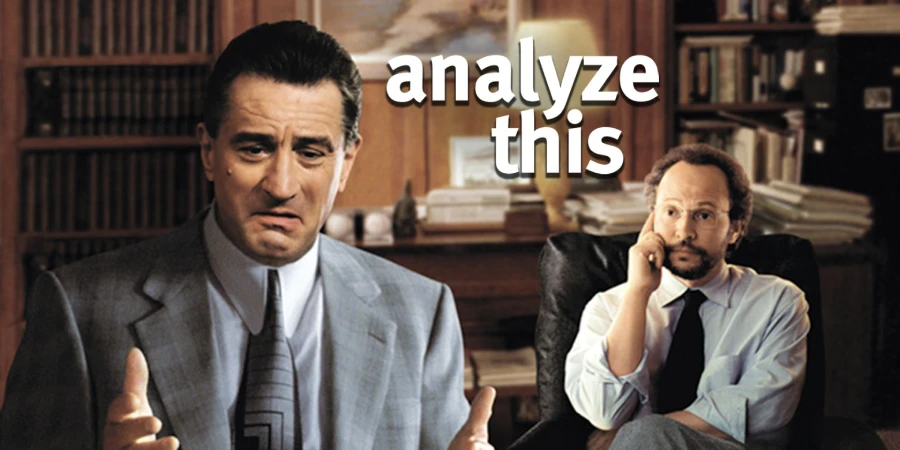

Analyze This (1999), directed by Harold Ramis, is a crime-comedy classic blending mafia drama with neurotic therapy sessions. It stars Robert De Niro as a troubled mob boss and Billy Crystal as the psychiatrist who unwillingly becomes his emotional lifeline.
Detailed Summary
The Setup: A Mob Boss in Crisis
Paul Vitti, a feared New York mafia leader, begins experiencing panic attacks, emotional outbursts, and moments of vulnerability that threaten his reputation. These symptoms surface at crucial moments, including negotiation meetings with rival families. His lieutenant Jelly tries to help but quickly realizes Paul needs professional assistance.
Enter Dr. Ben Sobel
Dr. Ben Sobel is a mild-mannered psychiatrist preparing for his wedding. His life is relatively calm until Paul and Jelly kidnap him to force him into becoming Paul’s therapist. Ben tries to resist, but Paul’s emotional instability and dangerous charisma pull him toward a mandatory doctor–patient arrangement.
The War Among Crime Families
As Paul’s mental state worsens, tensions rise between mafia groups heading toward a major summit intended to restore balance among families. Paul must maintain a tough image, but his psychological breakdown makes that impossible. Meanwhile, FBI agents are tailing Sobel, suspecting him of criminal activity due to his association with Vitti.
Sobel and Vitti’s Unlikely Bond
Throughout their sessions, Sobel slowly uncovers the trauma at the root of Paul’s issues, including unresolved childhood pain and guilt about his father’s murder. Sobel becomes a crucial (and unwilling) anchor in Paul’s life, while Paul disrupts Sobel’s wedding preparation, career, and sanity.


Movie Ending
The climax unfolds at the massive mafia summit meant to prevent a full-blown mob war. Paul arrives determined to exert dominance, but his panic attacks flare up again. When a hit squad attempts to assassinate him, Ben Sobel—despite having zero mafia experience—ends up saving Paul by intervening. This moment cements Sobel and Vitti’s strange but genuine friendship.
Paul is exposed for his emotional instability, leading to a breakdown that threatens his standing in the mob world. He’s arrested and sent to prison, but by the final scenes we see him continuing therapy with Sobel, implying that both men have accepted their new relationship: Paul as the emotionally complex mobster who finally wants help, and Ben as the reluctant therapist who realizes he does care about his patient.
The ending underscores how vulnerability—even for a feared mafia boss—is universal, and how Sobel’s influence brings unlikely humanity to Vitti’s world. It wraps up the mob war storyline, resolves the character arcs, and still leaves room for the sequel, Analyze That (2002).
Are There Post-Credits Scenes?
No. Analyze This does not include any post-credits or mid-credits scenes.
Type of Movie
The film is a crime-comedy blending mafia drama with psychological humor. It balances classic gangster tropes with lighthearted, witty therapy-based storytelling.
Cast
- Robert De Niro as Paul Vitti
- Billy Crystal as Dr. Ben Sobel
- Lisa Kudrow as Laura MacNamara Sobel
- Chazz Palminteri as Primo Sindone
- Joe Viterelli as Jelly
- Bill Macy as Dr. Isaac Sobel
- Robert Pastorelli as Manno
Film Music and Composer
The score was composed by Howard Shore, known for his versatility and later for The Lord of the Rings. The music mixes traditional mafia-style orchestral cues with comedic undertones, supporting the film’s blend of seriousness and absurdity.



Filming Locations and Their Importance
- New York City, USA – Most of the film’s pivotal scenes were shot in NYC. This authentic urban backdrop gives the mafia storyline credibility and grounds the otherwise comedic plot in a recognizable crime setting.
- Miami, Florida (brief segments) – Used for visual contrast and to lighten the film’s tone during transitional sequences.
New York’s neighborhoods, restaurants, and cityscape help ensure the film feels like a genuine mafia tale even when the comedy takes center stage.
Awards and Nominations
- Academy Awards: No nominations
- Golden Globes:
- Nominated for Best Actor – Comedy/Musical (Robert De Niro)
- Nominated for Best Picture – Comedy/Musical
- American Comedy Awards:
- Winner — Funniest Actor in a Motion Picture (Robert De Niro)
Behind the Scenes Insights
- Robert De Niro intentionally played his character straight, not comedic, because the contrast with Crystal’s reactions amplified the humor.
- Harold Ramis encouraged improvisation, leading to many unscripted lines that made the final cut.
- Billy Crystal worked with real psychiatrists to understand mannerisms and therapeutic language.
- Joe Viterelli (Jelly) was discovered by chance; his unique look and deadpan delivery made his character iconic.
- De Niro initially wasn’t sure a mafia comedy would work, but Ramis convinced him by emphasizing the film’s psychological depth.
Inspirations and References
- The story loosely draws on classic mafia films like Goodfellas and The Godfather, but satirizes their seriousness.
- Paul Vitti’s character is partially inspired by real-world mob figures rumored to have psychological issues.
- The therapist–criminal dynamic echoes earlier dark comedies and crime novels exploring criminals seeking unconventional help.
Alternate Endings and Deleted Scenes
A few scenes were trimmed for pacing:
- An extended therapy session where Paul reveals more childhood trauma.
- A longer wedding confrontation scene where mobsters interact awkwardly with Sobel’s guests.
- An alternate comedic take of the ending summit sequence, but no major alternate ending was ever developed.
Book Adaptations and Differences
Analyze This is not based on a book. However, its themes are reminiscent of psychological crime literature where criminals reveal vulnerabilities through therapy.



Memorable Scenes and Quotes
Key Scenes
- Paul Vitti having his first panic attack in a car, setting the entire plot in motion.
- Ben Sobel’s wedding rehearsal being interrupted by mob business.
- The emotional therapy session where Paul breaks down over unresolved grief.
- The final mafia summit shootout with Sobel unexpectedly acting heroically.
Iconic Quotes
- “I’m feeling very vulnerable right now, so just… don’t make me kill you.” – Paul Vitti
- “You don’t hear the word ‘no’ very often, do you?” – Sobel
- “You. You’re good. You’re very good.” – Paul Vitti
- “You’re a doctor. You’re not supposed to get upset!” – Jelly
Easter Eggs and Hidden Details
- Several scenes subtly parody Goodfellas and The Godfather through camera angles and dialogue patterns.
- De Niro’s character references past roles indirectly, including a nod to Raging Bull.
- Ben Sobel’s office decor includes certifications that quietly hint at his insecurity and desire for recognition.
Trivia
- This was one of De Niro’s rare comedic roles at the time, surprising critics.
- The film’s title inspired numerous pop-culture therapy-related parodies.
- Joe Viterelli became so beloved that he reprised his role in the sequel, despite originally planning to retire.
- The chemistry between De Niro and Crystal was so strong that the studio greenlit the sequel quickly.
Why Watch?
Analyze This offers a smart blend of crime drama and sharp, character-driven comedy. Watching De Niro’s intimidating mafia persona crumble in therapy sessions is both hilarious and strangely moving. The film balances authenticity, wit, and emotional depth in a way that still feels fresh.
Director’s Other Movies
- Groundhog Day (1993)
- Caddyshack (1980)
- National Lampoon’s Vacation (1983)
- Analyze That (2002)
- Multiplicity (1996)
Recommended Films for Fans
- Analyze That (2002)
- Midnight Run (1988)
- The Freshman (1990)
- Get Shorty (1995)
- My Cousin Vinny (1992)