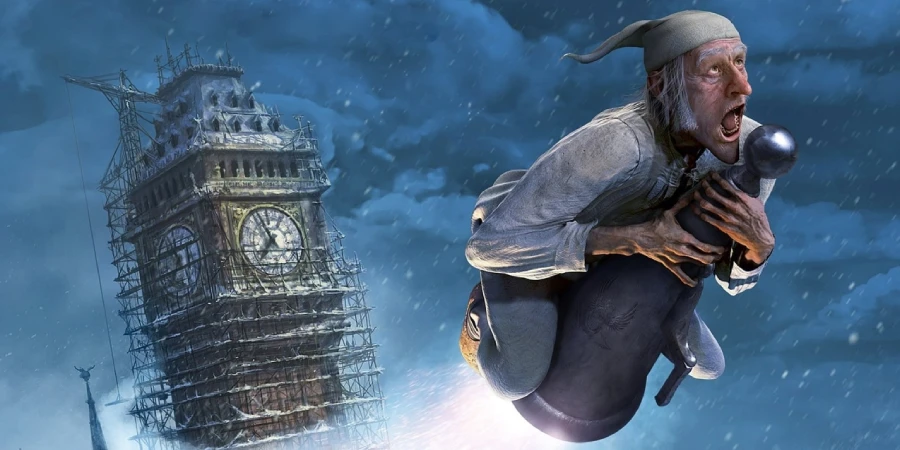

Robert Zemeckis did not adapt A Christmas Carol; he unleashed it. This 2009 animated film peels back centuries of cozy adaptations to reveal the grim, terrifying ghost story Charles Dickens originally wrote. It is a visual marvel, but its true power lies in its unabashed commitment to being frightening. This is a Christmas horror story, through and through.
Detailed Summary
A Miser’s Chilling Christmas Eve
Ebenezer Scrooge, a cold-hearted moneylender, begins Christmas Eve in his typical fashion. He dismisses his nephew Fred’s invitation to Christmas dinner with a “Bah, humbug!” Scrooge also reluctantly grants his overworked clerk, Bob Cratchit, a single day off for Christmas.
Afterwards, he threatens a boy for singing a carol at his door. Scrooge’s cruelty is on full display for all of London to see.
The Ghost of Jacob Marley
That night, Scrooge is visited by the ghost of his former business partner, Jacob Marley. Marley, bound in heavy chains forged from his own greed, warns Scrooge that he is destined for a similar, terrible fate.
However, Marley offers a sliver of hope. He tells Scrooge he will be visited by three spirits to give him one last chance at redemption.
The Ghost of Christmas Past
The first spirit, the candle-like Ghost of Christmas Past, takes Scrooge on a journey into his younger years. Scrooge witnesses his lonely childhood at boarding school and sees his joyful apprenticeship with the cheerful Mr. Fezziwig.
He then relives a painful memory. We see his love, Belle, leave him because his obsession with money had consumed him entirely.
The Ghost of Christmas Present
Next, the boisterous, giant Ghost of Christmas Present shows Scrooge the current Christmas celebrations. They invisibly attend his nephew Fred’s party, where guests mock Scrooge’s miserly ways. Fred, in contrast, defends his uncle.
The spirit then takes him to the humble home of Bob Cratchit. Scrooge sees the family’s meager but joyful dinner and their sick son, Tiny Tim. The ghost grimly warns that if the shadows of the future remain unaltered, Tiny Tim will die.
The Ghost of Christmas Yet to Come
The final spirit is a silent, hooded specter resembling the Grim Reaper. This ghost shows Scrooge a dark future where a local businessman has died, but no one mourns him. Instead, his associates and servants are pleased, pilfering his belongings.
The ghost then reveals the Cratchit family grieving the death of Tiny Tim. Finally, the spirit points Scrooge to a neglected tombstone. On it is his own name, confirming that he was the unloved man who had died.
Movie Ending
Horrified by the vision of his own desolate grave, Scrooge clings to the spectral robe of the Ghost of Christmas Yet to Come. He begs the spirit for a second chance, promising to honor Christmas in his heart and change his ways. The ground beneath him gives way, and he plummets into his own empty coffin deep within the earth before suddenly waking up in his bed.
Overjoyed to find it is Christmas morning, Scrooge is a completely changed man. He bursts into the streets, joyfully greeting everyone and buying the largest prize turkey for the Cratchit family. He then doubles Bob Cratchit’s salary and becomes a second father to Tiny Tim.
Ultimately, Scrooge fully embraces the spirit of Christmas, becoming a kind, generous, and happy man. His transformation is complete, ensuring Tiny Tim lives and that he himself escapes the terrible fate Marley warned him about.
Are There Post-Credits Scenes?
No, A Christmas Carol (2009) does not have any mid-credits or post-credits scenes. Once the credits begin to roll, the film is officially over.
Type of Movie
A Christmas Carol is a 3D computer-animated fantasy drama. Director Robert Zemeckis used performance capture technology to create a hyper-realistic yet stylized look for the film.
Notably, its tone is significantly darker than many other adaptations. The film leans heavily into the horror elements of Dickens’s story, with several intense and frightening sequences that make it feel more like a ghost story than a simple holiday film.
Cast
- Jim Carrey – Ebenezer Scrooge / Ghost of Christmas Past / Ghost of Christmas Present / Ghost of Christmas Yet to Come
- Gary Oldman – Bob Cratchit / Jacob Marley / Tiny Tim
- Colin Firth – Fred
- Bob Hoskins – Mr. Fezziwig / Old Joe
- Robin Wright Penn – Belle / Fan
- Cary Elwes – Dick Wilkins / Mad Fiddler
Film Music and Composer
The film’s powerful and dramatic score was composed by Alan Silvestri, a frequent collaborator with director Robert Zemeckis. Silvestri’s music effectively blends traditional Christmas carols with dark, ominous themes that heighten the story’s tension and emotional weight.
The score perfectly complements the ghostly visitations, creating a sense of wonder and terror. A standout piece is the original song “God Bless Us Everyone,” performed by Andrea Bocelli over the end credits, providing an uplifting conclusion.
Filming Locations
As a fully animated film using performance capture, A Christmas Carol was not shot on physical locations. Instead, the actors performed their scenes in a specially designed studio, likely in Los Angeles, California.
Their movements, facial expressions, and performances were digitally recorded and then translated into the animated characters seen on screen. The digital environments were meticulously crafted to recreate the atmosphere of Victorian London, drawing inspiration from historical records and illustrations.
Awards and Nominations
While not a major contender at the Academy Awards or Golden Globes, A Christmas Carol received recognition for its technical achievements. It won the award for Favorite Animated Movie at the 2010 Kids’ Choice Awards.
Behind the Scenes Insights
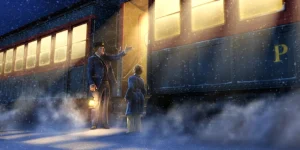
- Director Robert Zemeckis viewed this film as the third in his trilogy of performance capture movies, following The Polar Express (2004) and Beowulf (2007).
- Jim Carrey performed the roles of Scrooge across all ages as well as all three of the Christmas spirits, showcasing his incredible vocal and physical versatility.
- Similarly, Gary Oldman lent his talents to three different characters: Bob Cratchit, Jacob Marley, and even the voice of Tiny Tim.
- To prepare for the lead role, Jim Carrey studied the original text and worked extensively with a dialect coach to perfect a proper English accent for Scrooge.
Inspirations and References
The film is a direct adaptation of Charles Dickens’s 1843 novella, A Christmas Carol. Its primary goal was to remain faithful to the source material’s tone and narrative.
Furthermore, the visual design of the characters and settings drew heavily from the original illustrations by John Leech, which accompanied the first edition of the book. This gives the film an authentic, period-specific aesthetic.
Alternate Endings and Deleted Scenes
There are no known official alternate endings or widely released deleted scenes for A Christmas Carol. Robert Zemeckis presented a definitive version of the story that trims some minor subplots from the book but adds no significant alternative plotlines.
Book Adaptations and Differences
Zemeckis’s film is one of the most faithful adaptations of Dickens’s novella, particularly in its dialogue and embrace of the story’s darker themes. Most of the dialogue is lifted directly from the book.
However, the film uses its visual medium to expand on certain moments. For instance, the sequence where the Ghost of Christmas Past extinguishes himself and a thrilling, terrifying chase sequence involving a miniaturized Scrooge and the Ghost of Christmas Yet to Come are cinematic additions. These scenes amplify the peril and horror hinted at in the text.

Memorable Scenes and Quotes
Key Scenes
- Marley’s Arrival: The ghost of Jacob Marley makes a horrifying entrance, with his dislocated jaw providing one of the film’s most memorable jump scares.
- Extinguishing the Past: Scrooge struggles with the Ghost of Christmas Past, trying to put out its light with its candle-snuffer cap, a visually stunning and symbolic sequence.
- The Final Chase: The Ghost of Christmas Yet to Come pursues a shrunken Scrooge through London’s dark alleyways, a terrifying and action-packed addition unique to this adaptation.
Iconic Quotes
- “Bah! Humbug!” – Scrooge’s famous dismissal of Christmas.
- “Are there no prisons? Are there no workhouses?” – Scrooge’s cold response to the gentlemen collecting for the poor.
- “God bless us, every one!” – Tiny Tim’s hopeful and iconic toast.
- “I will honor Christmas in my heart, and try to keep it all the year.” – Scrooge’s desperate promise to the final spirit.
Easter Eggs and Hidden Details
- A Nod to the Illustrator: Some character designs, especially the emaciated figures of Ignorance and Want, are direct visual recreations of John Leech’s original 1843 illustrations.
- Jim Carrey’s Many Faces: Keen-eyed viewers might notice that the facial structure of the Ghost of Christmas Past subtly resembles a younger Jim Carrey.
- Zemeckis and Silvestri: The film continues the long-running collaboration between director Robert Zemeckis and composer Alan Silvestri, who have worked together on numerous films, including Back to the Future and Forrest Gump.
Trivia
- This was Disney’s first 3D film to be released on IMAX 3D.
- Colin Firth, who plays Scrooge’s cheerful nephew Fred, would later go on to play another famous literary character, Mr. Darcy, in Pride and Prejudice.
- The performance capture technology allowed actors to play multiple roles without extensive makeup. Gary Oldman, for example, voiced Tiny Tim but also performed the motion capture for Marley’s Ghost.
Why Watch?
This is a daring and visually spectacular take on a classic. If you prefer your Christmas tales with a touch of terror and appreciate a story that doesn’t shy away from its dark roots, this film is an essential holiday viewing.
Director’s Other Movies
- Back to the Future (1985)
- Who Framed Roger Rabbit (1988)
- Forrest Gump (1994)
- Contact (1997)
- Cast Away (2000)
- The Polar Express (2004)
- Flight (2012)
Recommended Films for Fans
- The Nightmare Before Christmas (1993)
- Scrooged (1988)
- The Polar Express (2004)
- Krampus (2015)
- Beowulf (2007)
- The Muppet Christmas Carol (1992)