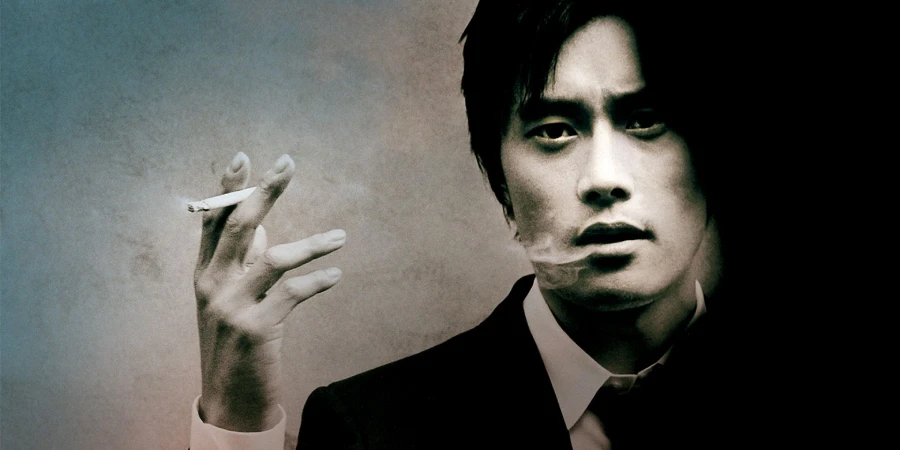

A Bittersweet Life is a stylish, brutal, and emotionally layered Korean neo-noir directed by Kim Jee-woon. On the surface, it looks like a revenge thriller. Underneath, it’s a meditation on loyalty, pride, regret, and the cost of one “small” moral choice. Elegant violence meets quiet despair, and yes, it hurts in the best cinematic way.
Detailed Summary
The Perfect Employee: Sun-woo’s Controlled World
Sun-woo (Lee Byung-hun) is the impeccably dressed right-hand man of powerful crime boss Kang. He runs a luxury hotel by day and handles assassinations by night with surgical precision. His life is defined by rules, silence, and obedience. Kang values Sun-woo not for friendship, but for absolute reliability.
Sun-woo appears emotionally numb, but subtle moments hint at inner conflict. He enjoys classical music, solitude, and order. This calm will not last.
The Assignment That Changes Everything
Kang gives Sun-woo a simple but dangerous task: follow Kang’s young girlfriend, Hee-soo, and kill her and her lover if she is cheating. The instruction is clear. No hesitation. No interpretation.
Sun-woo discovers that Hee-soo is indeed seeing another man. But instead of executing them, he lets them live. This single act of mercy, driven by empathy or perhaps envy of their freedom, becomes the irreversible turning point of the film.
Betrayal Is Not Forgiven
Kang quickly learns the truth. In the world Sun-woo lives in, disobedience is worse than failure. Sun-woo is brutally beaten, imprisoned, and left for dead. His punishment is not just physical—it is existential. He is erased.
But Sun-woo survives.
A Man With Nothing Left
Escaping captivity, Sun-woo is no longer the composed professional we met earlier. He is wounded, furious, and hollow. As he navigates the criminal underworld, violence escalates rapidly. His revenge is not clean or heroic. It is messy, desperate, and fueled by wounded pride rather than justice.
Along the way, Sun-woo briefly connects with a woman he meets by chance. This short-lived connection shows what his life could have been, making his path even more tragic.



Movie Ending
Sun-woo storms Kang’s headquarters alone, fully aware that he is walking toward his death. This is not a rescue mission or a power grab. It is a reckoning.
He kills Kang’s men methodically, sustaining severe injuries. Eventually, he confronts Kang face to face. Kang explains that Sun-woo’s betrayal was unforgivable not because of business, but because it wounded his pride. Kang does not see Sun-woo as a human who made a choice, only as a tool that malfunctioned.
Sun-woo, exhausted and bleeding, finally kills Kang.
But there is no triumph.
Outside, Sun-woo collapses. As he lies dying, he recalls a conversation about happiness and freedom, realizing too late that his life was never truly his own. The film ends with Sun-woo bleeding out on the street, alone, his revenge completed but utterly meaningless.
He wins the fight, but loses everything else. The ending reinforces the film’s central idea: some lines, once crossed, lead only to destruction—no matter how justified they feel.
Are There Post-Credits Scenes?
No. A Bittersweet Life does not include any post-credits or mid-credits scenes. The film ends definitively and intentionally, leaving the audience with silence and reflection rather than sequel bait.
Type of Movie
A Bittersweet Life is a neo-noir crime thriller infused with tragedy. It blends stylized action, psychological drama, and existential themes, balancing brutal violence with quiet emotional weight.
Cast
- Lee Byung-hun as Sun-woo
- Kim Yeong-cheol as Kang
- Shin Min-a as Hee-soo
- Kim Roi-ha as Moon-seok
- Oh Dal-su as Mr. Oh
Film Music and Composer
The score was composed by Dalparan, whose music contrasts elegant orchestral themes with unsettling minimalism. Classical music plays a key role, symbolizing the controlled, refined world Sun-woo inhabits—and how violently it collapses.

Filming Locations and Their Importance
The film was shot primarily in Seoul, South Korea. Luxury hotels, empty warehouses, night streets, and cramped interiors emphasize isolation and hierarchy. The contrast between polished environments and raw violence visually mirrors Sun-woo’s internal conflict: a refined exterior masking chaos underneath.
Awards and Nominations
- Blue Dragon Film Awards – Best Actor (Lee Byung-hun) nomination
- Grand Bell Awards – Best Actor nomination
- Fantasporto Film Festival – Best Film nomination
While not heavily awarded internationally at the time, the film has since gained cult classic status and critical reevaluation.
Behind the Scenes Insights
- Kim Jee-woon wrote the script specifically with Lee Byung-hun in mind.
- Lee Byung-hun performed many of his own stunts, including close-quarters fight scenes.
- The director intentionally limited Sun-woo’s dialogue to emphasize physical acting over exposition.
- The film’s color palette becomes darker and colder as Sun-woo’s moral descent deepens.
Inspirations and References
- Classic film noir themes of fatalism and moral consequence
- Jean-Pierre Melville’s crime films, especially Le Samouraï
- Japanese yakuza cinema
- Existential philosophy centered on choice and regret
Alternate Endings and Deleted Scenes
No alternate ending was officially released. However, interviews suggest that Kim Jee-woon considered an even more ambiguous conclusion. He ultimately chose a bleak but emotionally honest ending, believing survival would undermine the film’s core message.
Memorable Scenes and Quotes

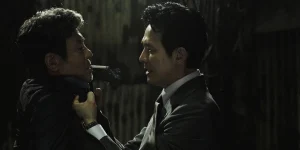
Key Scenes
- Sun-woo silently watching Hee-soo and her lover, deciding their fate
- The brutal basement beating sequence
- Sun-woo’s escape and return to the criminal underworld
- The final confrontation with Kang
Iconic Quotes
- “All I did was make one small mistake.”
- “Do you know what happiness is?”
- “Rules exist so people don’t have to think.”
Easter Eggs and Hidden Details
- Classical music selections subtly mirror Sun-woo’s emotional state
- Mirrors frequently appear before moments of moral choice
- The hotel represents order; every violent act happens outside it
Trivia
- The film helped launch Lee Byung-hun’s international career
- Quentin Tarantino has praised the movie publicly
- It is often cited as one of the most influential Korean noir films of the 2000s
Why Watch?
Watch A Bittersweet Life if you enjoy stylish revenge films that actually mean something. It’s not just about action—it’s about the price of dignity, obedience, and one human mistake. Beautifully shot, emotionally devastating, and unforgettable.
Director’s Other Works
- The Quiet Family (1998)
- A Tale of Two Sisters (2003)
- The Good, the Bad, the Weird (2008)
- I Saw the Devil (2010)
- The Age of Shadows (2016)