
Wings (1927) is a landmark in cinema history: the first film ever to win the Academy Award for Best Picture and one of the most ambitious silent films ever made. Set during World War I, it blends romance, rivalry, and large-scale aerial combat in a way that was revolutionary for its time.
Detailed Summary
Small-Town Beginnings and Rivalry
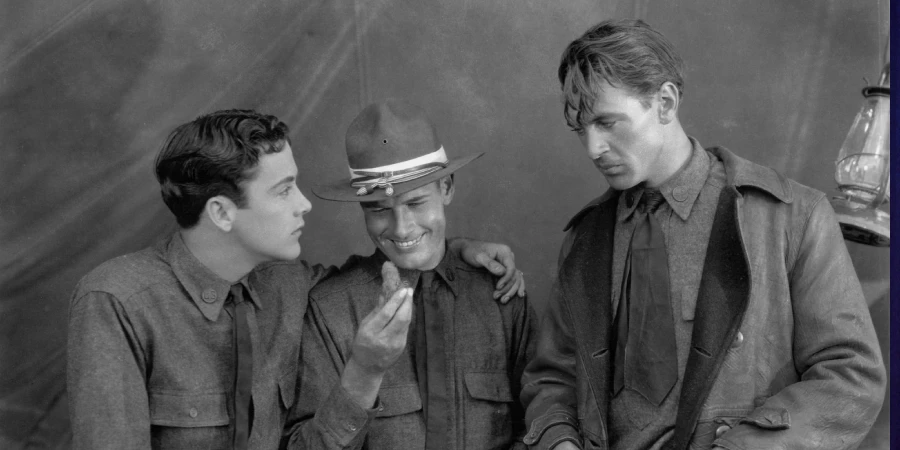
The story begins in a quiet American town where Jack Powell (Charles “Buddy” Rogers) and David Armstrong (Richard Arlen) are young men eager to become fighter pilots in World War I. Jack is confident and impulsive, while David is calm and disciplined. Both men are unknowingly connected through Mary Preston (Clara Bow), Jack’s devoted neighbor who secretly loves him. Jack, however, is infatuated with the glamorous Sylvia Lewis, who favors David.
This emotional triangle quietly fuels the rivalry that will follow them into war.
Training Camp and Brotherhood
Jack and David enlist and undergo grueling flight training. Despite their competition, they form a strong bond as fellow pilots. Mary joins the war effort as a volunteer driver, cutting her hair and disguising her heartbreak behind courage and humor. Her transformation subtly reflects how war reshapes everyone involved, not just those in the cockpit.
The Reality of War in the Air
Once deployed to France, the film shifts dramatically in tone. Wings becomes a visceral depiction of aerial warfare, with real planes, real pilots, and real danger. Dogfights are shown with unprecedented realism, emphasizing chaos, fear, and sudden loss. Friends die without warning, and heroism often comes at a terrible cost.
Jack’s recklessness earns him fame as a daring ace, while David’s quiet competence keeps him grounded. Their friendship survives, but tension remains beneath the surface.
Love, Loss, and Misunderstandings
Mary finally encounters Jack in France during a night of celebration. Disguised in a soldier’s uniform, she shares an intimate moment with him, though Jack does not realize who she truly is. This scene is both tender and tragic, as the audience understands what Jack does not: Mary has always been the one who truly loves him.


Movie Ending
The ending of Wings is emotionally devastating and unusually mature for its era. During a chaotic battle, David is shot down behind enemy lines but survives. He steals a German plane and attempts to return to Allied territory. Tragically, Jack spots the aircraft and mistakes it for an enemy fighter.
In a moment that defines the film’s tragic core, Jack shoots down the plane, only to discover too late that the pilot is David. As David lies dying, he forgives Jack, reaffirming their friendship in his final moments. This scene confronts the audience with the cruel irony of war: heroism and tragedy are often indistinguishable.
Jack returns home as a decorated hero, but his victory feels hollow. He visits David’s grieving parents, confessing the truth. Instead of hatred, they offer forgiveness, acknowledging that war, not Jack, is to blame.
The film closes with Jack finally recognizing Mary’s unwavering love. Their quiet embrace suggests healing, but not forgetting. The ending does not glorify war; instead, it leaves the audience reflecting on loss, guilt, and emotional survival.
Are There Post-Credits Scenes?
No. Wings predates the concept of post-credits scenes. The film ends definitively with its final emotional resolution.
Type of Movie
Wings is a war drama and romantic epic, combining large-scale military action with intimate personal tragedy. While patriotic on the surface, it ultimately presents a sobering, human-centered view of war.
Cast
- Charles “Buddy” Rogers as Jack Powell
- Richard Arlen as David Armstrong
- Clara Bow as Mary Preston
- Jobyna Ralston as Sylvia Lewis
- Gary Cooper as Cadet White (early career appearance)
Film Music and Composer
As a silent film, Wings was originally accompanied by live orchestral music. Later restorations included a synchronized score by J. S. Zamecnik, enhancing the emotional weight of aerial battles and intimate character moments.

Filming Locations
The film was shot primarily in Texas, especially around San Antonio, where vast open skies allowed realistic aerial combat scenes. Real U.S. Army pilots and aircraft were used, lending authenticity rarely seen even decades later. These locations were crucial in achieving the film’s groundbreaking realism.
Awards and Nominations
- Academy Award for Best Picture (1929)
- Academy Award for Best Engineering Effects
- Later recognized by the National Film Registry for cultural and historical significance
Behind the Scenes Insights
- Director William A. Wellman was a real World War I combat pilot, which heavily influenced the film’s realism.
- Actors were filmed in actual aircraft, with cameras mounted on planes mid-flight.
- Several dangerous stunts were performed without modern safety standards.
- Clara Bow’s short haircut symbolized changing roles for women during wartime.
Inspirations and References
The film was inspired by World War I aviation experiences and stories from real pilots. Wellman drew heavily from his own combat history, making Wings as much a personal reflection as a cinematic achievement.
Alternate Endings and Deleted Scenes
No alternate endings are known to exist. However, some character moments and training sequences were trimmed to maintain pacing due to the film’s already lengthy runtime.
Book Adaptations and Differences
Wings is not based on a novel but rather on an original story developed for the screen. Its realism sets it apart from more romanticized war stories common in literature at the time.

Memorable Scenes and Quotes
Key Scenes
- The first large-scale dogfight, filmed with real aircraft
- Mary’s emotional reunion with Jack in France
- David’s final moments and forgiveness
- Jack’s confession to David’s parents
Iconic Quotes
As a silent film, dialogue appears in intertitles. One of the most powerful lines is David’s final expression of forgiveness, emphasizing brotherhood over blame.
Easter Eggs and Hidden Details
- Real military insignias and authentic flight maneuvers are used throughout.
- Early use of handheld aerial camera techniques later adopted by modern war films.
- Gary Cooper’s brief appearance foreshadows his future stardom.
Trivia
- Wings was the most expensive film ever made at the time of its release.
- It took nearly two years to complete.
- The aerial sequences influenced films like Top Gun and Dunkirk decades later.
- One of the first films to feature a same-sex kiss, though subtly presented.
Why Watch?
If you care about film history, Wings is essential viewing. Beyond its technical achievements, it delivers a surprisingly emotional and anti-war message that still resonates. It is not just important; it is genuinely moving.
Director’s Other Works
- The Public Enemy (1931)
- A Star Is Born (1937)
- The Ox-Bow Incident (1943)
- Battleground (1949)
Recommended Films for Fans
- All Quiet on the Western Front (1930)
- The Big Parade (1925)
- Paths of Glory (1957)
- Dunkirk (2017)
- Top Gun: Maverick (2022)