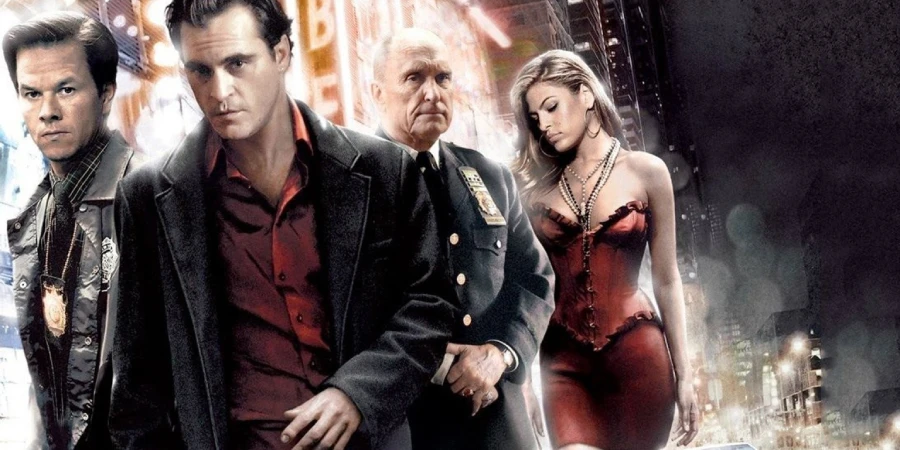
We Own the Night is a gritty, character-driven crime drama that dives deep into family loyalty, moral conflict, and the price of choosing a side. Directed by James Gray, the film stands out not for flashy action, but for its tense atmosphere, emotionally loaded performances, and tragic realism. This is not a glorified gangster movie; it’s a slow-burning descent into inevitability.
Detailed Summary
The World of Bobby Green
The story is set in late-1980s New York City, a time when the city was overwhelmed by drugs, corruption, and violent crime. Bobby Green lives comfortably outside the law as the manager of a popular Russian-owned nightclub in Brooklyn. He enjoys money, status, and freedom, deliberately distancing himself from his family and their values.
What Bobby tries to ignore is that his family is deeply embedded in law enforcement. His father is a respected deputy police chief, and his younger brother is a rising police officer. Bobby even uses a different last name to keep his worlds separate. This emotional and ideological split is the film’s backbone.
Family Ties and Rising Tensions
As the police begin cracking down on Russian drug traffickers, Bobby’s club comes under scrutiny. Although he claims ignorance, his environment makes him an indirect participant in criminal activity. The tension escalates when his brother Joseph is involved in a police operation targeting the Russian mob.
The film carefully shows how Bobby’s neutrality becomes impossible. He is forced to confront the consequences of staying on the sidelines while benefiting from a criminal ecosystem.
Betrayal, Violence, and Consequences
Things take a brutal turn when a failed police operation results in a devastating ambush. This moment becomes a turning point for Bobby, pushing him out of denial and into action. The violence is sudden, realistic, and emotionally devastating rather than stylized.
Bobby agrees to cooperate with the police, a decision that places him directly in danger and permanently alters his identity. The underworld he once navigated with ease now becomes hostile, and trust evaporates on all sides.
The Cost of Choosing Sides
As Bobby works with law enforcement, he realizes that there is no clean redemption. Every choice comes with loss, and loyalty is tested repeatedly. His transformation is not heroic; it’s painful, reluctant, and deeply human.
Movie Ending
In the final act, Bobby fully commits to helping the police dismantle the Russian drug operation. The climax involves a tense pursuit that ends with Bobby directly confronting the man responsible for orchestrating the attacks on his family.
The confrontation is not triumphant. When Bobby kills the antagonist, it is portrayed as an act of grim necessity rather than victory. There is no sense of satisfaction—only exhaustion and loss. The violence has cost him his former life, his sense of self, and much of his innocence.
The film closes with Bobby graduating from the police academy, officially becoming a law enforcement officer like his father and brother. However, the final images make it clear that this is not a happy ending. Bobby has gained purpose, but lost freedom. He has chosen order over chaos, but at the expense of the life he once loved. The cycle continues, and the badge feels more like a burden than a reward.
Are There Post-Credits Scenes?
No. We Own the Night does not include any post-credits or mid-credits scenes. The story ends definitively with the final shot.
Type of Movie
We Own the Night is a serious crime drama with strong elements of tragedy and psychological tension. It focuses more on internal conflict and moral consequence than traditional action or spectacle.
Cast
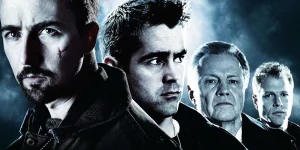
- Joaquin Phoenix as Bobby Green
- Mark Wahlberg as Joseph Grusinsky
- Robert Duvall as Burt Grusinsky
- Eva Mendes as Amada Juarez
- Alex Veadov as Vadim Nezhinski
Film Music and Composer
The score was composed by Wojciech Kilar, whose music emphasizes atmosphere over melody. The soundtrack uses low, ominous tones to reflect the film’s emotional weight and sense of impending doom, perfectly matching James Gray’s somber visual style.
Filming Locations
The film was shot primarily in New York City, including Brooklyn and Queens. These real locations give the movie a raw authenticity. The grim streets, rain-soaked highways, and dim interiors reinforce the film’s themes of moral darkness and urban decay. New York is not just a setting; it feels like a silent, oppressive character.
Awards and Nominations
- Nominated for the Palme d’Or at the Cannes Film Festival (2007)
- Praised by critics for performances and direction, though it remained underrepresented in major awards circuits
The film gained more appreciation over time, especially among fans of serious crime dramas.
Behind the Scenes Insights
- James Gray drew inspiration from real-life police and criminal dynamics he witnessed growing up in New York
- Joaquin Phoenix immersed himself deeply into the character, intentionally avoiding traditional “hero” traits
- The rain-soaked car chase scene was filmed practically, making it one of the most technically challenging sequences
- Robert Duvall reportedly helped shape the father-son dynamic through improvisation during rehearsals
Inspirations and References
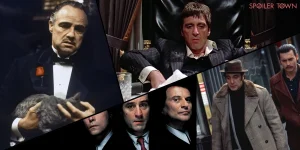
- Influenced by classic crime films like The Godfather and Serpico
- Rooted in James Gray’s recurring themes of family, fate, and masculinity
- Reflects real 1980s New York drug wars without glamorization
Alternate Endings and Deleted Scenes
No alternate ending has been officially released. However, several character-driven scenes involving Bobby’s relationship with Amada were trimmed to maintain the film’s tight, somber pacing. These cuts focused the narrative more firmly on family and moral conflict.
Book Adaptation and Differences
The film is not based on a book. It is an original screenplay, though its tone and structure resemble literary crime dramas rather than conventional Hollywood scripts.
Memorable Scenes and Quotes
Key Scenes
- The rain-drenched highway ambush, one of the most intense moments in the film
- Bobby’s interrogation sequence, where fear and guilt collide
- The final graduation scene, quietly devastating in its restraint
Iconic Quotes
- “You can’t be half a gangster, Bobby.”
- “The streets don’t love you back.”
- “You don’t choose your family. You choose what you become.”
Easter Eggs and Hidden Details
- Bobby’s use of a different last name subtly foreshadows his identity crisis
- The nightclub music choices reflect the emotional tone of each scene
- Police radio chatter references real NYPD procedures from the era
Trivia
- The title comes from a real quote attributed to corrupt police culture in 1980s New York
- Joaquin Phoenix and Mark Wahlberg intentionally avoided bonding off-camera to heighten tension
- The film is often considered the second part of James Gray’s unofficial “New York tragedy trilogy”
Why Watch?
If you enjoy intelligent, emotionally heavy crime films that prioritize character over action, this movie is for you. It doesn’t comfort the viewer or offer easy catharsis. Instead, it asks difficult questions about loyalty, identity, and the cost of doing the “right” thing.
Director’s Other Movies
- Little Odessa (1994)
- The Yards (2000)
- Two Lovers (2008)
- The Immigrant (2013)
- The Lost City of Z (2016)
- Ad Astra (2019)