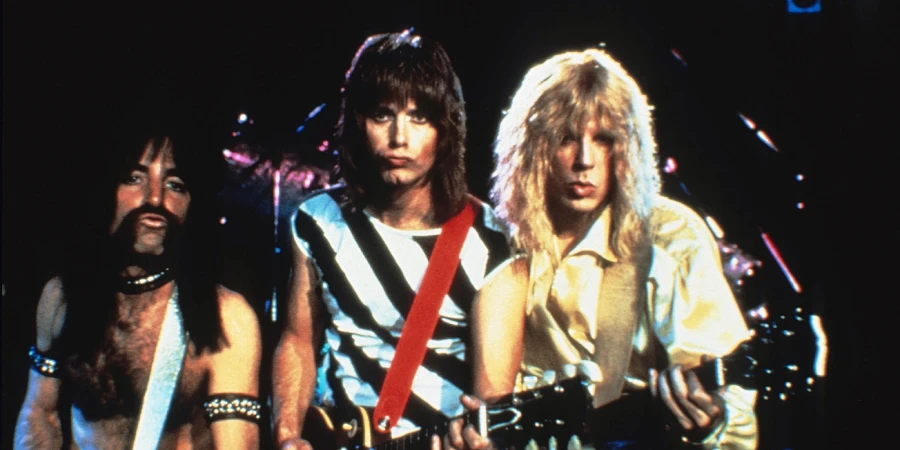

This Is Spinal Tap is one of the most influential comedies ever made. Released in 1984 and directed by Rob Reiner, the film didn’t just parody rock bands—it redefined how mockumentaries work. Many people initially thought it was a real documentary, which might be the highest compliment the movie could receive.
Detailed Summary
Opening: A Band Too Loud for Reality
The film presents itself as a serious documentary following Spinal Tap, an English heavy metal band on a U.S. tour to promote their album Smell the Glove. Director Marty DiBergi (played by Rob Reiner) introduces the band with complete sincerity, immediately setting up the joke: everyone treats nonsense with total seriousness.
From the start, the band members—Nigel Tufnel, David St. Hubbins, and Derek Smalls—display a deep lack of self-awareness, especially when discussing their musical “evolution” and past drummers (many of whom died in bizarre accidents).
The Amplifier That Goes to 11
One of the most famous scenes in film history occurs when Nigel proudly shows off his amplifier that goes to 11 instead of 10. This moment perfectly encapsulates the movie’s humor: technical ignorance presented as innovation. It also became a permanent phrase in pop culture.
Creative Disasters and Ego Collisions
As the tour continues, everything goes wrong:
- Album artwork is censored
- Venues get smaller
- Stage props malfunction (including a tiny Stonehenge)
- Band members argue over credit, lyrics, and sandwiches
Despite the chaos, the band remains convinced of their own brilliance. The film excels at showing how self-delusion fuels both creativity and destruction.
Band Dynamics and Silent Breakups
Nigel, the lead guitarist, grows increasingly frustrated with David’s leadership and the band’s lack of artistic direction. Their arguments feel painfully real, mirroring genuine band documentaries—just pushed slightly into absurdity.
Nigel eventually quits the band mid-tour, delivering one of the film’s most unexpectedly emotional moments.

Movie Ending
The film’s final act leans into bittersweet irony.
After Nigel leaves, Spinal Tap continues as a diminished version of itself, now playing second-tier gigs and festival side stages. David and Derek appear resigned to mediocrity, still convinced the band will bounce back.
Then comes the twist.
Spinal Tap is unexpectedly hugely successful in Japan, where their music is embraced without irony. Nigel rejoins the band, tensions are instantly forgotten, and the group performs to massive crowds.
The ending deliberately avoids character growth. Nothing is learned. Nothing is resolved. Instead, the band’s survival depends entirely on luck and misplaced confidence. The joke is clear: failure and success in the music industry often have nothing to do with talent or self-awareness.
Are There Post-Credits Scenes?
No. This Is Spinal Tap does not feature post-credits scenes. However, many of the film’s funniest moments feel improvised enough that they play like bonus footage, which is why later home releases included extensive deleted scenes and commentary tracks.
Type of Movie
This Is Spinal Tap is a mockumentary comedy that satirizes rock documentaries, heavy metal culture, and artistic ego. It blends improvisational humor with documentary realism so effectively that it permanently changed comedic filmmaking.
Cast
- Christopher Guest as Nigel Tufnel
- Michael McKean as David St. Hubbins
- Harry Shearer as Derek Smalls
- Rob Reiner as Marty DiBergi
- June Chadwick as Jeanine Pettibone
- Tony Hendra as Ian Faith
Film Music and Composer
The music was written and performed by Christopher Guest, Michael McKean, and Harry Shearer. What makes the soundtrack special is that every song is intentionally terrible in a very believable way. The band’s music perfectly mimics real rock subgenres while subtly exaggerating their worst tendencies.

Filming Locations
- Los Angeles, California
- Various concert venues and sound stages
These locations are crucial because they mimic real tour conditions, adding to the documentary illusion. Nothing looks “designed”—everything looks accidental, cramped, or poorly managed, which enhances the realism.
Awards and Nominations
- Nominated for BAFTA Best Original Screenplay
- Later inducted into numerous “Greatest Comedies of All Time” lists
The film’s true recognition came years later, as its influence became undeniable.
Behind the Scenes Insights
- Nearly 40% of the dialogue was improvised
- The actors created full backstories for their characters before filming
- Many viewers initially believed Spinal Tap was a real band
- Real musicians (including Ozzy Osbourne) later said the film was uncomfortably accurate
Inspirations and References
- Real rock documentaries like The Song Remains the Same
- British Invasion bands
- 1970s heavy metal excess
- Director Rob Reiner’s background in observational comedy
Alternate Endings and Deleted Scenes
There is no known alternate ending, but several deleted scenes exist:
- Extended interviews with band members
- Additional drummer death explanations
- Longer arguments between Nigel and David
These scenes were cut to maintain pacing but are included in special editions.
Book Adaptations and Differences
The film is not based on a book, but it later inspired:
- The Return of Spinal Tap (1992 TV special)
- Break Like the Wind (1992 album)
- Back from the Dead (2009 album)


Memorable Scenes and Quotes
Key Scenes
- The “amplifier goes to 11” explanation
- The Stonehenge stage disaster
- Nigel quitting the band
- The Japanese comeback performance
Iconic Quotes
- “These go to eleven.”
- “It’s such a fine line between stupid and clever.”
- “I’m not about to have someone tell me I’m not allowed to use a classical composer.”
Easter Eggs and Hidden Details
- Album titles parody real rock clichés
- Drummer deaths mirror exaggerated real-life rock tragedies
- Band logos subtly change throughout the film, reflecting identity confusion
Trivia
- The film was added to the U.S. National Film Registry
- Many real bands reference the movie in interviews
- “Turn it up to 11” entered the dictionary as a recognized phrase
Why Watch?
If you enjoy smart comedy, music history, or character-driven humor, this film is essential. It’s funny on the surface and brutally insightful underneath, especially for anyone familiar with creative industries.
Director’s Other Works (Movies)
- The Sure Thing (1985)
- Stand by Me (1986)
- The Princess Bride (1987)
- When Harry Met Sally (1989)
- Misery (1990)
- A Few Good Men (1992)
Recommended Films for Fans
- Best in Show (2000)
- Waiting for Guffman (1996)
- A Mighty Wind (2003)
- Teacher of the Year (2014)
- Walk Hard: The Dewey Cox Story (2007)
- Airheads (1994)
- Popstar: Never Stop Never Stopping (2016)