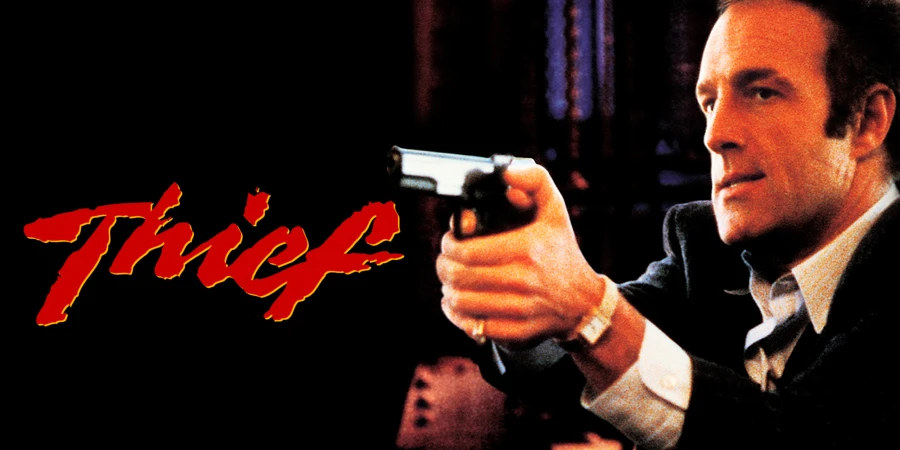

Thief is the feature film debut of director Michael Mann, and it immediately announced his distinctive cinematic style: sleek night photography, professional criminals with strict codes, and an obsession with the psychology of men living on the edge. The film stars James Caan as Frank, a professional safecracker trying to leave the criminal world behind after one last big score.
Often considered one of the defining neo-noir crime films of the 1980s, Thief blends intense character drama with meticulous depictions of professional crime.
Detailed Summary
Frank: A Professional with a Plan
Frank is a master safecracker in Chicago who runs a legitimate front business selling luxury cars. He is not a chaotic criminal; he’s methodical, disciplined, and extremely skilled. Frank only works high-end jobs and operates with a strict personal code.
His dream is simple: one last score, then retirement with a normal life. He keeps a symbolic collage of his goals—money, a wife, a family, and freedom. This collage becomes a recurring visual motif in the film.
The Big Offer from Leo
Frank’s skill attracts the attention of powerful crime boss Robert Prosky, who plays Leo. Leo offers Frank access to massive heists and promises to fund his retirement dream.
Frank accepts, believing this is his chance to secure the money he needs quickly. At the same time, he begins building a life outside crime by marrying Jessie, played by Tuesday Weld, and adopting a child.
For a brief moment, Frank seems to have everything he wanted.
The System Closes In
The deal with Leo turns out to be a trap.
Leo begins exerting control over Frank’s life, treating him less like a partner and more like property. He insists that Frank must continue working for him indefinitely. Leo even manipulates Frank’s personal life, claiming authority over his family and future.
Frank realizes something terrifying: he hasn’t bought freedom. He has sold it.
Frank’s Breaking Point
Frank refuses to live under anyone’s control. In one of the film’s most intense confrontations, he tells Leo exactly what he thinks of him and rejects the entire arrangement.
At this point Frank makes a drastic decision. Instead of trying to escape quietly, he systematically destroys everything tying him down.
He blows up his business, abandons the life he built, and prepares for a violent confrontation with Leo and his organization.

Movie Ending
The final act of Thief is bleak, intense, and uncompromising.
After realizing Leo will never allow him to walk away, Frank decides to erase the life he built under Leo’s control. In a symbolic act of liberation, he destroys his legitimate businesses, effectively burning the bridge back to the life he hoped for.
Frank also tells Jessie and his adopted child to leave him. This moment is emotionally brutal: he pushes away the family he fought so hard to build because he knows his life has become too dangerous for them.
Once completely untethered, Frank prepares for war.
Armed and alone, he begins hunting Leo’s men. The film’s final sequence unfolds as a violent nighttime assault on Leo’s compound. Frank methodically eliminates the guards and criminals protecting Leo.
Eventually, Frank confronts Leo directly. Leo pleads and attempts to manipulate Frank again, but this time Frank is finished with him. He kills Leo, ending the control the crime boss had over him.
However, victory is hollow. Frank walks away into the Chicago night alone, having destroyed his business, lost his family, and burned every connection to his former life.
The film ends with Frank disappearing into the darkness, free but completely isolated. The question left hanging is whether freedom without anything to live for is truly freedom.
Are There Post-Credits Scenes?
No. Thief (1981) does not include any post-credits or mid-credits scenes. The film ends definitively with Frank walking alone into the night.
Type of Movie
Thief is a neo-noir crime drama with elements of psychological character study and procedural realism. The film focuses less on action spectacle and more on the mindset and professional ethics of a career criminal.
Cast
- James Caan – Frank
- Tuesday Weld – Jessie
- Robert Prosky – Leo
- Willie Nelson – Okla
- Jim Belushi – Barry
Film Music and Composer
The score was composed by the German electronic music group Tangerine Dream.
Their synthesizer-heavy soundtrack gives the film a hypnotic, dreamlike tone and became one of the earliest examples of the electronic neo-noir sound that later influenced many crime films of the 1980s and beyond.



Filming Locations
The movie was shot primarily in Chicago, and the city is essential to the film’s atmosphere.
Important aspects of the location:
- Industrial Chicago streets emphasize the gritty realism of Frank’s world
- Nighttime cityscapes filled with neon lights create the film’s iconic visual style
- Real jewelry stores and safe systems were used to ensure authenticity in heist scenes
Michael Mann insisted on realism, even consulting real professional thieves to accurately portray safecracking techniques.
Awards and Nominations
While Thief was not a major awards contender at the time, it has since gained strong critical recognition and is widely regarded as an influential crime film.
Notable recognition includes:
- Critical acclaim for cinematography and direction
- Frequent inclusion in retrospectives on neo-noir cinema
- Strong cult status among crime film enthusiasts
Behind the Scenes Insights
- Michael Mann consulted real-life professional thieves to ensure accurate safecracking techniques.
- One of the consultants was actual burglar John Santucci, who later appears in the film as a police officer.
- The safe-cracking scenes were filmed with real tools and authentic procedures, not Hollywood shortcuts.
- The film helped define Michael Mann’s visual style: night photography, reflective city lights, and professional criminals with strict codes.
- James Caan reportedly spent time learning actual safecracking methods to make his performance convincing.
Inspirations and References
The film is based on the novel The Home Invaders by Frank Hohimer.
The book drew heavily from real-life criminal experiences, which is why the film’s depiction of burglary techniques feels unusually authentic.
Alternate Endings and Deleted Scenes
No widely documented alternate ending exists, but several scenes were trimmed during editing.
Notable removed material includes:
- Additional scenes showing Frank’s criminal network
- Extended character moments with Jessie that deepened their relationship
- Longer procedural details in the heist planning
These cuts helped keep the film tightly focused on Frank’s internal conflict.
Book Adaptations and Differences
While inspired by The Home Invaders, the film diverges in several ways.
Key differences include:
- The novel focuses more heavily on burglary teams and criminal networks.
- The movie centers much more on Frank’s psychology and desire for independence.
- Michael Mann added the powerful theme of the criminal seeking the American Dream.

Memorable Scenes and Quotes
Key Scenes
- The opening diamond heist sequence, showing Frank’s meticulous safecracking.
- Frank explaining his dream life using the collage he keeps in his wallet.
- The emotionally raw diner conversation where Frank persuades Jessie to marry him.
- The explosive scene where Frank destroys his own business to reclaim control of his life.
- The final nighttime assault on Leo’s compound.
Iconic Quotes
Frank’s confrontation with Leo is filled with memorable lines.
One of the most famous:
- “I am the last guy in the world you want to fuck with.”
Another defining moment occurs when Frank declares his independence and rejects Leo’s control entirely, a speech that encapsulates the film’s theme of freedom versus ownership.
Easter Eggs and Hidden Details
- The safecracking tools used in the film were real professional equipment, not props.
- Many background characters were played by actual Chicago locals.
- The film’s heavy use of neon reflections and nighttime city shots became a visual blueprint for later Michael Mann films.
- The character Okla, played by Willie Nelson, reflects a mentor archetype common in classic noir films.
Trivia
- This was Michael Mann’s first theatrical feature film.
- The movie helped launch Mann’s reputation for hyper-realistic crime storytelling.
- James Caan considers Frank one of his most complex roles.
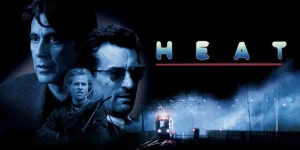
- The film’s visual style influenced later Mann projects like Heat and Collateral.
- Tangerine Dream recorded the score while watching rough cuts of the film.
Why Watch?
Thief is essential viewing for anyone interested in crime cinema.
It stands out because it treats crime as a profession rather than an adventure, showing the discipline, paranoia, and personal cost behind the lifestyle. Combined with Michael Mann’s atmospheric visuals and James Caan’s intense performance, the film remains one of the most influential neo-noir movies ever made.
Director’s Other Works (Movies)
Other notable films by Michael Mann:
- Manhunter (1986)
- The Last of the Mohicans (1992)
- Heat (1995)
- The Insider (1999)
- Ali (2001)
- Collateral (2004)
- Miami Vice (2006)
- Public Enemies (2009)
- Blackhat (2015)
- Ferrari (2023)
Recommended Films for Fans
If you enjoyed Thief, you’ll likely appreciate these similarly styled crime films: