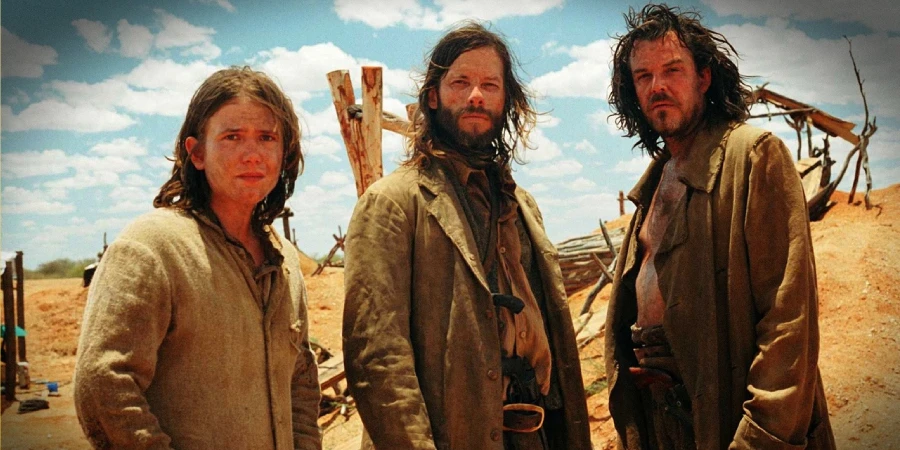

The Proposition (2005), directed by John Hillcoat and written by musician Nick Cave, is a grim, atmospheric, and emotionally raw Australian Western. Set in the scorching outback of the 1880s, it blends brutality with haunting beauty, exploring morality, loyalty, and the collapse of “civilization” in a landscape where survival often trumps ethics.
Detailed Summary
Opening: The Gang’s Downfall
The story begins with a fierce shootout between the Burns brothers’ gang and the police in a remote Australian town. Charlie Burns (Guy Pearce) and his younger brother Mikey (Richard Wilson) are captured, while their older brother Arthur Burns (Danny Huston), the most violent and feared of the trio, escapes.
Captain Morris Stanley (Ray Winstone), desperate to restore order in the region, offers Charlie a grim deal:
Find and kill Arthur within nine days, and Mikey will be pardoned.
If he fails, Mikey will be hanged on Christmas Day.
Charlie’s Reluctant Mission
Charlie sets out into the brutal outback, torn between love for his innocent younger brother and horror at Arthur’s crimes. Meanwhile, Captain Stanley struggles with pressure from his superiors and the town’s bloodthirsty citizens, all of whom demand harsh punishment for the Burns gang.
Settler Violence and Cruel Justice
As Stanley attempts to impose his version of “civilization,” tension rises in town. These scenes emphasize the film’s central theme: who is more savage—the criminals or the so-called lawmen?
Mikey endures imprisonment and brutal beatings, becoming a symbol of how the system crushes the vulnerable. Stanley’s wife Martha (Emily Watson), representing gentility and order, is increasingly horrified by the violence creeping into their lives.
Arthur Burns: Poet and Monster
Charlie eventually encounters Arthur, who is calm, articulate, and oddly philosophical despite his horrific past. His gang—more like a small band of feral poets—lives in harmony with the outback, yet commits atrocities with chilling ease.
Arthur’s charismatic menace raises the film’s central moral dilemma:
Can someone be both gentle and monstrous?

Movie Ending
Charlie ultimately refuses to kill Arthur while they are in the wilderness. Arthur, meanwhile, decides to visit the Stanleys’ home on Christmas Day—knowing full well that he is walking into the heart of the society that condemns him.
Inside the Stanley home, as Martha and Captain Stanley attempt to celebrate Christmas with forced normalcy, Arthur and his gang invade. They viciously beat Stanley and plan to rape Martha, fully exposing the hypocrisy of the “civilized” world.
Charlie arrives at the last critical moment. In the climax:
- Charlie kills Samuel, one of Arthur’s gang members.
- Charlie shoots Arthur, ending his brother’s reign of terror.
- As Arthur dies, he forgives Charlie with a tragic calmness, saying he knew Charlie would kill him eventually.
The film ends in a quiet, unsettling stillness:
Charlie and Mikey (wounded and dying) walk away from the house, leaving behind both civilization and savagery. Stanley and Martha survive, but forever changed.
The final images force the viewer to confront the film’s thesis:
Violence creates no heroes—only survivors.
Are There Post-Credits Scenes?
No. The Proposition does not include a post-credits or mid-credits scene. The film ends on its stark, contemplative final note without any additional footage.
Type of Movie
The Proposition is a gritty, atmospheric Australian Western blending historical drama with psychological tension. It is known for its poetic writing, stark violence, and moral ambiguity.
Cast
- Guy Pearce as Charlie Burns
- Ray Winstone as Captain Morris Stanley
- Danny Huston as Arthur Burns
- Emily Watson as Martha Stanley
- John Hurt as Jellon Lamb
- David Wenham as Eden Fletcher
- Richard Wilson as Mikey Burns
Film Music and Composer
The film’s haunting score was composed by Nick Cave and Warren Ellis. The soundtrack is minimalist, raw, and emotionally piercing, using violin, sparse guitar, and eerie vocal textures to echo the loneliness and brutality of the outback.
Filming Locations
The Proposition was filmed primarily in Winton, Queensland, and other harsh regions of the Australian outback.
The landscape is not merely a backdrop but a character in itself:
- The scorching deserts emphasize isolation and lawlessness.
- The vast emptiness heightens the film’s meditative tone.
- The harsh sunlight and dust highlight the moral corrosion of every character.
The authenticity of location filming is part of why the film feels so immersive and unsettling.
Awards and Nominations
- AFI Awards (Australia): Won several categories, including Best Cinematography and Best Musical Score
- IF Awards: Multiple wins for production, acting, and writing
- Australian Film Critics Association: Best Film
The movie was especially praised for its visuals and its soundtrack.
Behind the Scenes Insights
- Nick Cave originally wrote The Proposition as a novel before turning it into a screenplay.
- Director John Hillcoat and Cave frequently collaborated, including on Ghosts… of the Civil Dead.
- Guy Pearce lost significant weight to enhance Charlie’s gaunt, weary appearance.
- The cast and crew endured extreme heat during filming, often exceeding 45°C.
- Many scenes were shot far from towns, requiring long daily commutes across the desert.
- Danny Huston based his performance partly on 19th-century bushranger poetry and folklore.
- The town set was built in the middle of nowhere to avoid any modern visual interference.
Inspirations and References
- Inspired by Australian bushranger history, especially the moral gray areas in frontier justice.
- Influenced by Ned Kelly legends and the violent struggles between settlers and Indigenous Australians.
- Stylistically draws from Once Upon a Time in the West and McCabe & Mrs. Miller, especially in its atmospheric pacing.
- Nick Cave’s lyrical, poetic writing reflects the tone of his music and previous literary work.
Alternate Endings and Deleted Scenes
While the film did not have drastically different alternate endings, several extended scenes were removed for pacing, including:
- A longer version of the torture sequence involving Mikey.
- Additional dialogue between Charlie and Arthur discussing their childhood.
- A brief scene fleshing out Martha’s emotional trauma after the attack.
These scenes were trimmed to maintain the film’s deliberate, meditative rhythm.
Book Adaptations and Differences
The film is not directly based on a novel, though Nick Cave’s script was initially drafted with novel-like detail. Some novelistic elements—such as extended inner monologue and character backstories—were pared down for the final film, leaving the screenplay more visual and minimalist.
Memorable Scenes and Quotes
Key Scenes
- The brutal opening shootout in the dusty shack.
- Charlie wandering the desolate outback, hallucinating from exhaustion.
- Arthur’s philosophical conversation under the blood-red sunset.
- Mikey’s devastating imprisonment and beating—one of the film’s most emotional moments.
- The shocking Christmas Day confrontation in the Stanley home.
Iconic Quotes
- “I will civilize this land.” – Captain Stanley
- “You’ve been sent to kill me, have you?” – Arthur Burns
- “What are you gonna do now, Charlie?”
- “I’m afraid I must refuse.” – Charlie’s quiet moral stand
Easter Eggs and Hidden Details
- The Burns brothers loosely resemble real outlaw families such as the Kellys.
- The number of days Charlie is given—nine—symbolizes biblical trials and moral tests.
- Subtle Indigenous mythology references appear in small details (e.g., paintings, landscapes).
- Arthur’s poetic speech patterns echo Nick Cave’s songwriting style.
Trivia
- The film is often cited as one of the greatest Australian movies ever made.
- Nick Cave wrote the script in just three weeks.
- Ray Winstone’s hat was based on archival photos of real frontier police.
- The film revitalized the Australian Western genre for modern audiences.
Why Watch?
Because The Proposition is not just a Western—it’s a lyrical, brutal, morally complex meditation on violence, loyalty, and the attempt to “civilize” the uncivilizable.
Its combination of poetic writing, unforgettable performances, stark beauty, and haunting music makes it one of the most powerful films of the 2000s.
If you appreciate cinema that challenges you and lingers long after the credits end, this film is essential.
Director’s Other Movies
- Ghosts… of the Civil Dead (1988)
- The Road (2009)
- Lawless (2012)
- Triple 9 (2016)
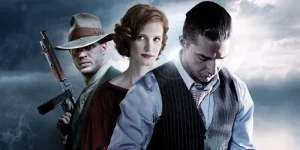
- The King (2019) – producer