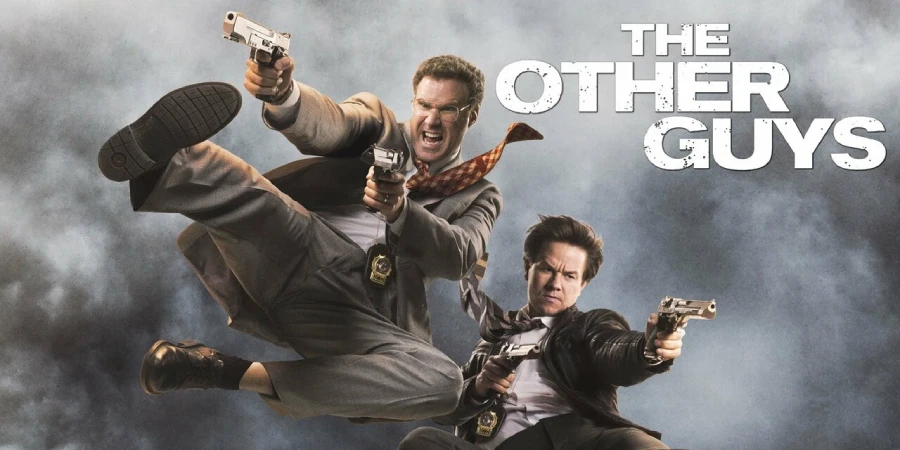

Adam McKay’s 2010 buddy-cop action comedy The Other Guys flips the cop genre on its head, replacing classic tough heroes with two hilariously incompetent office dwellers who stumble into a financial conspiracy. The film stars Will Ferrell and Mark Wahlberg as a mismatched duo in the NYPD who learn that sometimes the biggest crimes are committed in quiet offices, not on dangerous streets.
Detailed Summary
The Supercops and the Paperwork Guys
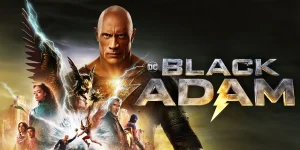
The film opens with NYPD’s celebrity cops, Highsmith and Danson (Samuel L. Jackson and Dwayne Johnson), who are adored by the city and celebrated as action-packed heroes. Meanwhile, Allen Gamble (Will Ferrell) and Terry Hoitz (Mark Wahlberg) are stuck doing desk work. Allen loves paperwork; Terry is still recovering from a career disaster after mistakenly shooting baseball player Derek Jeter.
The Fall of Fame, Rise of the Nobodies
After Highsmith and Danson die in a reckless stunt gone wrong, the police department needs new heroes. The ambitious Terry wants to take their place, but Allen wants to stay with his spreadsheets. When they stumble upon financial irregularities linked to a shady billionaire investor, Sir David Ershon (Steve Coogan), their boring careers suddenly become dangerous.
Becoming Real Detectives
The more they dig, the more they uncover a complex corruption scheme involving government funds, big Wall Street players, and political deals. As the mystery deepens, Terry discovers that Allen has a secret past as a pimp, and Allen discovers that Terry is capable of leadership and bravery despite his anger issues. Their unlikely partnership becomes real, driven by common frustration and the pursuit of justice.
The Final Fight (and Public Truth)
The investigation puts them up against corrupt corporations, greedy executives, and indifferent government officials who protect money over justice. As the conspiracy threatens to destroy millions of dollars in pension funds, Allen and Terry fight to expose the truth.

Movie Ending
The movie concludes with Allen and Terry finally taking down Ershon’s corrupt financial operation after a chaotic final confrontation on Wall Street. They manage to gather evidence and expose the scheme to the public, but the ending makes a bold statement: despite their success, the criminals don’t truly suffer. The stolen money is replaced by taxpayers, proving that rich institutions always protect their own.
Allen regains confidence, Terry finds redemption in his career, and both finally become respected detectives. Still, the closing credits feature real-life economic statistics about financial corruption, bailout scandals, and executive bonuses, showing that the cycle continues. The comedic ending is layered with a dark truth: corruption in finance isn’t easily defeated, not even by heroes.
Are There Post-Credits Scenes?
There is no comedic or story-related post-credits scene, but during the credits, the film displays real economic corruption data, highlighting the real-world parallels of the plot. Although not a traditional scene, it serves as a powerful conclusion.
Type of Movie
This is a buddy-cop action comedy that blends satire with investigative crime elements, poking fun at both police hero tropes and financial corruption.
Cast
- Will Ferrell as Allen Gamble
- Mark Wahlberg as Terry Hoitz
- Eva Mendes as Sheila
- Steve Coogan as David Ershon
- Samuel L. Jackson as Highsmith
- Dwayne Johnson as Danson
- Michael Keaton as Captain Gene Mauch
Film Music and Composer
The score was composed by Jon Brion, known for his melodic yet quirky soundtracks. The movie also includes music from bands like Foo Fighters and a heavy use of hip-hop and classic rock, emphasizing its over-the-top tone.


Filming Locations and Their Importance
- New York City, USA
The entire narrative revolves around Wall Street corruption, so the authentic NYC backdrop heightens the satire. Real financial buildings and downtown police offices provide the film a sense of grounded realism beneath its comedic surface.
Awards and Nominations
While the movie didn’t dominate awards ceremonies, it gained critical praise for its satire and was nominated at comedy-focused awards show categories including Best Comedy Duo recognitions for Ferrell and Wahlberg. Its cult popularity has grown over time, especially for its financial commentary.
Behind the Scenes Insights
- Mark Wahlberg trained with real police officers to mimic aggressive NYPD behavior.
- Will Ferrell based Allen’s personality on a real accountant obsessed with paperwork.
- Michael Keaton’s character works part-time at Bed Bath & Beyond as a satirical joke about underpaid public workers with leadership roles.
- Adam McKay worked with economists to insert real corruption facts into the credits.
Inspirations and References
- Inspired partly by real Wall Street scandals and the 2008 financial crisis.
- Parodies classic action cop films like Lethal Weapon and Bad Boys.
- Allen’s past as a pimp is a satire of the “unexpected dark past” trope common in detective films.
Alternate Endings and Deleted Scenes
- A deleted scene showed Terry becoming a motivational speaker after solving the case.
- Another cut scene featured Allen reconnecting with old pimp associates, which was removed for tone consistency.
- Multiple improvised takes exist for the Bed Bath & Beyond scenes, but only a few made the final cut.
Book Adaptations and Differences
The film is not based on a book, but it does reference real economic reports. The statistics shown during the credits are pulled from actual documented financial records.

Memorable Scenes and Quotes
Key Scenes
- Highsmith and Danson jumping off a building in their “aim for the bushes” moment.
- Terry learning about Allen’s former life as a pimp called “Gator.”
- The chaotic accounting meeting chase scene.
- Allen confronting Wall Street executives with paperwork as his weapon.
Iconic Quotes
- “Aim for the bushes.”
- “I’m a peacock! You gotta let me fly!”
- “Gator needs his gat, you punk-ass bitches.”
- “You turned my wife into a prostitute! She’s a biologist!”
Easter Eggs and Hidden Details
- Captain Gene unintentionally quotes TLC songs throughout the film.
- Allen’s Prius represents how “minor crimes are punished harder than corporate ones.”
- The mayor’s cameo implies government complicity in corruption.
Trivia
- The Prius used in the film became famous and was auctioned after release.
- McKay directed while researching global financial crime, influencing his later movies.
- Wahlberg improvised many angry lines, leading Ferrell to laugh on set repeatedly.
Why Watch?
Because it’s not just funny, it’s a sharp satire dressed as a buddy-cop comedy. It offers action, ridiculous humor, surprising social commentary, and two lead performances that complement each other with perfect chaotic chemistry.
Director’s Other Movies
- Anchorman: The Legend of Ron Burgundy (2004)
- Talladega Nights: The Ballad of Ricky Bobby (2006)
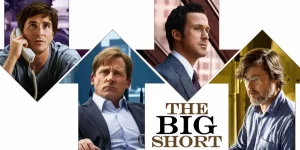
- The Big Short (2015)
- Vice (2018)