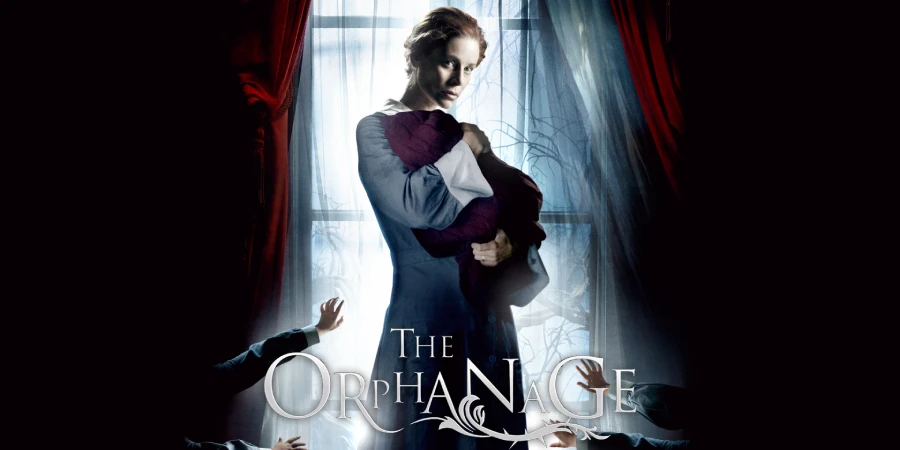

The Orphanage (Spanish: El Orfanato) is a 2007 Spanish gothic-horror drama directed by J.A. Bayona and produced by Guillermo del Toro. Known for its haunting atmosphere and emotional weight, the film blends supernatural mystery with a deeply human story about loss, motherhood, and memory.
Detailed Summary
Laura’s Return to the Orphanage
The film begins with Laura, who grew up in an orphanage before being adopted. Now an adult, she returns to the same location with her husband Carlos and adopted son Simón, intending to reopen it as a home for disabled children. Simón’s imagination is rich and vibrant, and he soon begins talking to invisible friends, one of whom he calls “Tomas.”
Simón’s Medical Secret and Laura’s Frustration
Laura learns a painful truth: Simón is HIV-positive and unaware of his illness. She plans to tell him “one day,” but Simón reveals he already knows—from his “friends.” This adds early tension and emotional uncertainty to Laura’s relationship with her son.
The Birthday Party and Simón’s Disappearance
During a party at the orphanage, Simón vanishes. Before disappearing, he leads Laura into a hidden area of the house, but she is distracted, and Simón becomes lost. Laura later encounters a masked child wearing a burlap sack over his head—a disturbing, iconic figure who pushes her into the bathroom. When she recovers, Simón is gone.
The Police Investigation and Paranormal Activity
As the police search for leads, paranormal events intensify. Laura becomes convinced the children who once lived in the orphanage—some with tragic pasts—are trying to show her something. She hires a medium who performs one of the film’s most chilling sequences: contacting spirits in the dark, discovering that the orphaned children were poisoned decades earlier.
Laura’s Descent into Memory and Truth
Driven by grief and guilt, Laura begins recreating the orphanage as it was when she lived there—old beds, toys, wallpaper—hoping it will coax the spirits to communicate. The supernatural clues grow stronger, drawing Laura toward a devastating revelation.



Movie Ending
The ending is one of the most emotionally devastating in horror cinema.
After following clues left by the spirits, Laura discovers a hidden basement room behind the closet—the same place Simón tried to show her on the day he disappeared. Inside, she finds Simón’s corpse, wearing the same clothes he had on when he vanished.
She realizes the horrifying truth:
- When Laura was trapped in the bathroom after being attacked by the masked “Tomas,” she inadvertently blocked the hidden room’s entrance.
- Simón, who had gone inside to play, fell down the stairs, broke his neck, and died alone, trapped behind the door that Laura unknowingly sealed.
Overcome with grief, Laura gently takes Simón’s body into her arms. She decides to remain in the room, taking a massive dose of sedatives. As she slips away, she begins to “see” the orphanage children alive again, greeting her warmly. Simón appears and takes her hand.
The message isn’t ambiguous: Laura dies, joining Simón and the other children in the afterlife, finally giving them the love and attention they were denied in life. It’s both tragic and strangely peaceful.
Carlos later finds a small memorial Laura created with the children’s names and belongings. A door opens behind him, suggesting that the spirits remain present—but no malevolent threat is implied.
Are There Post-Credits Scenes?
No.
There is no post-credits scene in The Orphanage. The film ends definitively with Carlos’s discovery and the subtle implication of ongoing spiritual presence.
Type of Movie
This is a gothic supernatural horror-drama that emphasizes emotional storytelling as much as scares. It’s less about monsters and more about grief, loss, and psychological unease.
Cast
- Belén Rueda as Laura
- Fernando Cayo as Carlos
- Roger Príncep as Simón
- Montserrat Carulla as Benigna
- Géraldine Chaplin as Aurora (the medium)
Film Music and Composer
The haunting and melancholic score was composed by Fernando Velázquez, whose orchestral themes amplify the film’s blend of terror and tenderness. His music in the final scenes is especially powerful and widely praised.

Filming Locations
- Lloret de Mar, Catalonia, Spain
The coastal house used as the orphanage is central to the film’s atmosphere—isolated, decaying, and filled with history. - Asturias, Northern Spain
Several exterior scenes were shot here to capture the misty, cold, and rugged landscapes that thematically mirror Laura’s emotional turmoil.
These locations contribute heavily to the film’s gothic tone, grounding the supernatural elements in a familiar, haunted European aesthetic.
Awards and Nominations
- Won 7 Goya Awards, including Best New Director and Best Original Screenplay.
- Nominated for Best Spanish Language Film at the Ariel Awards.
- Screened at Cannes and received standing ovations.
The film became one of Spain’s most successful horror exports.
Behind the Scenes Insights
- J.A. Bayona almost turned down the movie, believing the script was “too emotional” for a horror director—del Toro convinced him otherwise.
- Belén Rueda insisted on rehearsing many scenes multiple times to get the emotional beats right, especially the ending.
- The beach scenes were filmed under harsh weather; the crew could barely keep equipment from sinking into the sand.
- The mask design for Tomas went through dozens of versions; the final look was inspired by abandoned carnival dolls.
Inspirations and References
- Inspired by the comic-style gothic atmosphere of Guillermo del Toro’s own early works, especially The Devil’s Backbone.
- The emphasis on childhood trauma and memory draws on classic ghost stories such as The Turn of the Screw.
- Thematically influenced by Peter Pan, with Simón as a child who “never grows up,” and the orphanage children echoing the Lost Boys.
Alternate Endings and Deleted Scenes
- Early drafts included a more explicit “ghost reunion” scene showing Laura playing with the children, but Bayona cut it to maintain subtlety.
- A deleted scene showed Benigna’s past in more detail, explaining her relationship with Tomas, but it was removed for pacing.
- There was talk of an alternate ending where Carlos also sees Simón’s ghost, but the final version chose a quieter, more ambiguous note.
Book Adaptations and Differences
The film is not based on a book, but it often feels literary. A novelization was later released, but it follows the movie closely and adds only internal monologues—not major plot differences.

Memorable Scenes and Quotes
Key Scenes
- The hide-and-seek knocking game (“Un, dos, tres, toca la pared”) which becomes one of the scariest moments in the film.
- The medium’s séance sequence—shot in near darkness with grainy night-vision vibes.
- Laura recreating the orphanage exactly as it was decades earlier.
- The discovery of the hidden basement room and Simón’s fate.
Iconic Quotes
- “Seeing is not believing. It’s the other way around.”
- “I loved you so much, Simón.”
- “You’re not real.” “Yes I am.”
Easter Eggs and Hidden Details
- Tomas’s mask resembles antique European sack masks used by children during festivals—a nod to Spain’s folklore.
- The locket worn by Laura in flashbacks subtly reappears in background shots before her final death, indicating spiritual influence.
- In the séance scene, the children’s whispers include fragments of songs Spanish orphans used to sing in the 1970s.
Trivia
- Guillermo del Toro joined as producer after loving the script in Spanish—he refused an English-language remake pitch.
- Belén Rueda was terrified of basements; the final scene required over 30 takes because she kept panicking.
- The orphanage itself was rumored to be haunted, and multiple crew members reported hearing “footsteps” during night shoots.
Why Watch?
Because The Orphanage delivers emotionally rich horror—the kind that scares you not with jump scares, but with atmosphere, empathy, and the unsettling idea that the past always lingers. Few horror films manage to be both terrifying and heartbreaking. This one does.
Director’s Other Movies
- The Impossible (2012)
- A Monster Calls (2016)
- Jurassic World: Fallen Kingdom (2018)
- Society of the Snow (2023)
Recommended Films for Fans
- The Devil’s Backbone (2001)
- The Others (2001)
- Hereditary (2018)
- Mama (2013)