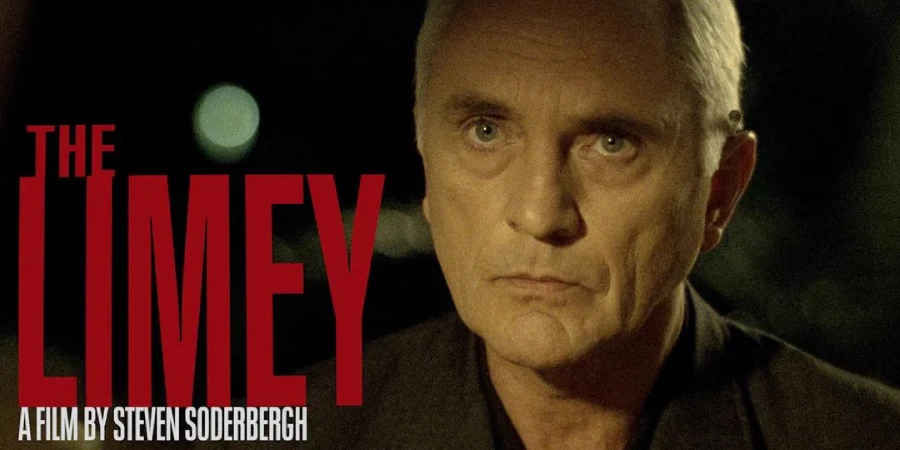

Steven Soderbergh’s The Limey is a gritty revenge thriller fueled by its raw emotional tension, razor-sharp editing, and a haunting performance by Terence Stamp. The film blends neo-noir storytelling with experimental visuals, creating a crime drama that’s as reflective as it is explosive.
Detailed Summary
A Father Arrives in America
British ex-con Wilson (Terence Stamp) travels to Los Angeles after learning that his estranged daughter Jenny has died in a mysterious “accident.” Wilson, haunted by guilt over missing most of her life due to prison time, believes something far darker led to her death.
Searching for Answers
Wilson tracks down people who knew Jenny, including her friend Eduardo. He learns Jenny had been involved with Terry Valentine (Peter Fonda)—a wealthy, sleazy music producer with ties to criminal activity. Valentine used her, discarded her, and may have had her killed. Wilson’s investigation turns increasingly violent as he tries to confront those responsible.
A Past That Can’t Be Escaped
Through flashbacks, including footage from Terence Stamp’s 1960s film Poor Cow (used as Wilson’s memories), we understand Wilson’s remorse and criminal past. His rage is fueled not only by vengeance but by the life he wasted away from his daughter. These flashbacks serve as emotional anchors, blurring memory and reality.
From Grief to Retribution
Wilson storms through Valentine’s world with a fierce, almost unstoppable brutality—torturing and intimidating everyone who might help him. The more he digs, the more corrupt Valentine appears, but even criminal allies don’t want Wilson around. He becomes a raw force shredding through a quiet L.A. crime ecosystem.
Movie Ending
Wilson finds Valentine resting at a cliff-side Malibu mansion, protected by hired killers. After an intense standoff, Wilson corners him. Valentine panics, tries to escape, and falls to his death from the cliff.
In this moment, Wilson could have killed him outright, yet Valentine’s fearful accident reflects the emptiness of vengeance. Wilson does not feel satisfaction. There’s no triumphant resolution.
Wilson returns to London, sitting quietly on a plane, reflecting on Jenny’s life through fragmented memories. He’s still a broken man, still haunted, but by the end he finally acknowledges his grief rather than running from it. His vengeance achieved nothing truly healing. The film closes on a somber, reflective note rather than punishment or closure.
Are There Post-Credits Scenes?
No, The Limey does not have a post-credits scene. Once the credits roll, the story is fully complete—there is no teaser or epilogue.
Type of Movie
The Limey is a neo-noir crime thriller with a strong emotional core, blending revenge drama with an experimental, non-linear editing style that heightens memory and guilt.
Cast
- Terence Stamp as Wilson
- Peter Fonda as Terry Valentine
- Lesley Ann Warren as Elaine
- Luis Guzmán as Eduardo Roel
- Barry Newman as Avery
- Joe Dallesandro as Uncle John
Film Music and Composer
The soundtrack features atmospheric music composed by Cliff Martinez, known for his minimalist, ambient electronic style. The film also heavily incorporates 1960s and 1970s rock influences, enhancing Valentine’s connection to a decaying, nostalgic version of Los Angeles.

Filming Locations
Primarily shot around Los Angeles, California, including:
- Malibu cliffs: Used for Valentine’s final sequence, symbolizing privilege and isolation.
- Downtown LA warehouses: Reflecting gritty criminal underworlds.
- Hollywood Hills homes: Contrasting luxury with moral decay.
These locations are not mere backdrops; they visually express the divide between power and desperation.
Awards and Nominations
While not a major awards contender, the film gained strong critical acclaim and later achieved cult status. Terence Stamp’s performance was especially praised in critic circles, and the film is often discussed in academic and filmmaking studies for its editing style.
Behind the Scenes Insights
- Soderbergh used footage from Poor Cow (1967) to portray Wilson’s younger years, giving the character real cinematic history.
- Terence Stamp improvised several lines, including the memorable threat about “telling them I’m coming.”
- Luis Guzmán originally worried Stamp’s intensity might be “too real,” adding tension to their scenes together.
- Peter Fonda modeled Valentine partly on aging, narcissistic music executives from the 70s.
Inspirations and References
- Based loosely on revenge crime tropes, but heavily inspired by 1960s British working-class cinema.
- The film’s structure echoes European experimental editing and minimalist noir.
- Valentine represents the corrupt Californian dream, echoing classic noir characters of Hollywood’s darker side.
Alternate Endings and Deleted Scenes
- Soderbergh has mentioned alternate edits rather than alternate endings; the film was re-cut multiple times for pacing and emotional rhythm.
- Some deleted scenes expanded Valentine’s business operations but were removed to keep him symbolic rather than detailed.
Book Adaptations and Differences
The Limey is not based on a book. It is an original screenplay by Lem Dobbs, though it draws from familiar noir archetypes.
Memorable Scenes and Quotes
Key Scenes
- Wilson interrogating a thug by smashing his face into a table repeatedly.
- Valentine’s panicked escape ending in his fall.
- Wilson walking calmly into a gunfight, speaking instead of shooting.
- Flashback memories intercut during the airplane sequence.
Iconic Quotes
- “Tell him I’m coming!”
- “You came here and you screwed up. You upset the system.”
- “There’s no use talking. You can’t talk to me.”
Easter Eggs and Hidden Details
- The Poor Cow footage makes Wilson not just a character, but a cinematic life lived.
- Soderbergh deliberately keeps Valentine’s guilt ambiguous until the end, mirroring real-world systems of criminal privilege.
- Wilson’s non-stop movement reflects his inability to process grief unless forced to stop.
Trivia
- Lem Dobbs famously criticized Soderbergh’s editing publicly, despite the film’s success.
- Stamp’s career revival after this film led to major roles in the 2000s.
- The film uses repeated audio loops during fight sequences, emphasizing rage rather than action choreography.
Why Watch?
Because The Limey offers more than revenge—it offers regret, memory, and the painful cost of a wasted life, wrapped in razor-sharp filmmaking and an unforgettable lead performance. It’s both stylish and emotionally devastating.
Director’s Other Works
- Sex, Lies, and Videotape (1989)
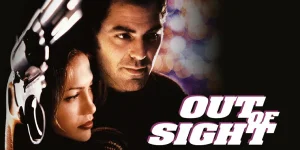
- Out of Sight (1998)
- Traffic (2000)
- Ocean’s Eleven (2001)
- Che (2008)
- Contagion (2011)
- Side Effects (2013)