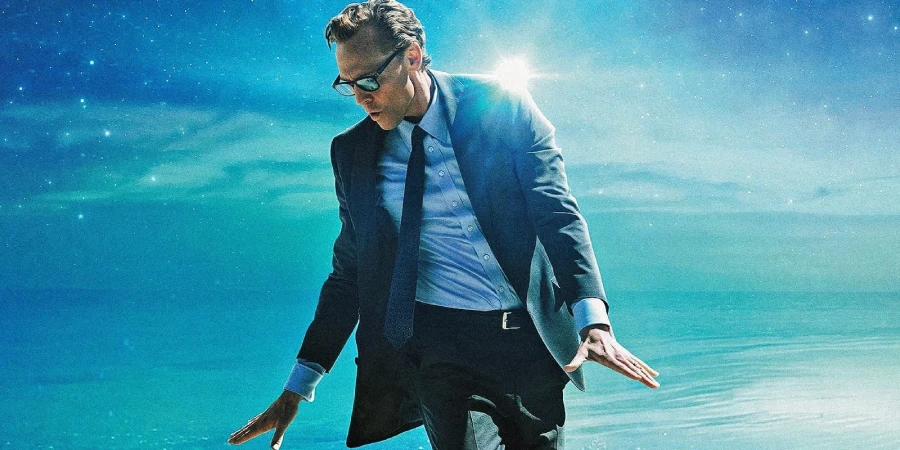
The Life of Chuck (2024) is a deeply emotional, philosophical, and quietly powerful adaptation of Stephen King’s novella from If It Bleeds. Directed by Mike Flanagan, the film explores life, death, memory, and meaning in a structure that deliberately moves backward in time. It is not a horror film in the traditional sense, but rather an intimate meditation on existence itself.
Detailed Summary
Act III – The World Is Ending
The film opens with what appears to be a global apocalypse. Earth is unraveling: natural disasters escalate, the internet collapses, and entire regions lose power. Amid the chaos, mysterious billboards and advertisements appear everywhere bearing the message:
“Charles Krantz. 39 Great Years. Thanks, Chuck.”
No one knows who Chuck is or why he’s being thanked.
Marty Anderson, a schoolteacher, and his ex-wife Felicia, a nurse, attempt to make sense of the collapsing world. News broadcasts disappear one by one. Entire continents go dark. As reality deteriorates, Chuck’s name continues to appear in skywriting, radio signals, and digital glitches.
Eventually, the universe fades into silence.
The implication becomes clear: the world is not literally ending.
It is ending from Chuck’s perspective.
Act II – The Middle of Life
The film jumps backward to several years earlier.
Chuck Krantz is alive and seemingly ordinary. He works as an accountant, lives alone, and maintains a polite, quiet existence. One afternoon, he encounters a spontaneous street performance where a drummer begins playing. Chuck suddenly joins in, dancing with surprising joy and precision.
This moment becomes one of the emotional cores of the film.
For a brief time, Chuck feels fully alive. Strangers gather. Music fills the street. The world seems infinite.
Afterward, Chuck collapses. He is diagnosed with a terminal illness. Though devastated, he accepts his fate with calm dignity, continuing his routine while quietly preparing for death.
This section emphasizes one of the film’s key ideas:
A single joyful moment can outweigh years of routine.
Act I – Childhood and Foundations
The final act moves back to Chuck’s childhood.
After the death of his parents, young Chuck is raised by his grandparents. His grandfather is warm but emotionally closed. His grandmother is loving yet terrified of one place in the house: the locked attic.
She insists Chuck must never open it.
Despite warnings, Chuck eventually enters the attic and experiences a vision of his own death, glimpsing time not as linear but as layered and infinite. This traumatic moment shapes his understanding of mortality from an early age.
Throughout his youth, Chuck shows a strong aptitude for numbers and accounting, but also a deep love for dance and music, passions he suppresses as he grows older.
The film suggests that Chuck’s entire inner universe was built in childhood, and everything afterward merely echoed outward from those early experiences.

Movie Ending
The film ends with Chuck as a young boy, long before illness, adulthood, or fear take hold.
We see him dancing freely in the school gym, joyful and unafraid. The voiceover explains that every human being contains an entire universe inside them. Memories, love, fear, and imagination form galaxies of meaning.
When Chuck eventually dies decades later, his inner universe collapses. That collapse is what the audience witnessed at the beginning of the film as the “end of the world.”
The ending reveals that:
- The apocalypse was symbolic, not literal
- The universe we saw was Chuck’s consciousness
- The billboards were his mind saying goodbye
- His life, though seemingly ordinary, was complete and meaningful
The final message is clear and haunting:
A life does not need to be famous, heroic, or extraordinary to matter.
Chuck lived 39 years.
And those years contained everything.
Are There Post-Credits Scenes?
No. There are no mid-credit or post-credit scenes. The film ends definitively, allowing its emotional weight to settle without interruption.
Type of Movie
The Life of Chuck is a philosophical drama with supernatural elements. It blends existential storytelling with emotional realism, focusing on human consciousness rather than traditional plot-driven tension.
Cast
- Tom Hiddleston – Charles “Chuck” Krantz
- Jacob Tremblay – Young Chuck
- Mark Hamill – Albie Krantz (grandfather)
- Chiwetel Ejiofor – Marty Anderson
- Karen Gillan – Felicia Gordon
- Mia Sara – Sarah Krantz (grandmother)
- Matthew Lillard – supporting role
Film Music and Composer
The score was composed by The Newton Brothers, longtime collaborators of Mike Flanagan.
The music is minimalist and emotional, relying on piano and soft orchestration rather than horror cues. It reinforces the film’s themes of memory, nostalgia, and impermanence.
Filming Locations
- Alabama, USA
- Vancouver, Canada
These locations were chosen for their quiet suburban landscapes, which emphasize the ordinariness of Chuck’s life. The film intentionally avoids iconic landmarks to reinforce the idea that this story could belong to anyone.
Awards and Nominations
- Toronto International Film Festival 2024 – People’s Choice Award (Winner)
- Saturn Awards – Best Fantasy Film (Nominee)
- Critics Choice Awards – Best Adapted Screenplay (Nominee)
The film was widely praised for its emotional impact and unconventional narrative structure.
Behind the Scenes Insights
- Mike Flanagan wrote the screenplay during the COVID-19 lockdown.
- Stephen King personally approved the script with minimal changes.
- Tom Hiddleston trained extensively for the dance sequence himself.
- The dance scene was filmed in long takes with minimal CGI.
- The film was shot chronologically backward to help actors emotionally align with the story.
Inspirations and References
- Stephen King’s novella The Life of Chuck
- Existential philosophy, particularly Albert Camus
- Terrence Malick’s The Tree of Life
- Ray Bradbury’s humanistic science fiction
- Buddhist concepts of impermanence
Alternate Endings and Deleted Scenes
Several deleted scenes expanded Chuck’s adult relationships and workplace life, but were removed to maintain pacing.
An alternate ending showed the attic vision more explicitly, but Flanagan chose ambiguity to preserve emotional resonance rather than explanation.
Book Adaptation and Differences
While highly faithful, the film makes several changes:
- The novella is more abstract and fragmented.
- The movie adds emotional continuity between timelines.
- Supporting characters receive expanded arcs.
- The cosmic imagery is visualized rather than implied.
The film softens some of the book’s ambiguity while strengthening its emotional clarity.
Memorable Scenes and Quotes
Key Scenes
- The spontaneous street dance sequence
- The first appearance of the “Thanks, Chuck” billboard
- The attic vision of death
- The quiet hospital farewell
- The final childhood gymnasium scene
Iconic Quotes
- “The universe is large. And it contains multitudes.”
- “You don’t fear death. You fear being forgotten.”
- “A life can be small and still infinite.”
Easter Eggs and Hidden Details
- The number 39 appears repeatedly throughout the film.
- A bookstore briefly displays several Stephen King titles.
- The radio broadcast countdown mirrors Chuck’s age.
- The attic clock always ticks backward.
- The final gym scene matches a line from the novella word-for-word.
Trivia
- This is Mike Flanagan’s first Stephen King adaptation without horror emphasis.
- Tom Hiddleston called it the most personal role of his career.
- The film uses no jump scares whatsoever.
- The opening apocalypse sequence contains fewer than 20 spoken lines.
- Chuck appears in every timeline, but not always physically.
Why Watch?
Because this film reminds viewers that:
Every life matters, even the quiet ones.
It is not about saving the world.
It is about understanding that you already are a world.
If you enjoy reflective cinema that stays with you long after the credits roll, this film is unforgettable.
Director’s Other Works
- Oculus (2013)
- Hush (2016)
- Gerald’s Game (2017)
- Doctor Sleep (2019)
- The Haunting of Hill House (2018, series)
- The Haunting of Bly Manor (2020, series)
- Midnight Mass (2021, series)