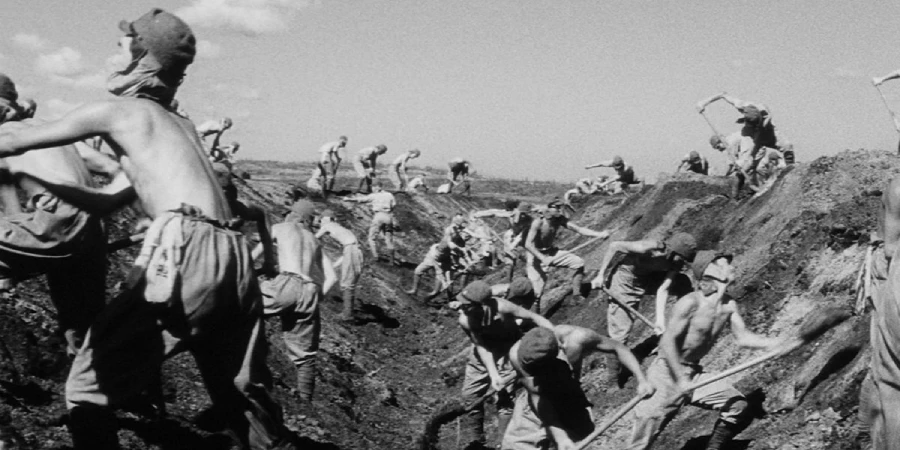

The Human Condition II: Road to Eternity is the second chapter of Masaki Kobayashi’s monumental anti-war trilogy. Released in 1959, the film continues the moral and psychological descent of its protagonist Kaji, pushing him deeper into the machinery of war and confronting him with humanity at its breaking point. Darker, harsher, and emotionally heavier than the first film, this chapter strips away idealism and replaces it with survival, guilt, and existential despair.
Detailed Summary
From Idealist to Soldier
The film begins immediately after the events of No Greater Love. Kaji, once a civilian trying to preserve moral integrity within a labor camp system, is now forcibly drafted into the Japanese Imperial Army.
Unlike his earlier role as a supervisor, he is no longer protected by rank or ideology. He becomes an ordinary soldier subjected to humiliation, violence, and strict military hierarchy. The transition marks the first major turning point of the film.
Kaji’s pacifist beliefs clash violently with the army’s brutal discipline, where blind obedience is valued above life itself.
Military Brutality and Dehumanization
Training sequences dominate the early portion of the film and are intentionally exhausting to watch. Soldiers are beaten routinely. Officers assert authority through fear, not leadership.
Kaji refuses to abuse weaker recruits, which immediately brands him as dangerous and subversive.
This section emphasizes one of the film’s central themes:
war does not merely kill people, it systematically destroys morality.
Punishments are arbitrary, survival depends on submission, and empathy is treated as weakness.
The Soviet Front and Collapse of Order
As Japan begins losing the war, Kaji’s unit is sent to the Manchurian front to confront advancing Soviet forces. The battlefield is chaotic, poorly organized, and filled with desperation.
The Japanese army is shown not as heroic but as collapsing from within. Officers abandon troops. Supplies vanish. Orders contradict reality.
During combat, Kaji witnesses mass death, suicides, and executions carried out not by the enemy but by Japanese commanders attempting to avoid surrender.
This section portrays war as institutional madness rather than conflict between nations.
Retreat and Moral Disintegration
Following defeat, the army begins a disastrous retreat through frozen wilderness. Hunger, exposure, and fear claim more lives than bullets.
Here, Kaji’s internal struggle intensifies. He must choose between survival and principle on a daily basis.
Soldiers steal from civilians. Some commit murder for food. Others descend into animalistic behavior.
Kaji repeatedly intervenes to prevent atrocities, but every act of resistance pushes him further toward isolation.
He becomes both morally superior and utterly powerless.
Capture by the Soviets
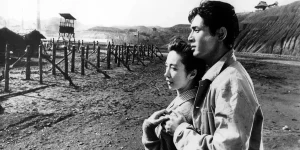
Eventually, Kaji and the remaining survivors are captured by Soviet forces.
Contrary to expectations, the Soviets are not portrayed as monsters. Instead, they appear bureaucratic, indifferent, and pragmatic. Yet captivity brings new suffering: forced marches, ideological pressure, and starvation.
Kaji refuses to betray fellow prisoners even when promised better treatment.
At this point, the film fully transforms from war drama into philosophical tragedy.

Movie Ending
The final section of Road to Eternity is emotionally devastating and deliberately unresolved.
After enduring brutal imprisonment, Kaji becomes severely ill and malnourished. Despite his physical collapse, his moral resistance remains intact. He continues to protect weaker prisoners and refuses to abandon human dignity, even when it clearly endangers his life.
As the prisoners are marched across the snowy plains toward an uncertain destination, Kaji collapses repeatedly. Fellow prisoners attempt to help him, but the guards show no mercy.
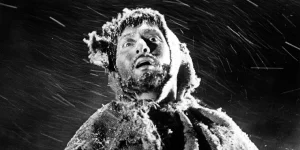
In the final moments, Kaji wanders away from the marching line, delirious and barely conscious. He speaks of returning home to his wife Michiko, clinging to memories of warmth and humanity.
He collapses alone in the snow.
The film ends without confirmation of death, but the imagery is unmistakable. The endless white landscape swallows him completely.
The viewer is left with deeply unsettling questions:
Did Kaji die because he refused to compromise?
Was moral purity possible in war, or was it always doomed?
Is survival itself a form of betrayal?
The ending offers no comfort, only the chilling suggestion that in an inhuman system, humanity itself may not survive.
Are There Post-Credits Scenes?
No. The film ends definitively with no post-credits or additional scenes.
Type of Movie
The Human Condition II: Road to Eternity is a historical war drama and psychological tragedy that functions as both an anti-war statement and a philosophical examination of human morality under extreme oppression.
Cast
- Tatsuya Nakadai as Kaji
- Michiyo Aratama as Michiko
- Keiji Sada as Sergeant Obara
- Tatsuya Ishiguro as Lieutenant Yoshida
- Akira Ishihama as Private Nishimura
Film Music and Composer
The score was composed by Toru Takemitsu, one of Japan’s most influential modern composers.
Rather than traditional melodic themes, the music relies on silence, dissonance, and minimalist tension. Often, the absence of music is more powerful than sound, reinforcing the emotional emptiness of war.

Filming Locations
The film was shot primarily in Hokkaido, Japan.
Its harsh winter landscapes were essential to the film’s realism. The endless snowfields visually represent isolation, despair, and the erasure of individuality.
The environment itself becomes an antagonist, mirroring the emotional desolation of the characters.
Awards and Nominations
- Mainichi Film Award – Best Actor (Tatsuya Nakadai)
- Blue Ribbon Award – Best Film nomination
- Kinema Junpo Awards – Top Ten Films of the Year
Although not widely recognized internationally at the time, the trilogy later gained global acclaim as one of the greatest achievements in Japanese cinema.
Behind the Scenes Insights
- Masaki Kobayashi was himself a former soldier who refused promotion during WWII due to ethical objections.
- The director considered the trilogy a personal apology for Japan’s wartime actions.
- Tatsuya Nakadai lost significant weight during filming to reflect physical deterioration.
- Many extras were actual former soldiers.
- Shooting conditions in Hokkaido were so severe that several crew members suffered frostbite.
Inspirations and References
- Based on the novel Ningen no Jōken by Junpei Gomikawa
- Influenced by Kobayashi’s personal wartime experiences
- Reflects post-war Japanese existential philosophy
- Shares thematic similarities with Dostoyevsky and Tolstoy’s moral writings
Alternate Endings and Deleted Scenes
No alternate ending has ever been released.
Several scenes depicting deeper Soviet camp life were removed to reduce runtime, but the final ending remained unchanged, as Kobayashi insisted the film must conclude in moral ambiguity rather than resolution.
Book Adaptations and Differences
While faithful to Gomikawa’s novel, the film simplifies some political discussions and focuses more heavily on Kaji’s internal psychology.
The novel contains extended ideological debates, whereas the film emphasizes emotional experience and visual suffering.
The core message remains identical: war makes ethical existence nearly impossible.



Memorable Scenes and Quotes
Key Scenes
- Kaji refusing to beat a subordinate during training
- The mass retreat through frozen terrain
- Soldiers turning on each other for food
- The silent march of prisoners through snow
- Kaji collapsing alone at the film’s end
Iconic Quotes
- “If this is obedience, then humanity has no meaning.”
- “To live without justice is worse than death.”
- “War does not make men brave. It only reveals what they truly are.”
Easter Eggs and Hidden Details
- Repeated imagery of footsteps in snow symbolizes erased identity
- Officers are often framed above soldiers to emphasize power imbalance
- Civilian homes appear warm and lit, contrasting with military darkness
- The absence of music increases as Kaji loses hope
Trivia
- The trilogy’s total runtime exceeds nine hours.
- Tatsuya Nakadai later called Kaji the most exhausting role of his career.
- Martin Scorsese has cited the trilogy as a major influence.
- The film was controversial in Japan due to its open criticism of the Imperial Army.
Why Watch?
You should watch The Human Condition II: Road to Eternity if you want:
- One of the most uncompromising anti-war films ever made
- A deeply philosophical exploration of morality under tyranny
- A performance that charts the slow destruction of idealism
- Cinema that refuses easy answers or emotional comfort
This is not entertainment. It is confrontation.
Director’s Other Works (Movies)
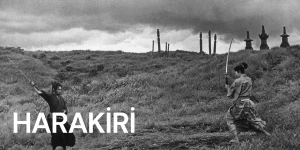
- Harakiri (1962)
- Kwaidan (1964)
- Samurai Rebellion (1967)
- The Inheritance (1962)
- Black River (1957)
Recommended Films for Fans
- The Human Condition I: No Greater Love (1959)
- The Human Condition III: A Soldier’s Prayer (1961)
- Fires on the Plain (1959)
- Come and See (1985)
- Paths of Glory (1957)
- Ivan’s Childhood (1962)