
More than just a poker movie, The Cincinnati Kid is a simmering study of ambition, pride, and the brutal truth that sometimes, being the best is not enough. It presents a world where legends are not simply beaten; they must be survived. Ultimately, it poses a timeless question: what happens when undeniable talent collides with unshakable experience?
Detailed Summary
The Kid Comes to Town
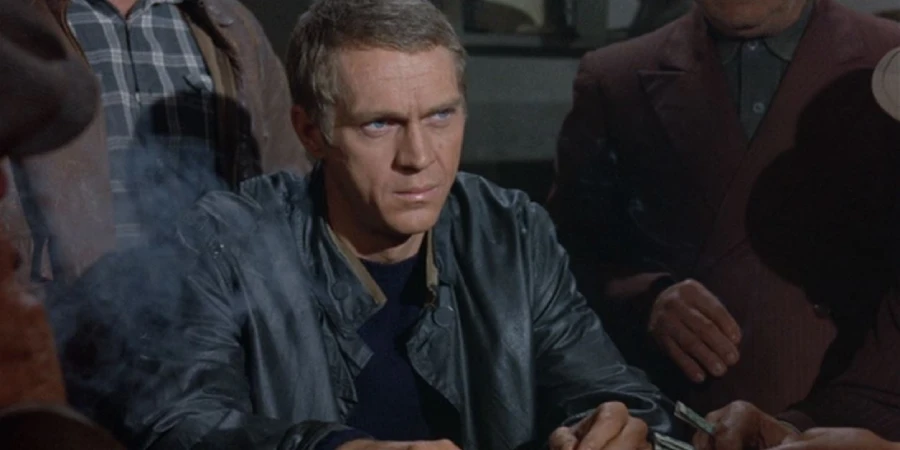
In the heart of Depression-era New Orleans, a gifted young poker player named Eric Stoner, known as “The Kid” (Steve McQueen), has built a formidable reputation. He moves from one backroom game to the next, confidently dispatching local challengers. Consequently, his ambition grows far beyond these small-time victories.
The Kid wants to prove he is the absolute best. To do that, he must take on the living legend of five-card stud, Lancey “The Man” Howard (Edward G. Robinson), an old master who is visiting the city for a series of high-stakes games.
Challenging The Man
The Kid uses his connections, including his friend and fellow cardsharp Shooter (Karl Malden), to arrange a private, marathon game against Lancey. Shooter is respected for his integrity as a dealer, a quality that makes him the ideal choice to oversee the big match. Meanwhile, the Kid navigates his relationship with his wholesome girlfriend, Christian (Tuesday Weld).
However, complications arise immediately. A wealthy and ruthless local gentleman named Slade (Rip Torn) holds a grudge against Lancey and wants to see him ruined. He pressures Shooter, who is deep in debt to him, to cheat in the Kid’s favor during the big game.
Pressure and Betrayal
Shooter is torn between his professional honor and Slade’s dangerous threats. Slade’s scheme is further complicated by Shooter’s flirtatious wife, Melba (Ann-Margret), who attempts to seduce the Kid. She serves as a distraction and a temptation, testing the Kid’s focus before the biggest game of his life.
The Kid rejects both Melba’s advances and Slade’s offer to fix the game. He is adamant that he must beat The Man straight up, without any help. His pride demands a clean victory to legitimize his claim as the new king of poker.
The Final Showdown
The marathon poker game begins, lasting for over thirty grueling hours. Players come and go, but the core battle remains between the Kid’s youthful aggression and The Man’s composed, experienced play. The tension is immense, with fortunes swinging back and forth on the turn of a card.
During a break, the Kid discovers that Shooter has been dealing him favorable cards, succumbing to Slade’s pressure. Enraged, the Kid confronts Shooter and demands a new dealer, insisting on winning or losing on his own terms. A neutral dealer takes over for the final, legendary hand.

Movie Ending
In the final hand of the marathon game, an astronomical pot builds on the table. The Kid holds a full house, Aces over Tens—an almost unbeatable hand. Confident in his victory, he pushes all his remaining money into the pot, forcing Lancey Howard to match him.
Lancey calmly considers the bet, then looks the Kid in the eye and calls. The Kid triumphantly lays down his full house. In response, Lancey slowly reveals his own hand: a Queen-high straight flush. The Man has won. The Kid is completely wiped out, his ambition crushed by an improbable, statistically staggering loss.
Shamed and defeated, Eric Stoner leaves the hotel. Outside, he loses a penny-toss game to a young shoe-shine boy, a final, humbling indignity. Notably, the film makes it clear Lancey won fairly; it was simply a case of incredible luck and the Kid’s “wrong move at the right time” finally catching up to him. Lancey’s parting words, “You’re good, kid, but as long as I’m around, you’re second best,” ring true.
Are There Post-Credits Scenes?
No, there are no post-credits scenes in The Cincinnati Kid. The film concludes after the final shot of the Kid walking away in defeat.
Type of Movie
The Cincinnati Kid is a Drama centered on the world of high-stakes professional gambling. Its tone is gritty, tense, and atmospheric, focusing more on psychological tension and character development than on fast-paced action.
The film captures the desperation of the Depression era, creating a moody and authentic backdrop for the central conflict between ambition and experience.
Cast
- Steve McQueen – Eric “The Cincinnati Kid” Stoner
- Edward G. Robinson – Lancey “The Man” Howard
- Ann-Margret – Melba
- Karl Malden – Shooter
- Tuesday Weld – Christian
- Rip Torn – Slade
- Joan Blondell – Lady Fingers
- Cab Calloway – Yeller
Film Music and Composer
The score for The Cincinnati Kid was composed by the legendary Lalo Schifrin, known for his work on Mission: Impossible and Bullitt. His music perfectly blends jazz, blues, and suspenseful themes that underscore the film’s New Orleans setting.
Furthermore, the iconic title song, “The Cincinnati Kid,” was written by Schifrin and performed by the great Ray Charles. This soulful track sets the mood immediately and remains one of the most memorable parts of the film’s soundtrack.
Filming Locations
The Cincinnati Kid was filmed on location in New Orleans, Louisiana. The city’s historic French Quarter provides an authentic and deeply atmospheric backdrop that is essential to the film’s story.
Director Norman Jewison used real locations to evoke the feeling of the 1930s, from sultry hotel rooms to bustling streets. As a result, the city itself becomes a character, its humid, shadowy presence contributing to the film’s palpable tension.
Awards and Nominations
While the film did not win major academy awards, its performances were celebrated. Most notably, Joan Blondell earned a Golden Globe nomination for Best Supporting Actress for her role as the veteran card dealer Lady Fingers.
Behind the Scenes Insights
- Original director Sam Peckinpah was fired just days into production. Producer Martin Ransohoff dismissed him over creative disputes, including Peckinpah’s desire to shoot the film in black and white and his handling of a planned nude scene.
- Norman Jewison replaced Peckinpah and opted for a muted color palette to achieve a period look without sacrificing the richness of the New Orleans setting.
- Edward G. Robinson was nearly deaf by the time of filming. Therefore, he had to carefully watch other actors’ mouths to know when his lines were due and often relied on Steve McQueen to subtly cue him.
- Spencer Tracy was the first choice to play Lancey Howard, but he was in poor health and had to decline the role.
Inspirations and References
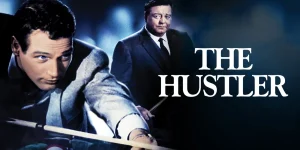
The film’s plot is a classic “young buck versus the old master” narrative, a timeless archetype found in stories across many genres. Its most direct comparison is to the 1961 film The Hustler, which features a similar dynamic between a young pool shark (Paul Newman) and an old pro (Jackie Gleason).
Both films explore themes of pride, talent, and the psychological cost of greatness in the high-pressure world of professional gambling.
Alternate Endings and Deleted Scenes
There are no known official alternate endings or deleted scenes available to the public. However, the firing of original director Sam Peckinpah suggests a vastly different film was initially planned. Peckinpah’s version was reportedly much darker and grittier, aligning with his signature style.
A key difference in his vision was that the final hand was meant to be clearly fixed. Jewison’s version, in contrast, leaves the hand as a legitimate, if astronomically unlikely, loss for the Kid.
Book Adaptations and Differences
The film is based on the 1963 novel of the same name by Richard Jessup. While the core plot is similar, the film adaptation makes significant changes, especially to the ending.
In Jessup’s novel, after the Kid loses to Lancey Howard, he is ambushed and stabbed in an alley by a pimp he had bested earlier in the story. The film’s ending is much more symbolic, with the Kid’s loss to a shoe-shine boy underscoring his complete fall from grace without the brutal violence of the book.

Memorable Scenes and Quotes
Key Scenes
- The Opening Game: The film opens with the Kid in a smoky backroom, calmly outplaying another gambler. This scene perfectly establishes his cool demeanor and formidable skill before he even speaks a word.
- The Cockfight: A brutal and tense sequence where the Kid, Shooter, and Slade attend a cockfight. The scene serves as a powerful metaphor for the life-or-death stakes of the Kid’s world and his impending duel with The Man.
- The Final Hand: The climatic showdown between the Kid and Lancey Howard is one of cinema’s most famous poker scenes. The slow, deliberate build-up of bets and the shocking reveal of the losing and winning hands are impeccably paced for maximum dramatic impact.
Iconic Quotes
- Lancey Howard: “You’re good, kid, but as long as I’m around, you’re second best.”
- The Cincinnati Kid: “Gets down to what it’s all about, doesn’t it? Making the wrong move at the right time.”
- Shooter: “That’s what it’s all about, fella… doing the wrong thing at the right time.”
- Lady Fingers: “He’s a stud poker player. He’s a lion. He’s a winner.”
Easter Eggs and Hidden Details
- Mirrored Reflections: Director Norman Jewison frequently uses mirrors and reflections to frame characters, particularly Melba and Slade. This visual motif suggests their deceitful natures and hidden motives.
- Prop Newspaper: In one scene, a newspaper headline reads “U.S. Fleet to Remain in Pacific.” This detail subtly grounds the film in the mid-1930s, a period of rising international tensions.
- Director’s Cameo: Norman Jewison makes a brief, uncredited appearance as one of the poker players seated at a table in the background.
Trivia
- Steve McQueen, an avid racer and motorcyclist, was a novice poker player. An on-set technical advisor taught him the proper way to handle cards to appear like a seasoned professional.
- The role of Melba was originally offered to Sharon Tate. After Sam Peckinpah was fired, Tate was replaced with Ann-Margret when Norman Jewison took over the production.
- Edward G. Robinson was a renowned art collector in real life. His character, Lancey Howard, is similarly depicted as a man of quiet refinement and taste, contrasting with the Kid’s raw ambition.
Why Watch?
This is a masterclass in character-driven tension. Steve McQueen and Edward G. Robinson deliver career-defining performances in a gritty, atmospheric setting. For fans of psychological drama and timeless cool, it is essential viewing that explores pride, ambition, and fate.
Director’s Other Movies
- The Thomas Crown Affair (1968)
- In the Heat of the Night (1967)
- Fiddler on the Roof (1971)
- And Justice for All (1979)
- Moonstruck (1987)
- The Hurricane (1999)
Recommended Films for Fans
- The Hustler (1961)
- The Sting (1973)
- Rounders (1998)
- California Split (1974)
- Mississippi Grind (2015)