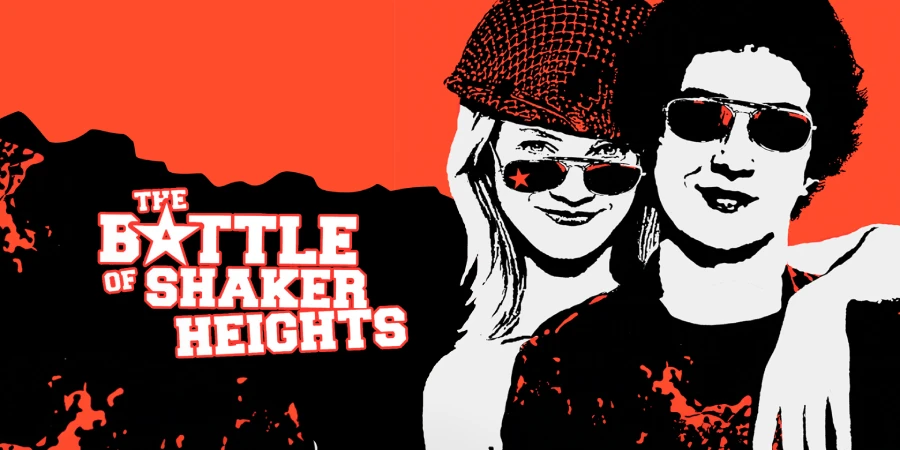

The Battle of Shaker Heights is a quiet, emotional indie drama that blends teenage romance, grief, and historical obsession into a deeply personal coming-of-age story. Set in suburban Ohio, the film explores how young people sometimes use the past to escape the pain of the present.
Detailed Summary
A Teenager Obsessed With War
Kelly Ernswiler is a high school student living in Shaker Heights, Ohio, a wealthy and orderly suburb. His defining trait is his obsession with historical wars, especially the American Civil War and World War II.
Kelly doesn’t just read about wars. He recreates them in his backyard using detailed costumes, maps, and tactical planning. He records everything on video, narrating battles as if he were a military historian.
This obsession is not random. Kelly’s father died in an accident, and his fascination with war serves as an emotional shield, allowing him to process death without confronting it directly.
Meeting Tabitha and the War Reenactments
Kelly meets Tabitha Chatterjee, a new student at school. She is intelligent, sarcastic, emotionally guarded, and immediately intrigued by Kelly’s unusual hobby.
Tabitha reveals that her own father is terminally ill with cancer. Unlike Kelly, she is painfully aware of the coming loss and struggles to cope with it.
Together, they begin staging elaborate war reenactments in Kelly’s backyard. These “battles” become a shared language for discussing death, sacrifice, and fear without speaking about them directly.
Their friendship slowly turns into romance.
Escapism vs Reality
As Kelly and Tabitha grow closer, their emotional avoidance deepens.
They increasingly retreat into historical fantasy:
Kelly sees himself as a commander who can impose order on chaos.
Tabitha finds comfort in the idea that death can have meaning, like fallen soldiers remembered in history.
However, real life begins to intrude.
Tabitha’s father’s condition worsens rapidly.
Kelly’s mother worries about her son’s inability to grieve properly.
School and social life start collapsing around them.
The film gradually reveals that their war games are no longer harmless imagination, but an emotional crutch preventing them from maturing.
Emotional Collapse
When Tabitha’s father dies, she emotionally shuts down. She becomes angry, reckless, and withdrawn. Her coping mechanism shifts from imagination to emotional numbness.
Kelly, on the other hand, becomes even more obsessed with his reenactments, planning an enormous final battle that mirrors famous historical defeats.
Their relationship deteriorates because they grieve in incompatible ways.
Tabitha accuses Kelly of hiding behind fake wars instead of facing real loss.
Kelly accuses Tabitha of abandoning the one thing that helped them survive.
This conflict drives the film toward its emotional climax.

Movie Ending
Kelly stages his final and most elaborate battle reenactment. Unlike previous ones, this battle is intentionally designed to be a defeat. His army is outnumbered. The outcome is inevitable.
As he narrates the battle, Kelly begins to understand something crucial:
Real life does not follow rules.
Loss is not heroic.
Death does not arrive with meaning or music.
During the reenactment, he stops filming.
This moment is subtle but powerful. For the first time, Kelly chooses not to hide behind the camera or historical metaphor.
Later, Kelly visits Tabitha. Their relationship does not magically repair itself. They acknowledge that they cared deeply for each other but were using the relationship to survive grief rather than confront it.
They part without bitterness.
In the final scenes, Kelly begins living more fully in the present. His obsession with war remains, but it no longer defines him. He has learned that history can teach lessons, but it cannot replace emotional truth.
The film ends without dramatic closure, emphasizing that healing is not a victory—it is a process.
Are There Post-Credits Scenes?
No. There are no post-credits or mid-credits scenes. The film ends definitively with its final emotional moment.
Type of Movie
The film is a coming-of-age drama with strong elements of teen romance and psychological realism. It focuses more on emotion and character than on plot, using history as metaphor rather than spectacle.
Cast
- Shia LaBeouf – Kelly Ernswiler
- Elden Henson – Bart
- Amy Smart – Tabitha Chatterjee
- Kathleen Quinlan – Kelly’s mother
- Billy Kay – Schoolmate
Notably, this film features one of Shia LaBeouf’s earliest dramatic leading performances, years before his blockbuster fame.
Film Music and Composer
The score was composed by Mark Mothersbaugh, known for his emotionally restrained and atmospheric style.
The music relies heavily on:
- Soft piano motifs
- Minimalist ambient textures
- Sparse emotional cues
This approach reinforces the film’s introspective tone rather than manipulating emotion.



Filming Locations
The movie was filmed almost entirely in Shaker Heights, Ohio.
The location is crucial because:
- The suburb’s calm, affluent appearance contrasts sharply with the inner turmoil of the characters.
- The manicured lawns emphasize how grief can exist beneath seemingly perfect communities.
- The historical significance of the town mirrors Kelly’s obsession with the past.
Very little was altered for filming, giving the movie an authentic Midwestern realism.
Awards and Nominations
While the film did not receive major mainstream awards, it gained recognition at independent festivals:
- Official Selection – Sundance Film Festival (2003)
- Praised in indie film circuits for screenplay and performances
Its reputation has grown quietly over time as a cult indie coming-of-age film.
Behind the Scenes Insights
- The film was shot on a very small budget with a tight schedule.
- Many outdoor scenes used natural lighting to preserve realism.
- Shia LaBeouf studied historical battle tactics to make Kelly’s obsession feel authentic.
- The directors encouraged improvisation during emotional conversations.
- Much of the dialogue was intentionally understated to avoid melodrama.
Inspirations and References
The film draws inspiration from:
- Real Civil War reenactment communities in the U.S.
- Director Kyle Rankin’s own experiences growing up in Ohio
- Classic coming-of-age films such as Stand by Me
- The idea that historical fascination can function as emotional denial
There is no direct book adaptation.
Alternate Endings and Deleted Scenes
No alternate ending was officially filmed.
However, deleted material includes:
- Additional scenes with Kelly’s father in flashback
- Longer hospital scenes involving Tabitha’s family
- More explicit dialogue explaining Kelly’s emotional avoidance
These were removed to keep the film subtle and avoid over-explanation.
Memorable Scenes and Quotes
Key Scenes
- Kelly’s first backyard war reenactment
- Tabitha explaining her father’s illness using battlefield metaphors
- The silent hospital hallway after her father’s death
- Kelly turning off the camera during the final battle
- The restrained final conversation between Kelly and Tabitha
Iconic Quotes
- “I like wars. They make sense. Someone wins. Someone loses.”
- “History remembers the dead better than real life does.”
- “You can’t plan everything like a battle.”



Easter Eggs and Hidden Details
- Kelly’s battlefield maps mirror real Civil War troop layouts.
- His final reenactment mirrors a historically unwinnable battle.
- Several background books reference actual military historians.
- The model soldiers change positions subtly between scenes, reflecting Kelly’s shifting mindset.
Trivia
- Shia LaBeouf was only 16 during filming.
- The movie was released before his Disney Channel fame.
- Many extras were real residents of Shaker Heights.
- The backyard battlefields were rebuilt daily due to weather.
- The film’s title refers to an actual Civil War skirmish myth associated with the town.
Why Watch?
You should watch this film if you appreciate:
- Emotionally realistic teen dramas
- Stories about grief without melodrama
- Quiet, character-driven storytelling
- Early performances from major actors
- Films that trust the audience’s intelligence
It’s not loud, fast, or flashy. It’s thoughtful, intimate, and surprisingly moving.
Director’s Other Works
Efram Potelle & Kyle Rankin
- Turkey Bowl (2019) – Kyle Rankin
- Various independent short films and television projects
This remains their most critically discussed feature film.
Recommended Films for Fans
- Stand by Me (1986)
- The Squid and the Whale (2005)
- Garden State (2004)
- October Sky (1999)
- Me and Earl and the Dying Girl (2015)
- Ordinary People (1980)
- The Perks of Being a Wallflower (2012)