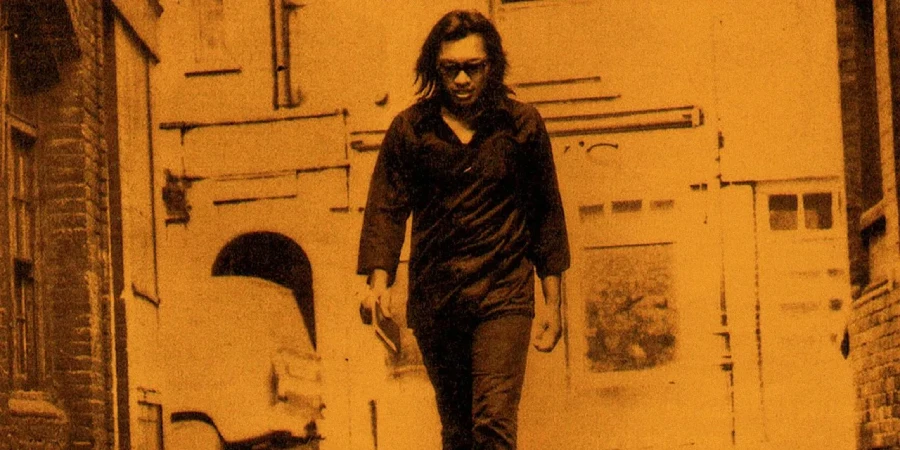

A ghost haunted the music scene of apartheid-era South Africa. His name was Sixto Rodriguez, an American folk singer whose protest anthems fueled a generation of rebels. In the United States, however, he was a total unknown, a vinyl phantom who vanished after two failed albums. But in South Africa, his supposed on-stage suicide cemented him as a legend bigger than Elvis.
Detailed Summary
The Myth of Rodriguez
Searching for Sugar Man opens by establishing a fascinating musical mystery. We learn about Rodriguez, a Detroit-based musician from the early 1970s whose two albums, Cold Fact and Coming from Reality, flopped spectacularly in America. Consequently, his record label dropped him, and he disappeared into obscurity.
Meanwhile, on the other side of the world, a bootleg copy of his album found its way to South Africa. His anti-establishment lyrics resonated deeply with the youth fighting against apartheid. Rodriguez, as a result, became a cultural icon whose fame rivaled that of The Rolling Stones, yet he remained a complete enigma.
The most persistent rumor surrounding him was his death. South African fans believed he had committed a dramatic suicide on stage. One version claims he set himself on fire, while a similarly popular tale says he shot himself in the head mid-performance.
The Search Begins
Decades later, two dedicated South African fans, record shop owner Stephen “Sugar” Segerman and music journalist Craig Bartholomew Strydom, decide to find the truth. They were tired of the myths and wanted to know who this man really was. Their investigation starts with a deep dive into Rodriguez’s dense, poetic lyrics, searching for geographical or personal clues.
Their initial efforts lead nowhere. The lyrics reference places like Dearborn, but without context, these names mean little to them. For this reason, their quest for answers stalls for years, turning into more of a passionate hobby than a fruitful investigation.
Following the Money
A logical next step for the duo was to track the album royalties. Given Rodriguez’s massive success in South Africa, he should have earned a fortune. Strydom tenaciously contacts former executives from his American label, Sussex Records, including its founder, Clarence Avant.
Avant, however, is dismissive and claims to know nothing about any South African sales or royalties. This creates a new layer to the mystery: where did all the money go? The dead end further fuels the fans’ determination to uncover what really happened to their idol.
The Breakthrough
Strydom finally gets a crucial lead while re-examining the album liner notes. He focuses on a producer listed on the record. This producer’s name ultimately leads him to a website where he posts an inquiry titled “Where is Rodriguez?”
Amazingly, he receives a response weeks later from one of Rodriguez’s daughters, Eva Rodriguez. She is stunned to learn about her father’s fame in South Africa. More importantly, she confirms the unbelievable truth: her father is alive and well.
The Triumphant Return
Rodriguez, living a humble life as a demolition and construction worker in Detroit, had no idea he was a superstar anywhere. His daughters tell him about his massive following in South Africa. He is understandably shocked but graciously agrees to travel there for a concert tour.
The film’s emotional peak arrives with his first show in Cape Town. Rodriguez, a simple man in his 50s, walks onto a stage to a deafening roar from thousands of fans. They sing along to every word, finally connecting with the man whose music had profoundly shaped their lives.

Movie Ending
The ending of Searching for Sugar Man is both triumphant and bittersweet. Rodriguez completes a wildly successful tour of South Africa, playing sold-out stadiums and treated like a returning hero. He finally receives the recognition he was denied for over three decades.
After the tour, he returns to his modest life and job in Detroit. His daughters reveal that he gave away most of his earnings from the tour to family and friends, keeping very little for himself. The film concludes with Rodriguez walking through the snowy streets of his neighborhood, a content and humble man, seemingly unfazed by his newfound fame.
Notably, the question of the missing royalties from his decades of South African album sales is never fully resolved. Clarence Avant maintains his ignorance, and the film leaves audiences to speculate about where the huge sums of money went. This ambiguity underscores the film’s focus on the man and his music, not the corrupt industry that failed him.
Are There Post-Credits Scenes?
There are no post-credits scenes in Searching for Sugar Man. The film ends with footage of Sixto Rodriguez walking in Detroit, and the credits roll immediately after.
Type of Movie
Searching for Sugar Man is a documentary. Its tone shifts from a compelling mystery to an investigative procedural and ultimately culminates in a deeply moving and uplifting human story. Its narrative structure feels more like a thriller than a typical documentary, which contributed significantly to its broad appeal.
Cast
- Sixto Rodriguez – Himself
- Stephen “Sugar” Segerman – Himself
- Craig Bartholomew Strydom – Himself
- Clarence Avant – Himself
- Eva Rodriguez – Herself
- Sandra Rodriguez-Kennedy – Herself
- Regan Rodriguez – Herself
- Dennis Coffey – Himself (Producer)
- Mike Theodore – Himself (Producer)
Film Music and Composer
The music is the heart and soul of the film. Every featured song is a track written and performed by Sixto Rodriguez from his two studio albums, Cold Fact (1970) and Coming from Reality (1971). His poignant, politically charged folk-rock provides the narrative’s emotional core.
Key tracks include “Sugar Man,” “I Wonder,” “Crucify Your Mind,” and “Cause.” The film’s director, Malik Bendjelloul, also composed the minimal original score that ties the documentary footage together.


Filming Locations
The film was shot primarily in two starkly contrasting locations: Cape Town, South Africa, and Detroit, Michigan. This geographical split is central to the story. Cape Town represents Rodriguez’s unbelievable fame and the vibrant culture he influenced from afar.
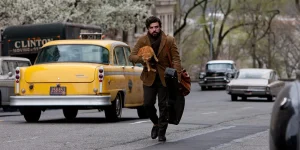
In contrast, the gritty, snow-covered streets of Detroit represent his decades of anonymity and humble blue-collar existence. The visual juxtaposition powerfully illustrates the two separate lives the musician unknowingly led.
Awards and Nominations
Searching for Sugar Man was a critical darling and received numerous accolades. Its most significant win was the Academy Award for Best Documentary Feature in 2013. In addition, it won the BAFTA Award for Best Documentary and the Directors Guild of America Award for Outstanding Directorial Achievement in Documentaries.
Behind the Scenes Insights
- Director Malik Bendjelloul initially discovered the story while traveling and decided to pursue it as a short film for Swedish television before expanding it into a feature.
- Bendjelloul ran out of funding near the end of production. He resourcefuly shot the final sequences using his iPhone with an app called 8mm Vintage Camera, which costs only $1.99.
- Rodriguez was hesitant to participate at first, believing no one would be interested in his story. His daughters ultimately persuaded him to cooperate with the filmmakers.
Inspirations and References
The film is not inspired by any external work. It is a documentary that chronicles a true, and previously little-known, series of events. Its inspiration is the real-life story of Sixto Rodriguez and the incredible detective work of his South African fans, Stephen Segerman and Craig Bartholomew Strydom.
Alternate Endings and Deleted Scenes
As a documentary built from interviews and archival footage, there are no known “alternate endings” in the fictional sense. Director Malik Bendjelloul shot countless hours of interviews and footage, much of which did not make the final 90-minute cut. However, this material has not been released publicly as traditional “deleted scenes.”
Book Adaptations and Differences
Searching for Sugar Man is not based on a book. It is an original documentary feature based entirely on real-life events and firsthand accounts from the people who lived them.

Memorable Scenes and Quotes
Key Scenes
- The Phone Call: The emotional moment when Craig Bartholomew Strydom speaks to Rodriguez’s daughter Eva for the first time, realizing with shock that her father is still alive.
- The First Concert: Rodriguez walking onto the stage in Cape Town, visibly stunned by the thunderous applause from a massive audience that knows every word to his songs. The crowd’s reaction is pure electricity.
- The Detroit Coworkers: Interviews with Rodriguez’s construction coworkers in Detroit, who express their complete disbelief that the quiet, hardworking man they know was secretly a musical icon in another country.
Iconic Quotes
- “Thanks for keeping me alive.” – Sixto Rodriguez, addressing his South African fans from the stage.
- “It was the soundtrack to our lives.” – Stephen Segerman, on the importance of Rodriguez’s music to his generation in South Africa.
- “He was more popular than Elvis Presley.” – A South African record store owner describing Rodriguez’s fame.
Easter Eggs and Hidden Details
True to its documentary form, the film contains few traditional “Easter eggs.” The hidden details lie within the story itself. For instance, the filmmakers use subtle animations to bring the wild, untrue rumors of Rodriguez’s death to life, visually contrasting myth with reality.
Trivia
- Stephen Segerman’s nickname, “Sugar,” directly comes from Rodriguez’s most famous song, “Sugar Man.” He was known for being the first to import the album.
- Rodriguez ran for public office several times in Detroit, including for mayor and city council, but was never elected.
- Tragically, director Malik Bendjelloul took his own life in 2014, just over a year after winning the Oscar. He had been struggling with depression.
Why Watch?
Watch this film for one of the most unbelievable true stories ever documented. It is a powerful testament to the timeless power of music and a profound story about humility, hope, and second chances. It will restore your faith in miracles.
Director’s Other Movies
- Searching for Sugar Man (2012) was Malik Bendjelloul’s only feature film.
Recommended Films for Fans
- 20 Feet from Stardom (2013)
- Anvil! The Story of Anvil (2008)
- Amy (2015)
- Man on Wire (2008)
- Buena Vista Social Club (1999)
- Muscle Shoals (2013)