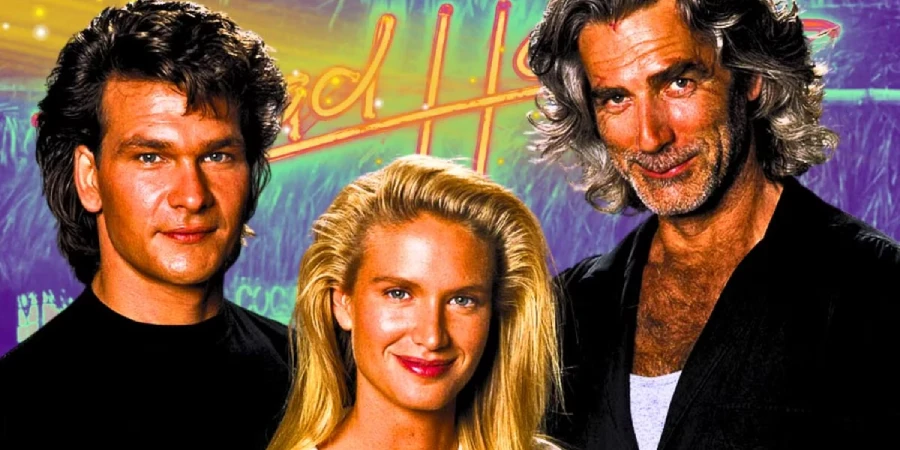

Patrick Swayze is not just a bouncer in Road House; he is a philosopher with a PhD in pain. Consequently, this film delivers far more than just bar fights and broken bottles. This cinematic classic represents a modern Western where a cooler’s code of conduct ultimately becomes the law of the land.
Detailed Summary
Dalton’s Arrival in Jasper
James Dalton, a legendary “cooler” (an elite bouncer), is recruited by Frank Tilghman to clean up his rowdy honky-tonk bar, the Double Deuce, in Jasper, Missouri. Dalton accepts the high-paying job, despite his reputation for attracting trouble. Upon arrival, he observes the bar’s rampant violence, drug dealing, and inept security. Meanwhile, he finds lodging at a local farm owned by an old man named Emmett.
Cleaning Up the Double Deuce
Dalton immediately takes charge of the Double Deuce. He fires several insubordinate and corrupt employees, establishing three simple rules: 1. Expect the unexpected. 2. Take it outside. 3. Be nice. Dalton’s decisive actions and martial arts prowess quickly bring a level of order to the bar. During this time, he is injured in a fight and seeks treatment from Dr. Elizabeth “Doc” Clay, with whom he soon begins a romantic relationship.
The Wrath of Brad Wesley
The film’s primary antagonist, Brad Wesley, is a wealthy and corrupt businessman who extorts money from all local businesses. However, Dalton and Tilghman refuse to pay him. As a result, Wesley begins a campaign of intimidation. He disrupts the bar’s liquor supply and sends his thugs to start fights. One of Wesley’s top henchmen, Jimmy, proves to be a formidable martial artist and a direct rival to Dalton.
Dalton’s Past and the Escalation
Wesley’s attacks escalate dramatically. He has a monster truck destroy the car dealership of Red Webster, Doc’s uncle. Furthermore, Wesley’s men burn down Emmett’s house. The extreme violence prompts Dalton to call his mentor and friend, the legendary cooler Wade Garrett. Wade arrives to help, but Wesley learns of Dalton’s dark secret: Dalton once killed a man in self-defense by ripping out his throat, an act that haunts him. The conflict reaches its peak when Wesley’s men murder Wade, leaving his body in the Double Deuce to taunt Dalton.
The Final Confrontation
Devastated by Wade’s murder, Dalton decides to end Wesley’s reign of terror once and for all. He drives to Wesley’s mansion and begins a systematic assault, killing Wesley’s henchmen one by one in brutal fashion. In perhaps the film’s most infamous scene, Dalton finally confronts and kills Jimmy by ripping out his throat, mirroring the act from his past. Dalton then faces Wesley, but runs out of ammunition before he can finish the job.
Movie Ending
In the final scene, a wounded Dalton confronts an armed Brad Wesley in his trophy room. Wesley gains the upper hand and prepares to shoot Dalton. However, just as he is about to pull the trigger, a series of shotgun blasts tear through him. The camera pans to reveal that Tilghman, Red Webster, Emmett, and other townspeople whom Wesley terrorized have arrived. They collectively shoot Wesley to death. When the police arrive, the townspeople all deny seeing anything, effectively creating a town-wide cover-up to protect Dalton and end Wesley’s tyranny. The final shot shows Dalton and Doc swimming together in a lake, finally at peace.
Are There Post-Credits Scenes?
No, there are no post-credits or mid-credits scenes in the original 1989 version of Road House.
Type of Movie
Road House is primarily an action film infused with elements of a modern-day Western and a thriller. Its tone is a signature blend of 1980s machismo, surprisingly philosophical musings, and over-the-top violence. The narrative structure, featuring a mysterious stranger cleaning up a corrupt town, directly mirrors classic Western tropes. Consequently, the film has a unique feel that is both gritty and stylishly absurd.
Cast
- Patrick Swayze – James Dalton
- Kelly Lynch – Dr. Elizabeth “Doc” Clay
- Sam Elliott – Wade Garrett
- Ben Gazzara – Brad Wesley
- Marshall Teague – Jimmy Reno
- Kevin Tighe – Frank Tilghman
- Red West – Red Webster
- Jeff Healey – Cody
Film Music and Composer
The score for Road House was composed by the late Michael Kamen, a prolific composer known for his work on action films like Die Hard and Lethal Weapon. His music provides a tense, dramatic backbone for the film’s action sequences. In addition, the movie’s soundtrack is arguably more famous, featuring the Canadian blues-rock artist The Jeff Healey Band as the Double Deuce’s house band. They perform several songs on-screen, including covers of “Roadhouse Blues” and “(I’m Your) Hoochie Coochie Man,” which became inextricably linked to the film’s identity.
Filming Locations
Although the story is set in the fictional town of Jasper, Missouri, filming primarily took place in California. The Double Deuce bar exterior was built for the film in Valencia, California, while its interiors were shot on a soundstage. Several other towns, including Reedley and Sanger in Fresno County, California, provided the backdrop for the small-town atmosphere. These locations were specifically chosen for their rustic, middle-American feel, which was essential for grounding the film’s Western-inspired narrative.
Awards and Nominations
Road House was not a critical darling upon its release. In fact, the film was nominated for five Golden Raspberry Awards in 1990, an awards ceremony that “honors” the worst in cinema. The nominations included Worst Picture, Worst Director, Worst Screenplay, Worst Supporting Actor (Ben Gazzara), and Worst Actor (Patrick Swayze). Despite this, the film became a massive cult classic and a commercial success on home video.
Behind the Scenes Insights
- Patrick Swayze, a trained dancer and martial artist, performed most of his own stunts and fight choreography.
- During the main fight scene between Dalton and Jimmy, actor Marshall Teague has said both he and Swayze used real contact to make the fight look authentic, though they consulted carefully beforehand.
- Ben Gazzara (Brad Wesley) reportedly ad-libbed many of his lines, including the infamous “I used to fuck guys like you in prison” taunt, though this claim is often disputed.
- The infamous “throat rip” was achieved using a special effects prosthetic appliance applied to the stuntman’s neck.
- Swayze was injured several times during the shoot, at one point requiring surgery on his knee, which delayed production.
Inspirations and References
Director Rowdy Herrington has openly stated that Road House was conceived as a modern Western. Its plot heavily borrows from the classic loner-hero narrative seen in films like Shane (1953), where a mysterious and skilled stranger arrives to defend a town from a powerful, corrupt landowner. Dalton is the quiet “gunslinger,” the Double Deuce is the lawless town, and Brad Wesley is the cattle baron who believes he owns everything and everyone.
Alternate Endings and Deleted Scenes
No official alternate endings for Road House have ever been released. However, rumors and interviews from the cast and crew suggest that several scenes were cut to tighten the pacing and secure an R-rating. For instance, many of the fight sequences were allegedly trimmed of their most graphic moments. In addition, some character-developing scenes between Dalton and Doc were shortened to focus more on the escalating action.
Book Adaptations and Differences
Road House is not based on a book. It is an original story and screenplay written by David Lee Henry and Hilary Henkin. Therefore, its narrative and characters were created specifically for the screen, without any literary source material to draw from.

Memorable Scenes and Quotes
Key Scenes
- Dalton Cleans House: Dalton’s introductory speech to the Double Deuce staff, where he fires several people and lays down his iconic three rules.
- The Throat Rip: Dalton’s final, brutal fight with Jimmy concludes with him ripping out Jimmy’s throat, a shocking moment that pays off his dark backstory.
- Pain Don’t Hurt: While Doc stitches him up, Dalton utters his famous mantra, “Pain don’t hurt,” explaining his philosophical approach to injury.
- The Monster Truck: Brad Wesley uses his monster truck to demolish Red’s auto dealership in a brazen display of power, significantly escalating the conflict.
Iconic Quotes
- “I want you to be nice until it’s time to not be nice.” – Dalton
- “Pain don’t hurt.” – Dalton
- “Nobody ever wins a fight.” – Dalton
- “I thought you’d be bigger.” – A common taunt directed at Dalton.
- “My way… or the highway.” – Brad Wesley
Easter Eggs and Hidden Details
- The name of Dalton’s mentor, Wade Garrett, is likely a nod to two famous Western figures: lawman Wyatt Earp (whose first name was Wade) and Sheriff Pat Garrett.
- Dalton’s car throughout the film is a 1965 Buick Riviera, a classy but powerful vehicle that reflects his personality. Conversely, Brad Wesley drives a brand new Mercedes-Benz, symbolizing his more modern and flashy brand of corruption.
- In the opening credits, the name of the film’s stunt coordinator, Charlie Picerni, appears over a shot of a man being thrown through a window, a fitting visual tribute to his work.
Trivia
- Sam Elliott’s character, Wade Garrett, was not in the original script. He was added later at the suggestion of producer Joel Silver to flesh out Dalton’s backstory and raise the personal stakes.
- Bill Murray and his brothers were reportedly huge fans of screenwriter David Lee Henry’s work and would prank call him, pretending to be characters from his scripts.
- The Jeff Healey Band was cast after Joel Silver saw them performing in a club in Toronto. Healey was blind, and his unique method of playing the guitar on his lap is featured in the movie.
- Patrick Swayze turned down roles in Tango & Cash and The Dead Pool to star in Road House.
Why Watch?
For pure 80s action nirvana, few films compare. It is a perfect storm of cheesy one-liners, brutal brawls, and unexpected Zen wisdom. Ultimately, the film is a fascinating, endlessly rewatchable masterpiece of its own unique genre.
Director’s Other Movies
- Jack’s Back (1988)
- Gladiator (1992)
- Striking Distance (1993)
- A Murder of Crows (1998)
- Bobby Jones: Stroke of Genius (2004)
Recommended Films for Fans
- Point Break (1991)
- Tango & Cash (1989)
- Commando (1985)
- Bloodsport (1988)
- John Wick (2014)