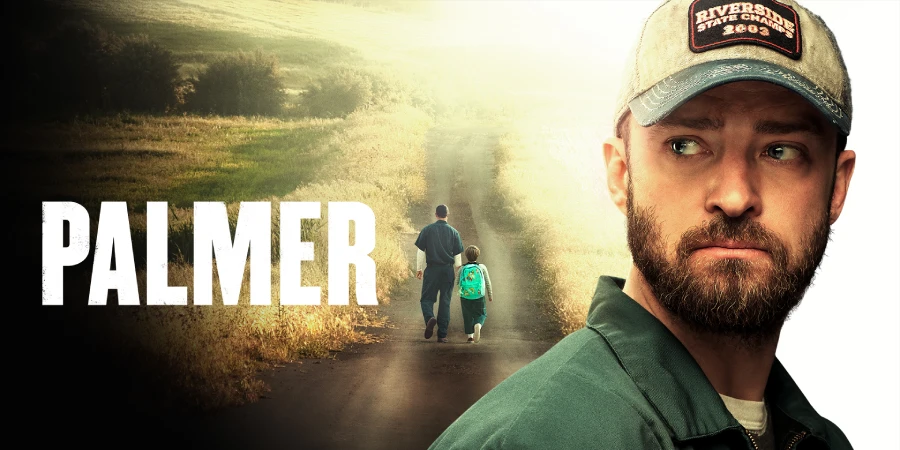

Palmer is a quiet, character-driven drama that sneaks up on you emotionally. Directed by Fisher Stevens and led by a surprisingly restrained Justin Timberlake performance, the film tells a story about redemption, masculinity, and the quiet ways love reshapes people. It’s less about big plot twists and more about how people heal each other when life has already done its damage.
Detailed Summary
A Man Returning to a World That Moved On
Eddie Palmer is released from prison after serving 12 years for attempted murder and robbery. He returns to his small Louisiana hometown, carrying the weight of his past and the label that comes with it. He moves in with his grandmother, Vivian, who is one of the few people who still sees him as human rather than a criminal.
Palmer tries to keep his head down and get work at a local construction company. It quickly becomes clear that the town hasn’t forgotten what he did. People avoid him, distrust him, and treat him like a ticking time bomb.
Meeting Sam: The Unexpected Bond
Next door lives Shelly, a drug-addicted single mother, and her young son Sam. Sam is different from the other boys. He loves princess dresses, tea parties, and fairy tales. He doesn’t fit the expectations of how a “boy” should behave, and he is bullied for it constantly.
When Shelly disappears for days at a time, Palmer and his grandmother start looking after Sam. What begins as reluctant babysitting slowly turns into something deeper. Sam gravitates toward Palmer, and Palmer, who barely knows how to talk to kids, finds himself becoming Sam’s emotional anchor.
This relationship becomes the emotional core of the movie. Sam doesn’t see Palmer as an ex-con. Palmer doesn’t see Sam as “wrong.” They simply see each other as safe.
Loss, Responsibility, and Social Pressure
Vivian suddenly passes away, leaving Palmer truly alone. At the same time, Shelly vanishes again, and Palmer unofficially becomes Sam’s caretaker. The town starts talking. The school calls. Authorities begin asking questions.
Palmer is confronted with something he never planned for: responsibility. Not because he has to, but because he wants to. He begins to understand that protecting Sam means standing up to a society that wants Sam to change who he is.
The Conflict: Sam vs. The World
Sam faces brutal bullying at school for wearing dresses and acting in ways deemed “unacceptable” for a boy. Palmer initially tries to steer Sam toward more traditionally “masculine” things, not out of cruelty, but fear. He thinks life will be easier for Sam if he conforms.
But he soon realizes that asking Sam to change is just another form of harm. One of the film’s most powerful emotional shifts is when Palmer stops trying to fix Sam and starts defending him instead.
The Breaking Point
When Shelly returns and tries to reclaim Sam, the situation escalates. Palmer knows Sam isn’t safe with her, but legally, he has no right to intervene. In a tense moment at school, Palmer assaults a parent who insults Sam, violating his parole.
This act sends Palmer back to prison, seemingly undoing all the progress he has made. But this time, it’s different. He went back because he stood up for someone else.



Movie Ending
Palmer is sentenced to prison again for violating his parole. Sam is placed in foster care, separated from the one stable figure in his life. The separation is heartbreaking because Sam clearly understands what’s happening and feels abandoned, even though Palmer did it for him.
While in prison, Palmer writes letters to Sam. Over time, we see that Sam never forgets him.
After Palmer is released once more, he goes looking for Sam. He finds him living with a kind foster family. There’s a tense moment where Palmer doesn’t know if Sam will even want to see him. When Sam sees Palmer, he runs to him without hesitation.
In the final scenes, it’s revealed that Palmer has started the process to become Sam’s legal guardian. The movie ends with Palmer attending one of Sam’s school events where Sam confidently performs in a princess costume. This time, Palmer sits proudly in the audience, fully accepting Sam for who he is.
The ending makes it clear that Palmer’s redemption didn’t come from staying out of trouble. It came from learning how to love someone without conditions.
Are There Post-Credits Scenes?
No. Palmer does not include any mid-credits or post-credits scenes.
Type of Movie
Palmer is a grounded, emotional drama focused on redemption, identity, and human connection, told through intimate character development rather than plot-driven spectacle.
Cast
- Justin Timberlake as Eddie Palmer
- Ryder Allen as Sam
- Juno Temple as Shelly
- June Squibb as Vivian
- Alisha Wainwright as Maggie
Film Music and Composer
The score is composed by Tamar-kali. The music is subtle and restrained, designed to support the emotional tone without overwhelming the scenes. Justin Timberlake also contributed the song “Better Days” to the soundtrack.


Filming Locations
The movie was filmed in Louisiana, particularly around New Orleans and its surrounding parishes. The Southern small-town setting is crucial because it reinforces the social pressure, conservatism, and close-knit community judgment that both Palmer and Sam face daily.
Awards and Nominations
While not a major awards contender, the film received recognition for Justin Timberlake’s dramatic performance and Ryder Allen’s breakout role. It was nominated in several critics’ circles for performances and LGBTQ+ representation themes.
Behind the Scenes Insights
- Ryder Allen had no prior acting experience before being cast as Sam.
- Justin Timberlake spent time with children and families to prepare for the emotional depth of the role.
- The film was praised during production for handling gender expression in children with sensitivity.
- Director Fisher Stevens focused heavily on natural performances and minimal rehearsal to keep scenes authentic.
Inspirations and References
The story is original but draws from real societal issues surrounding gender expression in children, foster care systems, and reintegration struggles of former inmates.
Alternate Endings and Deleted Scenes
Some deleted scenes reportedly expanded Shelly’s backstory and showed more of Palmer’s prison life, but they were cut to maintain the film’s tight emotional focus. No alternate ending has been released.
Book Adaptations and Differences
The film is not based on a book or prior work. It is an original screenplay by Cheryl Guerriero.



Memorable Scenes and Quotes
Key Scenes
- Sam wearing a princess dress to school for the first time
- Palmer teaching Sam how to throw a football and realizing Sam doesn’t enjoy it
- The courtroom moment when Palmer accepts the consequences of his actions
- The final school performance where Palmer watches Sam with pride
Iconic Quotes
- Sam: “But I like what I like.”
- Palmer: “You don’t have to change for anyone.”
- Vivian: “People deserve second chances.”
Easter Eggs and Hidden Details
- Sam’s princess costume subtly changes throughout the movie, symbolizing growing confidence.
- Palmer’s house gradually becomes more colorful as Sam spends more time there.
- The football scenes mirror Palmer’s past identity versus Sam’s authentic self.
Trivia
- Justin Timberlake called this one of the most emotionally challenging roles of his career.
- The film premiered on Apple TV+ rather than in theaters.
- The relationship between Palmer and Sam was largely improvised in several scenes.
Why Watch?
Because it’s a film that quietly dismantles stereotypes without ever feeling preachy. It shows how healing can come from the most unexpected places and how acceptance can be an act of bravery.
Director’s Other Works (Movies)
- The Cove (2009)
- Crazy Love (2007)
- Before the Flood (2016)