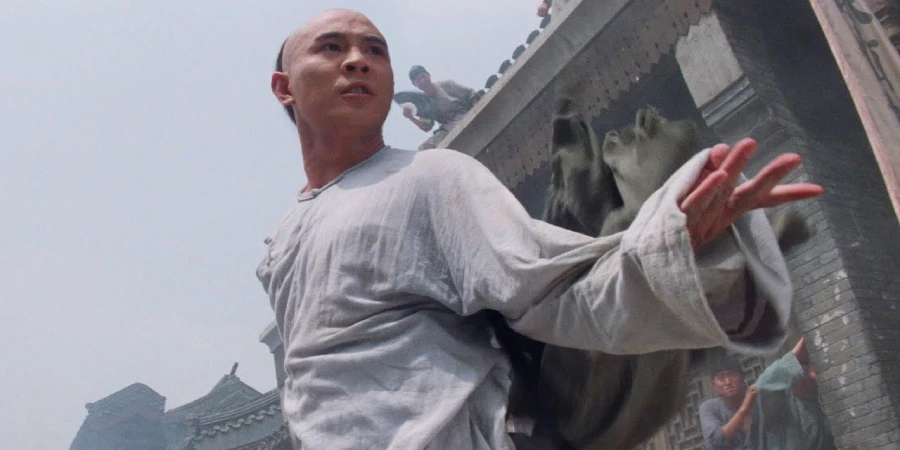

Once Upon a Time in China III is the third entry in Tsui Hark’s legendary martial arts saga and arguably one of the most entertaining installments. Released in 1992, the film blends historical drama, nationalism, comedy, and jaw-dropping kung fu choreography into a fast-paced, character-driven spectacle centered on the iconic folk hero Wong Fei-hung.
Detailed Summary
The Lion Dance Competition and Political Tensions
The story is set during the late Qing Dynasty, a time when China is under increasing foreign pressure and internal instability. A major national lion dance competition is organized in Beijing to celebrate the Empress Dowager’s birthday. On the surface, it’s a festive cultural event, but beneath it lies fierce rivalry between martial arts schools, political factions, and opportunists.
Wong Fei-hung travels to Beijing with his students to represent Guangdong province. Right away, the competition becomes symbolic of regional pride and national identity, not just athletic skill.
Introduction of Aunt Yee and Culture Clash
Aunt Yee arrives in Beijing as well, now more confident and Westernized than ever. Her modern thinking clashes with traditional values, especially in the conservative capital. The film uses her character to explore China’s struggle between tradition and modernization, often through humor but also with subtle tension.
Wong Fei-hung remains emotionally restrained, torn between his affection for Aunt Yee and his strict moral code.
Rise of Zhao Tiansha and Political Manipulation
The main antagonist, Zhao Tiansha, is a ruthless military commander who uses the lion dance competition to consolidate power. He is not just a fighter but a political schemer who exploits chaos to justify violence and control.
Zhao manipulates the competition rules, intimidates rivals, and turns the event into a brutal battlefield. As contestants are injured or killed, it becomes clear that the competition is merely a tool for oppression.
Escalation: Violence, Betrayal, and National Pride
As tensions rise, Wong Fei-hung finds himself forced to intervene—not just as a martial artist, but as a moral leader. Several violent encounters reveal Zhao’s true nature, including public executions disguised as “law enforcement.”
Meanwhile, Wong’s students face humiliation and danger, testing his leadership and philosophy of restraint. The film emphasizes that true strength lies in discipline and justice, not blind aggression.
The Final Lion Dance Showdown
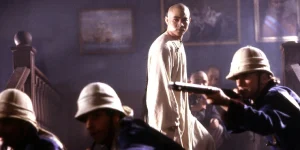
The climax unfolds during the final lion dance performance. What begins as a ceremonial event transforms into an all-out fight atop towering poles. This sequence is widely considered one of the greatest martial arts set pieces ever filmed, combining acrobatics, traditional lion dance, and combat.
Wong Fei-hung confronts Zhao directly, exposing his corruption in front of the public and defeating him through skill, intelligence, and moral authority rather than brute force.
Movie Ending
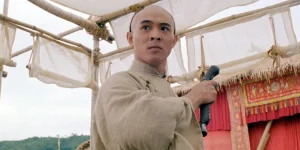
After the climactic battle, Zhao Tiansha is publicly defeated and disgraced, his authority shattered in front of both officials and civilians. His reign of terror ends not just through physical defeat, but through exposure—his manipulation of power is revealed to be cowardly and dishonorable.
Wong Fei-hung wins the lion dance competition, but the victory is symbolic rather than celebratory. He does not revel in triumph; instead, he reflects on the fragile state of China and the responsibility of its people to protect their cultural identity.
Aunt Yee and Wong share a quiet, emotionally restrained moment. Their feelings remain unresolved, emphasizing Wong’s internal conflict between love and duty. The film ends with Wong returning to the people, reinforcing his role as a guardian of tradition rather than a personal hero.
The final note is bittersweet: justice is served, but the larger struggle for China’s future continues.
Are There Post-Credits Scenes?
No. Once Upon a Time in China III does not feature a post-credits or mid-credits scene. The story concludes definitively within the film itself.
Type of Movie
This film is a martial arts historical drama infused with action and light comedy. It balances traditional kung fu cinema with political commentary and cultural reflection.
Cast
- Jet Li as Wong Fei-hung
- Rosamund Kwan as Aunt Yee
- Max Mok as Leung Foon
- Lau Shun as Bucktooth So
- Cheung Tat-ming as Nap-lan Yun-seut
- John Wakefield as Robber Chief
Film Music and Composer
The score was composed by James Wong, blending traditional Chinese instrumentation with heroic motifs. The iconic Wong Fei-hung theme reinforces the character’s legendary status while maintaining emotional restraint.
Filming Locations
The film was primarily shot in Mainland China and Hong Kong, with large-scale sets constructed to recreate imperial Beijing.
These locations are essential to the film’s impact:
- The imperial architecture reinforces political authority and hierarchy
- Open courtyards allow for large ensemble action scenes
- Vertical pole setups enable the legendary lion dance climax
The physical space becomes part of the choreography, not just a backdrop.
Awards and Nominations
- Hong Kong Film Awards – Nominated for Best Action Choreography
- Widely praised retrospectively as one of the best entries in the series, particularly for its action design
Behind the Scenes Insights
- Jet Li performed most of his own stunts, including the dangerous pole-top lion dance
- Tsui Hark pushed for faster pacing than the previous films
- The lion dance finale required weeks of rehearsal
- Some performers trained in traditional lion dance before filming
- The film was shot back-to-back with other entries in the series
Inspirations and References
- Chinese folklore surrounding Wong Fei-hung
- Traditional southern Chinese lion dance rituals
- Real historical tensions during the late Qing Dynasty
- Classic kung fu cinema of the 1970s, reimagined with modern pacing
Alternate Endings and Deleted Scenes
No confirmed alternate endings exist, but several extended political dialogue scenes were reportedly cut to keep the focus on action and pacing. Early drafts placed more emphasis on Qing court politics.
Book Adaptations and Differences
The film is not directly adapted from a single book, but from folklore and historical legends. Unlike traditional stories, the film:
- Adds stronger political antagonists
- Emphasizes national identity over personal legend
- Modernizes Wong Fei-hung’s moral philosophy
Memorable Scenes and Quotes
Key Scenes
- Wong Fei-hung’s arrival in Beijing and first lion dance confrontation
- Public execution scene that exposes Zhao’s cruelty
- Aunt Yee confronting traditionalist officials
- The final lion dance battle atop high poles
Iconic Quotes
- “Strength without justice is violence.”
- “China does not need tyrants disguised as protectors.”
Easter Eggs and Hidden Details
- Lion colors represent regional Chinese identities
- Background banners reference real Qing military divisions
- Wong Fei-hung’s calm posture mirrors traditional kung fu manuals
- Repeated framing emphasizes Wong always standing below authority figures—until the finale
Trivia
- This is Jet Li’s most physically demanding role in the series
- The lion dance finale influenced later wuxia films
- Tsui Hark considered this the “most complete” Wong Fei-hung story
- The film was a box-office success in Hong Kong
Why Watch?
If you enjoy classic kung fu cinema with intelligence, this film delivers. It offers:
- One of the greatest martial arts finales ever filmed
- A thoughtful look at tradition versus modernization
- Jet Li at his physical and charismatic peak
It’s action with meaning, not just punches and kicks.
Director’s Other Works (Movies)
- Zu: Warriors from the Magic Mountain (1983)
- Once Upon a Time in China (1991)
- Once Upon a Time in China II (1992)
- The Blade (1995)
- Time and Tide (2000)
Recommended Films for Fans
- Once Upon a Time in China II (1992)
- Iron Monkey (1993)
- Fist of Legend (1994)
- Drunken Master II (1994)
- Crouching Tiger, Hidden Dragon (2000)