
My Neighbor Totoro (1988) is one of Studio Ghibli’s most beloved films, directed by the legendary Hayao Miyazaki. It’s a gentle, heartwarming story that blends childhood imagination, rural Japan, and subtle emotional depth. Despite its simplicity, it carries profound themes about nature, innocence, and family bonds.
Detailed Summary
The Move to the Countryside
The story follows two young sisters, Satsuki and Mei Kusakabe, who move to a rural home with their father to be closer to the hospital where their mother is recovering from a long-term illness. Their new home is old and creaky, filled with soot spirits (small, fuzzy dust creatures) that vanish once they settle in. This sets up the film’s tone of magic blending seamlessly into ordinary life.
Mei’s Discovery of Totoro
One afternoon, four-year-old Mei explores the forest and encounters a small, rabbit-like creature that leads her to a giant, friendly forest spirit — Totoro. This massive, furry being with a broad grin and deep growl becomes her secret friend. Totoro embodies nature’s spirit — comforting, mysterious, and slightly mischievous.
Satsuki Meets Totoro
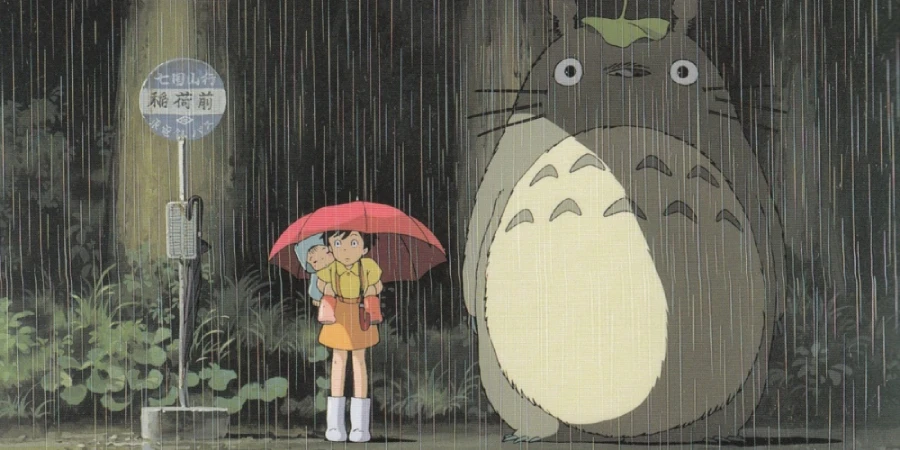
Later, during a rainy night at a bus stop, Satsuki and Mei wait for their father’s bus. Mei falls asleep, and Satsuki holds an umbrella over her. Then, Totoro suddenly appears beside them, carrying only a leaf as cover. Satsuki lends him her umbrella, and in return, Totoro gifts her a bundle of seeds. This bus stop scene — simple, wordless, and magical — is one of the most iconic in animation history.
The Magical Catbus
One night, the sisters plant the seeds, and Totoro and his mini companions appear to help them grow. They perform a dance that makes the seeds sprout into an enormous tree, symbolizing nature’s wonder. The next morning, only small shoots remain — leaving the audience to question what was real and what was imagination. Later, when Mei goes missing, Totoro calls upon the Catbus, a giant, smiling, twelve-legged cat that functions as a supernatural vehicle.
The Search for Mei
Satsuki panics when Mei disappears after an argument about their mother’s illness. She desperately searches the countryside until, in despair, she asks Totoro for help. Totoro roars, summoning the Catbus, which takes Satsuki to Mei, who is sitting alone by a shrine clutching a piece of corn for their mother. The sisters reconcile, and the Catbus then whisks them to the hospital so they can secretly visit their mother from afar.



Movie Ending
At the hospital, the girls see their mother through the window. They don’t speak to her, but they leave the corn on the windowsill with a note reading “For Mommy.” Their mother, noticing the corn, smiles — a subtle sign that she will recover. The sisters return home safely with the Catbus disappearing into the night.
The film closes with a serene scene: their mother eventually returns home, and the family continues life in the countryside. Totoro and his smaller spirits are seen nearby, watching from the trees. There’s no dramatic resolution or explicit magic explanation — instead, the ending reinforces that the wonders of childhood imagination coexist with everyday life.
It’s a perfect conclusion — emotional without being tragic, and magical without demanding explanation.
Are There Post-Credits Scenes?
No, My Neighbor Totoro does not have a post-credits scene. However, during the ending credits, charming hand-drawn illustrations show glimpses of the family’s future — the mother’s return, school life, and happy everyday moments — giving emotional closure without additional dialogue.
Type of Movie
My Neighbor Totoro is a fantasy drama with elements of slice-of-life and coming-of-age storytelling. It’s also considered a cornerstone of Japanese magical realism in animation.
Cast (Japanese Version)
- Noriko Hidaka as Satsuki Kusakabe
- Chika Sakamoto as Mei Kusakabe
- Hitoshi Takagi as Totoro
- Shigesato Itoi as Tatsuo Kusakabe (the father)
- Sumi Shimamoto as Yasuko Kusakabe (the mother)
- Tanie Kitabayashi as Granny
(In the English dub, Dakota and Elle Fanning voiced Satsuki and Mei respectively.)
Film Music and Composer
Music by Joe Hisaishi, one of the most iconic composer-director pairings in cinema history. The score perfectly captures the film’s balance between wonder and calmness. The main theme, “Sanpo” (“Stroll”), is a cheerful tune symbolizing childhood adventure, while “My Neighbor Totoro” provides a soothing, nostalgic warmth that lingers long after the film ends.


Filming Locations
Though animated, the film’s rural scenery was inspired by Sayama Hills in Tokorozawa, Japan, near Tokyo. The area’s forests and rice paddies deeply influenced Miyazaki’s depiction of nature. Fans can even visit the Totoro Forest Foundation, a real conservation site preserving the landscapes that inspired the film.
These locations emphasize one of the movie’s core messages: harmony between humans and nature.
Awards and Nominations
- Blue Ribbon Award (Japan, 1989) – Best Film
- Kinema Junpo Award (1989) – Best Film
- Mainichi Film Award (1988) – Best Film and Best Art Direction
- Animage Anime Grand Prix (1988) – Film of the Year
It’s also listed among Empire magazine’s “100 Best Films of World Cinema” and was selected as one of Time Out’s best animated films of all time.
Behind the Scenes Insights
- Miyazaki initially had difficulty getting the film funded because it had no villain or clear conflict.
- The two sisters were originally going to be one child, but Miyazaki split them to better represent childhood relationships.
- Totoro wasn’t designed as a “cute mascot” — his mix of cat, owl, and tanuki (Japanese raccoon dog) features were meant to feel ancient and mysterious.
- The Catbus was inspired by Japanese folklore about shape-shifting animals that transport humans.
- Studio Ghibli worried Totoro would fail at the box office, so it was released as a double feature with “Grave of the Fireflies.”
Inspirations and References
The movie draws heavily from:
- Japanese Shinto beliefs, where spirits inhabit natural elements like trees and rivers.
- Miyazaki’s own childhood memories of growing up in postwar rural Japan.
- The real-life illness of Miyazaki’s mother, who suffered from tuberculosis, inspired the Kusakabe family’s story.
Alternate Endings and Deleted Scenes
No official alternate ending was produced, but concept art reveals:
- An unused scene where the sisters meet Totoro one last time after their mother’s return.
- A few dialogue extensions where Satsuki talks about her dreams of becoming a teacher.
These were cut to maintain a natural flow and keep the focus on emotion rather than explanation.
Book Adaptations and Differences
The movie inspired several children’s books and picture books, released after the film. These adaptations mostly retell the story faithfully but include more descriptive narration and illustrations of deleted moments. There was no pre-existing novel or manga before the movie — the story is an original creation by Hayao Miyazaki.

Memorable Scenes and Quotes
Key Scenes
- Mei’s first encounter with the small Totoro and her fall onto the giant Totoro’s stomach.
- The bus stop in the rain — Totoro holding the umbrella, smiling as raindrops fall.
- The magical tree-growing scene after planting the seeds.
- The Catbus chase to find Mei.
- The silent hospital scene where the sisters see their mother from afar.
Iconic Quotes
- “Trees and people used to be good friends.”
- “You can’t see spirits if you don’t believe.”
- “I’m Mei! Who are you?”
- “Totoro!” (Mei’s delighted yell — now iconic worldwide.)
Easter Eggs and Hidden Details
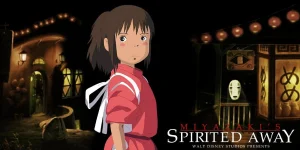
- The soot sprites (Susuwatari) also appear later in Spirited Away (2001).
- Totoro’s roar is actually a blend of several animal sounds mixed with a human voice.
- The bus stop scene was recreated in real life at several Ghibli-themed parks in Japan.
- The hospital name “Shichikokuyama” references Miyazaki’s childhood neighborhood.
- Totoro’s design has been subtly included in various other Studio Ghibli movies and merchandise.
Trivia
- The character Totoro became Studio Ghibli’s mascot, appearing in the studio logo.
- The film’s merchandise sales skyrocketed years after release, saving Ghibli financially.
- Miyazaki said Totoro is not a god or ghost — just “a creature that lives in the forest.”
- Despite no villains, the film is consistently ranked among the top-rated family films worldwide.
Why Watch?
Because My Neighbor Totoro captures something few films can — the quiet magic of childhood. It’s both nostalgic and refreshing, beautifully animated, and profoundly human. Watch it when you need comfort, when you want to reconnect with nature, or when you want to remember what it felt like to believe in the impossible.
Director’s Other Movies
- Spirited Away (2001)
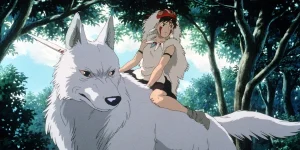
- Princess Mononoke (1997)
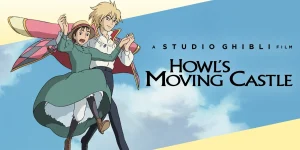
- Howl’s Moving Castle (2004)
- Nausicaä of the Valley of the Wind (1984)
- Ponyo (2008)