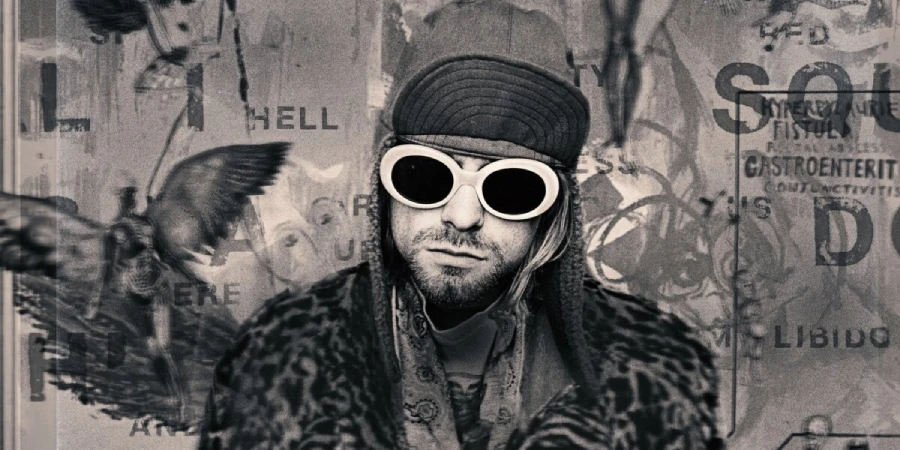

Brett Morgen’s documentary is not about a rock star. Instead, it is a chaotic dive into an artist’s private hell, constructed from his own home movies, journals, and art. It bypasses myth-making to present a raw, unfiltered psychological portrait. Consequently, viewers experience Kurt Cobain’s life with an unnerving, first-person intimacy.
Detailed Summary
Childhood Tapes and Teenage Turmoil
Kurt Cobain: Montage of Heck opens with a trove of home audio and video from Kurt’s childhood in Aberdeen, Washington. We see an energetic, happy blond child who craves attention and loves his parents. However, this idyllic picture shatters following his parents’ messy divorce.
A young Cobain becomes withdrawn and angry. Animated sequences bring his tortured journal entries and grotesque artwork to life. He recounts feelings of shame and rejection, which fuels his early artistic expression and a deep-seated desire for connection.
The Birth of a Sound
The documentary explores Cobain’s teenage years through his own audio recordings and mixtapes, including the titular “Montage of Heck.” It details his discovery of punk rock and his early musical collaborations with Krist Novoselic. These formative years are depicted as a blur of social alienation and artistic discovery.
Eventually, these experiences culminate in the formation of Nirvana. Early concert footage shows a raw, explosive energy that quickly gains a following. The film emphasizes that the music was a direct, visceral outlet for Cobain’s internal chaos.
Fame, Love, and Addiction
Nirvana’s sudden explosion into global superstardom with the release of Nevermind is portrayed as a profoundly destabilizing event. Cobain actively resists the “spokesman of a generation” label thrust upon him. Meanwhile, his chronic stomach pain intensifies, leading him to self-medicate with heroin.
He meets Courtney Love, and the film presents their relationship through incredibly intimate and often disturbing home video footage. They bond over a shared disdain for the world and a mutual drug habit. Their dynamic is shown as both deeply loving and dangerously codependent.
The Final Performance
The birth of their daughter, Frances Bean Cobain, offers a brief period of hope. However, the pressures of fame, media scrutiny, and escalating addiction prove overwhelming. Private footage shows a loving but often incoherent father, nodding off while holding his infant daughter.
The film moves toward its conclusion by highlighting Nirvana’s legendary performance on MTV Unplugged. Cobain appears fragile and weary. His final, haunting rendition of “Where Did You Sleep Last Night” is framed as a foreshadowing of his imminent demise.


Movie Ending
The ending of Kurt Cobain: Montage of Heck is somber and inevitable. It avoids showing Kurt Cobain’s death directly. Instead, the final scenes focus on the MTV Unplugged performance, lingering on his exhausted face.
Following this powerful musical sequence, the screen goes black. Text appears on screen stating that Kurt Cobain took his own life in April 1994. The film concludes not with a bang, but with a quiet, tragic finality, leaving the audience with the raw humanity of the man rather than the sensationalism of his death.
Are There Post-Credits Scenes?
There are no post-credits scenes in Kurt Cobain: Montage of Heck. Once the credits begin to roll, the film is officially over. Sticking around will only give you more time to absorb the documentary’s heavy emotional impact.
Type of Movie
This film is a biographical documentary that utilizes archival footage, animation, and interviews. Its tone is profoundly intimate, raw, and often chaotic, mirroring the subject’s internal state. It is less a historical record and more a psychological exploration, creating a visceral and immersive experience for the viewer.
Cast
- Kurt Cobain – Himself (archival footage)
- Courtney Love – Herself
- Krist Novoselic – Himself
- Wendy O’Connor – Herself (Kurt’s mother)
- Don Cobain – Himself (Kurt’s father)
- Jenny Cobain – Herself (Kurt’s stepmother)
- Tracy Marander – Herself (Kurt’s ex-girlfriend)
Film Music and Composer
The film’s soundscape is a collage of Nirvana’s most iconic tracks and, more importantly, Cobain’s unreleased solo acoustic demos and sound experiments. These personal recordings provide an unfiltered look into his creative process. Notably, the score was composed by Jeff Danna, who created orchestral arrangements of Nirvana songs to complement the film’s emotional arc.

Filming Locations
As a documentary, the film does not have traditional filming locations. Instead, it is built from archival footage shot primarily in Kurt Cobain’s key residences and haunts. Locations like Aberdeen and Seattle, Washington feature prominently, providing the dreary, rain-soaked backdrop that defined both Cobain’s youth and the grunge scene he pioneered.
Awards and Nominations
Kurt Cobain: Montage of Heck received widespread critical acclaim. It was nominated for seven Primetime Emmy Awards, including Outstanding Documentary or Nonfiction Special. In addition, director Brett Morgen was nominated for a Directors Guild of America Award for his work on the film.
Behind the Scenes Insights
- Director Brett Morgen was given unprecedented, complete access to the Cobain family’s personal archives, which included over 200 hours of unreleased audio and 4,000 pages of writings.
- Frances Bean Cobain, Kurt’s daughter, served as an executive producer. Her involvement was crucial in granting the filmmakers access to the sealed materials.
- The film’s striking animated sequences were created by Dutch animator Hisko Hulsing, who worked to visually translate the chaotic energy of Cobain’s personal journals and artwork.
- The title, Montage of Heck, is taken from one of Cobain’s own experimental sound collage mixtapes he made in the late 1980s.
Inspirations and References
The film’s primary and sole inspiration is Kurt Cobain’s personal archive. Unlike other biographical works that rely on third-party accounts, this documentary is built almost entirely from Cobain’s own journals, artwork, home movies, and sound recordings. It is less a film about him and more a film by him, posthumously assembled.
Alternate Endings and Deleted Scenes
While no specific “alternate ending” exists, director Brett Morgen had over 200 hours of audio and countless hours of video to sift through. He noted that the most challenging part of the editing process was deciding what to leave out. For instance, an entire album of unreleased Cobain solo material, titled Montage of Heck: The Home Recordings, was released as a companion to the film, showcasing audio that didn’t make the final cut.
Book Adaptations and Differences
Kurt Cobain: Montage of Heck is not an adaptation of any book. It is a unique work based on direct access to primary source materials that had never been publicly available before. While books like Charles R. Cross’s Heavier Than Heaven cover the same life story, this film differentiates itself by using Cobain’s own voice and art to drive the narrative.


Memorable Scenes and Quotes
Key Scenes
- Animated Journals: The film brings Cobain’s dark, surreal, and often disturbing journal entries to life through visceral animated sequences, providing a direct window into his mind.
- Bathroom Home Videos: Extremely raw footage of Kurt Cobain and Courtney Love in their bathroom shows their chaotic love, shared drug use, and moments of jarring intimacy.
- MTV Unplugged Performance: The final performance of “Where Did You Sleep Last Night” is presented as a haunting and gut-wrenching farewell, capturing Cobain’s physical and emotional exhaustion.
Iconic Quotes
- “I’m a negative creep and I’m stoned.” – A simple, self-defining line from one of his early audio recordings.
- “My name is Kurt, I’m a boy, I can’t be a girl.” – A line from a childhood audio tape, hinting at early confusion and discomfort.
- “I was looking for something, a lot heavier, yet melodic. And punk rock.” – Cobain describing his artistic vision for the sound that would become grunge.
Easter Eggs and Hidden Details
- Journal Doodles: Throughout the animated journal segments, keen-eyed viewers can spot early drafts of lyrics, band name ideas, and recurring artistic motifs that appear in Nirvana’s later album art.
- The Fecal Matter Demo: Early in the film, you can hear snippets from Cobain’s pre-Nirvana punk project, Fecal Matter, a deep cut for longtime fans.
- Sub Pop Rejection Letter: A blink-and-you’ll-miss-it shot shows a rejection letter from the legendary Seattle record label Sub Pop, before they eventually signed Nirvana.
Trivia
- The film was in development for eight years before its release.
- Courtney Love first approached Brett Morgen with the idea for the documentary back in 2007.
- The final film contains only one interview with a Nirvana bandmate, Krist Novoselic. Dave Grohl was interviewed, but his segment was completed too late to be included in the final Sundance cut and was ultimately left out.
- During his research, Morgen discovered over 107 unreleased cassette tapes recorded by Cobain.
Why Watch?
This film is an essential, if difficult, watch. It offers an unflinching and deeply personal look at a tortured artist, stripped of myth and rock-god cliché. For anyone seeking to understand the man behind the music, it is an unparalleled and unforgettable experience.
Director’s Other Movies
- The Kid Stays in the Picture (2002)
- Chicago 10 (2007)
- Jane (2017)
- Moonage Daydream (2022)
Recommended Films for Fans
- Amy (2015)
- Soaked in Bleach (2015)
- Last Days (2005)
- Hype! (1996)