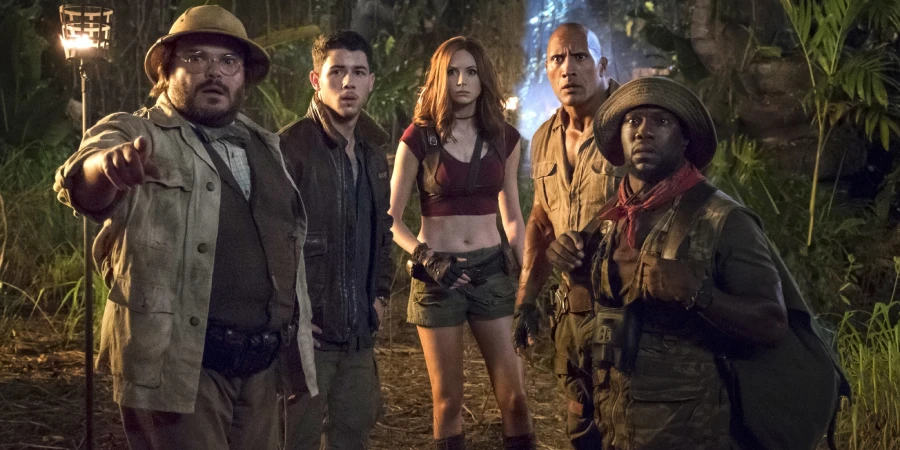

Jumanji: Welcome to the Jungle is a surprisingly smart, energetic, and self-aware reboot of the 1995 classic. Instead of simply repeating the original concept, the film updates it for the video game generation and leans heavily into character-driven comedy, making it far more entertaining than many expected.
Detailed Summary
From Board Game to Video Game
The film opens in 1996, where a teenager discovers the original Jumanji board game. Unlike the 1995 movie, the game transforms itself into a video game cartridge to stay relevant. Years later, four high school students are sent to detention and stumble upon the abandoned game console.
Each student selects a character avatar, unknowingly choosing their in-game identities. Once the game starts, they are sucked into the world of Jumanji.
The Avatars and Their Real Selves
Inside the game:
- Spencer becomes Dr. Smolder Bravestone, a muscular action hero.
- Fridge becomes Franklin “Mouse” Finbar, a zoology expert with limited strength.
- Bethany becomes Professor Shelly Oberon, a middle-aged male cartographer.
- Martha becomes Ruby Roundhouse, a skilled fighter.
This contrast between real personalities and in-game bodies fuels much of the film’s humor and character growth.
Learning the Rules of the Game
The group discovers that Jumanji operates like a real video game:
- They each have three lives
- NPCs repeat scripted dialogue
- Each avatar has strengths and weaknesses
Their mission is revealed: return a magical jewel to its rightful place to lift a curse placed on the land by the villain, Van Pelt.
Jungle Adventures and Growing Bonds
As they journey through jungles, bazaars, and dangerous terrain, the characters face literal and emotional obstacles. Spencer learns confidence, Martha finds courage, Fridge learns humility, and Bethany develops empathy.
They meet Alex, a pilot who has been trapped in the game for over 20 years, adding emotional weight and raising the stakes.
Facing Van Pelt
Van Pelt relentlessly hunts them, forcing the group to confront danger head-on. Lives are lost, strategies fail, and teamwork becomes essential. By the final act, they fully embrace their avatars while retaining their real-world values.
Movie Ending
In the climax, the group reaches the statue where the jewel must be returned. Van Pelt attacks, leading to an intense final confrontation. Several characters lose their remaining lives, raising genuine tension about whether everyone will survive.
Spencer, as Bravestone, makes the ultimate leap to return the jewel, sacrificing himself in the process. The curse is lifted, Van Pelt is destroyed, and Jumanji collapses.
Because the game is beaten, all surviving players are returned to the real world. Crucially:
- Spencer is revived, as completing the game restores all players.
- Alex returns as a teenager, reunited with his now-elderly father.
- The four teens emerge from detention, forever changed.
The board game is destroyed, seemingly ending Jumanji’s threat. The film closes with the group reconnecting at school, now confident, kinder, and more self-aware, strongly implying lasting friendships and personal growth.
Are There Post-Credits Scenes?
Yes, there is one post-credits scene. It shows two other teenagers discovering the broken game and hearing jungle drums, clearly teasing the sequel Jumanji: The Next Level (2019).
Type of Movie
Jumanji: Welcome to the Jungle is an action-adventure fantasy comedy that blends video game logic with character-driven humor. It balances spectacle with emotional arcs, making it accessible to both younger audiences and adults.
Cast
- Dwayne Johnson as Dr. Smolder Bravestone
- Kevin Hart as Franklin “Mouse” Finbar
- Jack Black as Professor Shelly Oberon
- Karen Gillan as Ruby Roundhouse
- Nick Robinson as Spencer Gilpin
- Ser’Darius Blain as Fridge
- Madison Iseman as Bethany
- Alex Wolff as Alex Vreeke
- Bobby Cannavale as Van Pelt
Film Music and Composer
The score was composed by Henry Jackman, who mixes classic adventure motifs with modern rhythms. The music pays subtle homage to the original Jumanji while establishing a more playful, blockbuster tone.
Filming Locations
The movie was filmed primarily in Hawaii, including:
- Honolulu
- Oahu
- Kualoa Ranch
These locations provided lush jungles, mountains, and open landscapes, grounding the fantastical world of Jumanji in a tangible, realistic environment that enhances immersion.
Awards and Nominations
- Nominated for Critics’ Choice Movie Award for Best Comedy
- Nominated for MTV Movie & TV Awards (Best On-Screen Team)
- Widely praised for box office success rather than awards dominance
Behind the Scenes Insights
- Jack Black studied teenage girl mannerisms to convincingly portray Bethany.
- Karen Gillan performed many of her own stunts.
- Dwayne Johnson adjusted his performance to reflect Spencer’s insecurity.
- The cast frequently improvised dialogue, especially Kevin Hart.
Inspirations and References
- Inspired by Chris Van Allsburg’s original Jumanji book
- Draws heavily from video game culture, including NPC behavior and life systems
- References classic adventure films like Indiana Jones
Alternate Endings and Deleted Scenes
- Early drafts included darker consequences for losing all lives.
- Deleted scenes expanded Alex’s emotional struggle inside the game.
- No radically different ending was filmed, but several character moments were trimmed for pacing.
Book Adaptations and Differences
The film is loosely based on the original Jumanji children’s book. Major differences include:
- The game becoming a video game
- Expanded mythology
- A stronger focus on character arcs rather than pure chaos

Memorable Scenes and Quotes
Key Scenes
- First transformation into avatars
- Discovery of the three-lives rule
- Jack Black’s dance sequence
- The final sacrifice leap
Iconic Quotes
- “I’m literally a bodybuilder, but I’m not allowed to lift anything.”
- “Strengths: none. Weaknesses: cake.”
- “Smolder Bravestone. Smolder.”
Easter Eggs and Hidden Details
- Jungle drums echo the 1995 film’s sound design
- Van Pelt’s design mirrors the original antagonist
- The game console adapts to modern technology, hinting at future transformations
Trivia
- The film grossed nearly $1 billion worldwide
- Jack Black’s role was written specifically with him in mind
- The success shocked Sony, leading to an accelerated sequel
Why Watch?
Because it’s far smarter, funnier, and more heartfelt than it has any right to be. It respects the original while confidently reinventing it, offering genuine character growth beneath blockbuster spectacle.
Director’s Other Works
- Walk Tall (2004)
- The Rundown (2003)
- Central Intelligence (2016)
- Jumanji: The Next Level (2019)