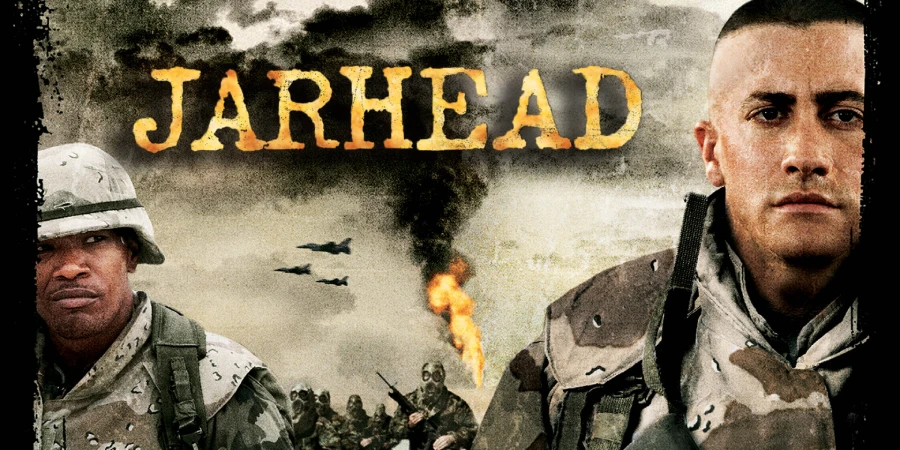

Jarhead is not your typical war movie. Directed by Sam Mendes, it strips away heroism and replaces it with boredom, frustration, psychological tension, and moral ambiguity. Based on a real memoir, the film focuses less on combat and more on what it feels like to be a soldier waiting for a war that may never come.
Detailed Summary
Training: Breaking Down the Individual
The film begins with Anthony Swofford joining the U.S. Marines. Boot camp is brutal, dehumanizing, and intentionally designed to erase individuality. Under the harsh command of Staff Sergeant Sykes, recruits are reshaped into obedient weapons. This phase establishes one of the movie’s core ideas: the military creates killers, even if they never get to kill.
Becoming a Sniper
Swofford shows exceptional skill and is selected for sniper training alongside Alan Troy, who becomes both a mentor and a psychological counterweight. Snipers are trained to wait, observe, and kill with precision—skills that ironically become a burden when no targets ever appear.
Deployment to the Gulf War
The Marines are deployed to Saudi Arabia during the Gulf War. Expectations of glory and action clash with reality: endless waiting, desert heat, oil fires darkening the sky, and constant anxiety. The soldiers are trapped between anticipation and meaninglessness.
Isolation, Madness, and Masculinity
As weeks turn into months, boredom corrodes discipline. Soldiers obsess over sex, fear betrayal by partners back home, and lash out violently at one another. Troy begins to unravel emotionally, while Swofford struggles with rage and a growing sense of purposelessness. War becomes psychological rather than physical.
The Almost-Shot
Swofford and Troy are finally assigned a sniper mission to assassinate an Iraqi officer. After days of crawling through the desert, they set up the perfect shot—only to have it taken away at the last second by higher command, who opts for an airstrike instead. This moment is the emotional core of the film: the denial of purpose.



Movie Ending
After the war abruptly ends, the Marines return home without having fired a single shot in combat. Swofford struggles to reintegrate into civilian life. The discipline, aggression, and hyper-awareness drilled into him have no place outside the military.
The film closes with Swofford reflecting on how war permanently marks those who experience it—even without combat. He states that every war movie is, in some way, a lie, because soldiers never truly leave the war behind. The final images show former Marines attending a veteran gathering, many unable to adapt, some dead, others still psychologically trapped in the desert. The ending is deliberately unresolved, emphasizing that the real damage of war often appears long after the battlefield is gone.
Are There Post-Credits Scenes?
No. Jarhead does not include any post-credits or mid-credits scenes. The story ends definitively with its final reflective moments.
Type of Movie
Jarhead is a psychological war drama that prioritizes internal conflict over action. Rather than glorifying combat, it examines alienation, masculinity, and the emotional cost of military conditioning.
Cast
- Jake Gyllenhaal as Anthony Swofford
- Jamie Foxx as Staff Sergeant Sykes
- Peter Sarsgaard as Alan Troy
- Lucas Black as Chris Kruger
- Chris Cooper as Lieutenant Colonel Kazinski
Film Music and Composer
The score was composed by Thomas Newman, whose subtle, atmospheric music reinforces the film’s emotional distance and tension. The soundtrack also includes period-specific rock and hip-hop tracks that contrast sharply with the sterile desert environment.



Filming Locations
The movie was primarily shot in California and Imperial Valley deserts, which doubled for Saudi Arabia and Kuwait. These locations were crucial in conveying the vast emptiness and psychological isolation experienced by the soldiers. The endless flat landscapes visually reinforce the theme of waiting without purpose.
Awards and Nominations
- Nominated for BAFTA Best Cinematography
- Nominated for Satellite Awards – Best Actor (Jake Gyllenhaal)
While it didn’t dominate award season, the film gained strong critical recognition for its realism and performances.
Behind the Scenes Insights
- The film is based on Anthony Swofford’s real-life memoir, and he served as a consultant.
- Sam Mendes intentionally avoided traditional battle scenes to subvert war movie expectations.
- Many actors underwent real Marine-style training to capture authentic behavior.
- The oil fire visuals were inspired by real Gulf War footage and recreated digitally for safety.
Inspirations and References
- Based on the memoir Jarhead: A Marine’s Chronicle of the Gulf War and Other Battles by Anthony Swofford.
- Influenced by anti-war films like Apocalypse Now and Full Metal Jacket, but with a modern, minimalist lens.
Alternate Endings and Deleted Scenes
Several deleted scenes expanded on Troy’s psychological breakdown and Swofford’s post-war struggles. These were removed to maintain a tight, introspective tone. No alternate ending was officially filmed, as Mendes felt the existing conclusion best reflected the memoir’s message.
Book Adaptation and Differences
While largely faithful, the film downplays some of the memoir’s darker humor and raw anger. The book is more explicit about resentment toward military leadership and media glorification, whereas the film takes a more observational approach.



Memorable Scenes and Quotes
Key Scenes
- Boot camp rifle training with the repeated chant about loving the rifle
- The sniper mission that ends without a shot being fired
- Soldiers watching war footage while being denied combat themselves
Iconic Quotes
- “The thing about a Marine is that he’s trained to kill, but he’s not allowed to.”
- “Every war is different. Every war is the same.”
Easter Eggs and Hidden Details
- Real Marine slang and procedures are used with minimal explanation.
- News broadcasts shown in the background reference real Gulf War timelines.
- The dehumanizing language mirrors actual Marine training manuals.
Trivia
- Jake Gyllenhaal lost significant weight to reflect Swofford’s physical strain.
- The title “Jarhead” refers to the Marines’ high-and-tight haircut resembling a jar lid.
- The film spawned two direct-to-video sequels, none involving the original cast or director.
Why Watch?
Watch Jarhead if you want a war film that refuses to glorify war. It’s especially compelling for viewers interested in the psychological aftermath of military service rather than battlefield heroics.
Director’s Other Works (Sam Mendes)
- American Beauty (1999)
- Road to Perdition (2002)
- Revolutionary Road (2008)
- Skyfall (2012)
- 1917 (2019)