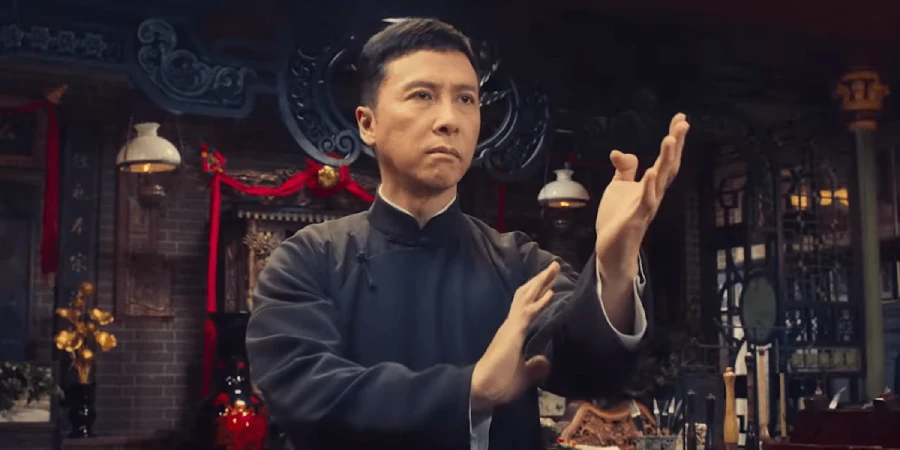

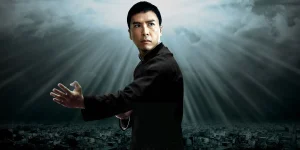
Ip Man 4: The Finale is the final chapter of the modern Ip Man saga, starring Donnie Yen as the legendary Wing Chun master and mentor of Bruce Lee. Released in 2019, the film serves as both a martial arts spectacle and an emotional farewell, focusing on legacy, discrimination, honor, and cultural identity. This is not just about fists anymore; it’s about what Ip Man leaves behind.
Detailed Summary
A Master Facing His Mortality
The film opens with Ip Man learning he has throat cancer, a quiet but powerful moment that immediately sets a reflective tone. Knowing his time is limited, he worries deeply about his rebellious son and the future of his teachings. This internal conflict becomes the emotional backbone of the movie.
Trouble at Home and Abroad
Ip Man’s son is expelled from school due to constant fighting, pushing Ip Man to consider sending him abroad for a better education. At the same time, Bruce Lee writes from the United States, inviting his master to San Francisco. This invitation draws Ip Man into a new world filled with cultural tension.
The Chinese Community in San Francisco
Once in San Francisco, Ip Man encounters deep-rooted discrimination against Chinese immigrants. Local Chinese martial arts masters are divided, fearful that teaching kung fu to foreigners will provoke hostility from American authorities. Ip Man finds himself caught between tradition and progress.
The Rise of Conflict with the U.S. Marines
The central conflict escalates when a racist U.S. Marine Corps gunnery sergeant openly mocks and humiliates Chinese martial arts, claiming karate (incorrectly lumped together) is superior. This antagonist represents institutional racism and abuse of power rather than just physical threat.
A Battle of Philosophy as Much as Fists
As tensions rise, Ip Man must defend not only himself but also the dignity of Chinese culture. The film carefully balances action with moral debate, questioning who gets to define strength, discipline, and respect.
Movie Ending
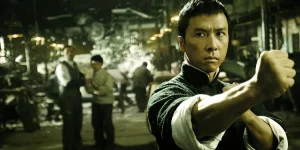
Ip Man ultimately accepts the challenge against the Marine gunnery sergeant. Despite his illness significantly weakening him, he enters the fight knowing it may cost him what little strength he has left. The battle is brutal and grounded, emphasizing technique over flashy choreography. Ip Man is knocked down multiple times, clearly struggling physically, but his mental discipline and mastery of Wing Chun prevail.
He defeats the gunnery sergeant in front of witnesses, forcing public acknowledgment of Chinese martial arts and exposing the Marine’s racism. This victory is not about domination but respect. The antagonist is disgraced, and the Chinese community gains a small but meaningful sense of justice.
Afterward, Ip Man returns to Hong Kong. His health rapidly declines, and the film shifts into a quiet, reflective tone. We see him spending time with his son, finally mending their strained relationship. He records a final video of himself performing Wing Chun forms, a farewell message and a gift to future generations.
The final scenes confirm that Ip Man passes away not long after. The movie closes by showing Bruce Lee continuing his legacy, teaching Wing Chun and spreading Chinese martial arts worldwide. The ending is definitive, respectful, and intentionally restrained, underlining that Ip Man’s greatest victory was not a fight, but the influence he left behind.
Are There Post-Credits Scenes?
No, there are no post-credits scenes.
The film ends conclusively, reinforcing its role as the final chapter of the franchise.
Type of Movie
Ip Man 4: The Finale is a martial arts drama with strong biographical elements. While it delivers high-level fight choreography, it leans heavily into themes of legacy, racism, cultural pride, and mortality.
Cast
- Donnie Yen as Ip Man
- Wu Yue as Wan Zong Hua
- Scott Adkins as Gunnery Sergeant Barton Geddes
- Danny Chan as Bruce Lee
- Vanda Margraf as Yonah
- Kent Cheng as Fat Bo
Film Music and Composer
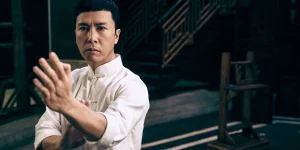
The score is composed by Kenji Kawai, who blends traditional Chinese instruments with dramatic orchestral themes. The music avoids excess, instead reinforcing the film’s emotional weight and sense of finality.
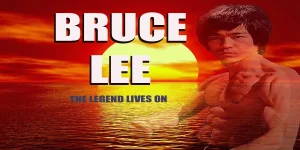

Filming Locations
The movie was filmed primarily in Hong Kong, China, and studio recreations of San Francisco’s Chinatown.
- Hong Kong represents Ip Man’s roots and personal life.
- San Francisco is essential thematically, highlighting cultural conflict and immigrant struggles.
- The controlled studio environments allowed precise choreography and period-accurate settings.
Awards and Nominations
- Nominated for Best Action Choreography at multiple Asian film awards
- Recognized for Donnie Yen’s performance in martial arts cinema retrospectives
While not a major awards contender, the film was widely praised by genre fans.
Behind the Scenes Insights
- Donnie Yen confirmed this would be his final portrayal of Ip Man.
- Scott Adkins trained extensively to adapt his kick-heavy style to a more grounded military combat approach.
- The fight scenes were intentionally less flashy to reflect Ip Man’s declining health.
- The production team consulted historical sources on Chinese-American discrimination in the 1960s.
Inspirations and References
- Inspired by the real life of Ip Man (1893–1972)
- Based loosely on historical accounts rather than a single book
- Draws thematic inspiration from Bruce Lee’s real struggles in America
Alternate Endings and Deleted Scenes
- Early drafts included a longer farewell between Ip Man and Bruce Lee, which was shortened to maintain emotional subtlety.
- Some extended training scenes were removed to keep the runtime focused on the core message.
Book Adaptations and Differences
There is no direct book adaptation. The film takes creative liberties with historical events, particularly timelines and confrontations, to create a coherent dramatic arc rather than strict biography.
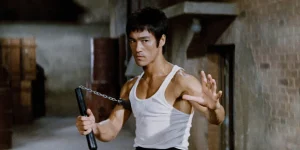
Memorable Scenes and Quotes
Key Scenes
- Ip Man learning about his cancer diagnosis
- The public martial arts demonstration interrupted by racism
- The final fight against the Marine gunnery sergeant
- Ip Man recording his Wing Chun forms at home
Iconic Quotes
- “Martial arts are not about fighting. They are about discipline.”
- “A man must know who he is, before the world tells him who he should be.”
Easter Eggs and Hidden Details
- Bruce Lee’s training movements closely match archival footage.
- Ip Man’s final form sequence mirrors the opening of the first film.
- Background posters reference real-life Chinese exclusion laws.
Trivia
- This is the highest-grossing film in the Ip Man franchise.
- Donnie Yen performed most of his own stunts.
- Scott Adkins called this role one of the most physically demanding of his career.
Why Watch?
If you appreciate martial arts with meaning, Ip Man 4 delivers a powerful farewell. It’s not just about combat, but about identity, dignity, and legacy. Even viewers unfamiliar with the earlier films can feel the emotional impact, but long-time fans will find it especially rewarding.
Director’s Other Works
- Ip Man (2008)
- Ip Man 2 (2010)
- Ip Man 3 (2015)
- Kill Zone (SPL) (2005)
- Flash Point (2007)