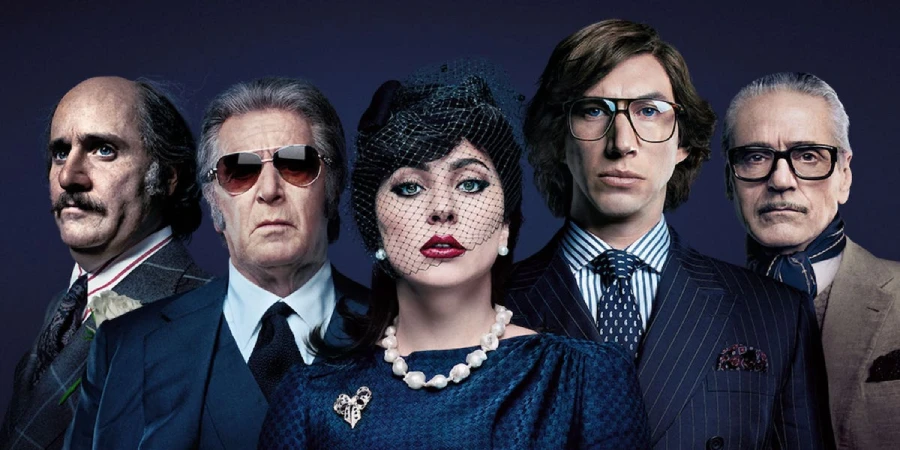

House of Gucci is a stylish, operatic crime drama directed by Ridley Scott. Based on real events, the film dives into the rise and catastrophic fall of the Gucci dynasty, centering on one of fashion history’s most infamous crimes. It is melodramatic, seductive, occasionally outrageous—and fully aware of it.
Detailed Summary
The Outsider Enters the Dynasty
The story begins in 1970s Italy, where Patrizia Reggiani (Lady Gaga) meets Maurizio Gucci (Adam Driver), the shy and somewhat awkward heir to the Gucci empire. Maurizio initially distances himself from his family’s wealth and influence, but Patrizia sees potential—not just in him, but in the Gucci name.
Their romance escalates quickly into marriage, against the wishes of Maurizio’s father Rodolfo Gucci (Jeremy Irons), who distrusts Patrizia’s ambition. From the very beginning, the film signals that love and power are dangerously intertwined.
The Family War for Control
After Rodolfo’s death, Maurizio inherits a controlling stake in Gucci. Meanwhile, his uncle Aldo Gucci (Al Pacino) and cousin Paolo Gucci (Jared Leto) are running the brand into the ground through ego-driven decisions and financial mismanagement.
Patrizia becomes increasingly involved in corporate maneuvering. She pushes Maurizio to assert dominance within the company, helping orchestrate legal and financial schemes that ultimately push Aldo out and marginalize Paolo. What begins as strategic ambition slowly turns into something darker. Maurizio, once passive, becomes ruthless. Patrizia, once supportive, becomes controlling.
The Marriage Deteriorates
Success changes Maurizio. As he grows more powerful within Gucci, he becomes emotionally distant from Patrizia. Eventually, he leaves her for a younger woman, Paola Franchi. This is the film’s emotional pivot point.
Patrizia’s identity was built on being Mrs. Gucci. When Maurizio abandons her, she loses not only her husband but her status and control. The humiliation is both personal and social, and it pushes her into paranoia and obsession.
The Conspiracy Forms
Patrizia consults a psychic friend, Pina Auriemma (Salma Hayek), who becomes her confidante and co-conspirator. The conversations shift from heartbreak to vengeance. Maurizio is thriving, rebuilding Gucci into a global powerhouse while planning to marry again.
Patrizia cannot accept this reality. What follows is no longer corporate warfare—it is personal destruction.


Movie Ending
Maurizio is shot and killed outside his office building in Milan in 1995. The assassination is cold and deliberate. The investigation quickly leads authorities to uncover a murder-for-hire plot.
Patrizia is arrested and charged with orchestrating the killing. Evidence reveals she hired hitmen through intermediaries connected to Pina. The motive is both financial and emotional: jealousy, resentment, fear of losing influence, and the looming finality of Maurizio’s remarriage.
In court, Patrizia is convicted and sentenced to 29 years in prison (later reduced). During her trial and incarceration, she reportedly refers to herself not as a widow, but as “Patrizia Gucci.” The film closes with title cards explaining the fates of key family members and noting that no member of the Gucci family was involved in the company after its eventual sale.
The final note is chilling: the empire survived, but the family did not.
Are There Post-Credits Scenes?
No. There are no post-credits or mid-credits scenes. Once the title cards conclude and the credits roll, the story is fully finished.
Type of Movie
House of Gucci is a biographical crime drama with strong elements of psychological thriller and melodrama. It blends true crime with high-fashion spectacle, creating a story that is both intimate and operatic in scale.
Cast
- Lady Gaga – Patrizia Reggiani
- Adam Driver – Maurizio Gucci
- Al Pacino – Aldo Gucci
- Jeremy Irons – Rodolfo Gucci
- Jared Leto – Paolo Gucci
- Salma Hayek – Pina Auriemma
- Camille Cottin – Paola Franchi
Film Music and Composer
The score was composed by Harry Gregson-Williams. The film also features a soundtrack filled with disco and pop hits from the 70s and 80s, reinforcing the glamorous yet decadent atmosphere.
Filming Locations and Their Importance
The film was shot across Italy, including Rome, Milan, Florence, and Lake Como. These locations are not just backdrops; they embody the luxury and legacy of the Gucci brand.
Lake Como’s villas emphasize Maurizio’s growing isolation and elite status. Milan’s business districts reinforce the corporate battleground. Rome and Florence ground the story in authentic Italian fashion heritage.
The production also filmed in Switzerland for certain alpine sequences that reflect the wealth and exclusivity surrounding the Gucci family.
Awards and Nominations
- Academy Award nomination for Best Makeup and Hairstyling
- Multiple BAFTA nominations
- Golden Globe nomination for Lady Gaga
- Screen Actors Guild nominations
While it didn’t sweep major awards, Lady Gaga’s performance was widely discussed during awards season.
Behind the Scenes Insights
- Lady Gaga reportedly stayed in character for months and used a consistent Italian accent even off-camera.
- Jared Leto spent hours in prosthetic makeup daily to transform into Paolo Gucci.
- Ridley Scott filmed this back-to-back with another feature in the same year, showcasing remarkable productivity.
- The Gucci family publicly criticized the film for its portrayal of certain members.
- The production had access to authentic archival research but not official Gucci brand endorsement.
Inspirations and References
The film is based on the book The House of Gucci by Sara Gay Forden. It draws heavily from investigative journalism and court records detailing the murder case and family drama.
Alternate Endings and Deleted Scenes
No alternate ending has been officially released. However, extended character moments—particularly involving Maurizio’s relationship with Paola and additional business negotiations—were trimmed for pacing. Early cuts reportedly included more courtroom detail, which was reduced to maintain narrative momentum.
Book Adaptations and Differences
The film condenses complex financial dealings for dramatic clarity. The book provides deeper investigative detail on the corporate restructuring and legal proceedings.
Patrizia’s portrayal in the film leans into operatic intensity, while the book presents a more journalistic, layered depiction. Certain timelines were compressed to heighten dramatic tension.



Memorable Scenes and Quotes
Key Scenes
- Patrizia and Maurizio’s first flirtatious encounter at a party
- Paolo’s disastrously awkward fashion presentation
- Maurizio coldly informing Patrizia he is leaving her
- The assassination scene outside Maurizio’s office
Iconic Quotes
- “Father, son, and House of Gucci.”
- “I don’t consider myself a particularly ethical person, but I am fair.”
- “Gucci needs no blood.”
Easter Eggs and Hidden Details
- Several costumes were inspired by actual Gucci archival designs.
- The film subtly mirrors The Godfather in its family-power dynamics.
- Maurizio’s office design reflects the minimalist aesthetic shift that defined Gucci’s 1990s reinvention.
- Paolo’s exaggerated wardrobe echoes documented real-life fashion missteps.
Trivia
- Jared Leto’s transformation required full facial prosthetics.
- Lady Gaga won the New York Film Critics Circle Award for her performance.
- Ridley Scott completed principal photography in roughly 45 days.
- The real Patrizia Reggiani reportedly felt Lady Gaga should have met her before portraying her.
Why Watch?
Watch it for the performances, especially Lady Gaga’s bold, committed portrayal. Watch it for the spectacle of wealth collapsing under ego and betrayal. And watch it because true stories of power turning poisonous are always compelling.
Director’s Other Works
Recommended Films for Fans
- The Wolf of Wall Street (2013)
- American Hustle (2013)
- The Godfather (1972)
- Phantom Thread (2017)
- All the Money in the World (2017)