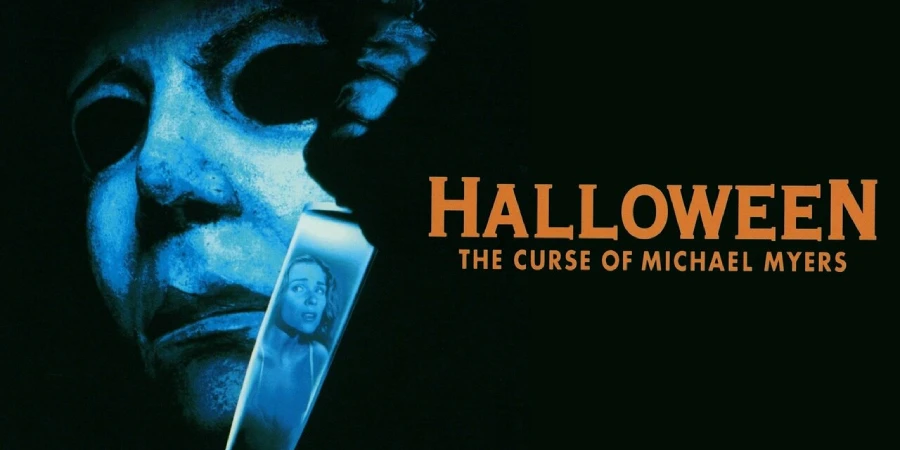

Halloween: The Curse of Michael Myers is the sixth entry in the iconic slasher franchise and one of the most controversial and confusing installments. Studio interference, rewrites, reshoots, and two radically different cuts turned this movie into a cult curiosity rather than a clean sequel. Love it or hate it, this film attempts to explain Michael Myers, something many fans argue should never be done.
Detailed Summary
The Thorn Cult and Michael’s Origin
The movie opens by revealing that Michael Myers has been under the control of a mysterious cult called Thorn, rooted in ancient Celtic rituals. The cult believes Michael is cursed and must kill his family members to prevent evil from spreading.
This marks the film’s most divisive choice: turning Michael from pure evil into a controlled weapon.
Jamie Lloyd’s Tragic Fate
Jamie Lloyd (Danielle Harris), Laurie Strode’s daughter, has been institutionalized since the events of Halloween 5. She escapes with the help of a mysterious man but is quickly hunted down by Michael.
Her death early in the film shocked fans, as Jamie had been positioned as the franchise’s emotional anchor. This moment sets a bleak and unforgiving tone.
The Strode Family Returns to Haddonfield
Laurie Strode’s son, Tommy Doyle, now an adult, returns to Haddonfield with a new family living in the Myers house. Tommy has grown obsessed with stopping Michael and uncovering the truth behind the Thorn curse.
Paul Rudd’s intense and awkward performance as Tommy became unexpectedly iconic.
Dr. Loomis vs. Dr. Wynn
Dr. Loomis begins to suspect that his longtime colleague Dr. Wynn is secretly leading the Thorn cult. The film gradually reframes Loomis not just as a hunter, but as a man realizing his life’s work may have enabled something far worse.
The Hospital Massacre
Michael infiltrates Smith’s Grove Sanitarium in one of the film’s strongest sequences. The atmosphere is cold, violent, and relentless, reminding viewers of the franchise’s roots.
This scene reinforces that even with explanations, Michael is still terrifying.
Movie Ending
The ending differs drastically depending on which version you watch.
In the Theatrical Cut, Tommy confronts Michael in the sanitarium and seemingly defeats him by using runic symbols and chanting to immobilize him. Michael collapses, stripped of his mask, and is taken away.
Dr. Loomis stays behind as sirens approach. In the final moments, Loomis’ screams echo through the building, implying Michael has escaped again and Loomis may be his next victim.
In the Producer’s Cut, the ending leans heavily into the Thorn mythology. Tommy uses magical runes to transfer the Thorn curse from Michael to Dr. Wynn. Michael spares a baby (his last remaining bloodline), suggesting the curse is broken.
Dr. Loomis is implied to have taken on the curse himself. The film ends on an unsettling note where evil doesn’t die—it merely changes hosts.
Both endings leave audiences disturbed, confused, and divided.
Are There Post-Credits Scenes?
There is no traditional post-credits scene. However, in the theatrical cut, Dr. Loomis’ scream plays during the end credits, acting as a chilling final sting rather than a visual scene.
Type of Movie
This film is a supernatural slasher horror that blends traditional stalk-and-kill elements with occult mythology and psychological horror, shifting the franchise into darker and more explanatory territory.
Cast
- Donald Pleasence as Dr. Sam Loomis
- Paul Rudd as Tommy Doyle
- Marianne Hagan as Kara Strode
- Mitch Ryan as Dr. Terrence Wynn
- Kim Darby as Deborah Strode
- George P. Wilbur as Michael Myers
Film Music and Composer
The score was composed by Alan Howarth, collaborating with themes originally created by John Carpenter. While familiar motifs return, the music leans more industrial and aggressive, reflecting the film’s darker tone.
Filming Locations and Their Importance
- Salt Lake City, Utah served as Haddonfield
- Suburban neighborhoods were chosen to preserve the ordinary American setting that contrasts with supernatural horror
- Smith’s Grove Sanitarium sets emphasized decay and corruption rather than clinical order, reinforcing the cult narrative
Awards and Nominations
The film did not receive major awards or nominations. However, it has gained retrospective cult status, particularly the Producer’s Cut, which was officially released years later due to fan demand.
Behind the Scenes Insights
- The movie went through extensive reshoots, changing the entire third act
- Donald Pleasence passed away before release, making this his final appearance as Loomis
- Studio executives pushed for less mythology and more slasher elements
- Two separate endings were shot and tested with audiences
- Paul Rudd has openly acknowledged how strange and intense the shoot was
Inspirations and References
- Celtic mythology, particularly the Curse of Thorn
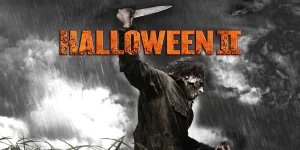
- Earlier Halloween films, especially Halloween II (1981)
- Occult horror films of the late 80s and early 90s
Alternate Endings and Deleted Scenes
- The Producer’s Cut acts as an alternate ending rather than a deleted scene
- Extended cult rituals were removed from the theatrical version
- A longer explanation of the baby’s importance was cut for pacing
Book Adaptations and Differences
This film is not based on a novel, but expands on lore introduced in previous movies. Unlike earlier films, it prioritizes mythology over mystery, a significant tonal shift.
Memorable Scenes and Quotes
Key Scenes
- Jamie Lloyd’s escape and death
- Michael stalking the Strode family inside the Myers house
- The hospital massacre sequence
- Dr. Loomis confronting Dr. Wynn
Iconic Quotes
- “It’s not just a man… it’s a force.”
- “You can’t control evil. You can only hope to survive it.”
Easter Eggs and Hidden Details
- The Thorn symbol appears subtly throughout the film
- Tommy’s notes reference events from Halloween III
- Room numbers in Smith’s Grove match earlier films
- Michael’s mask design subtly changes to appear more aged
Trivia
- This was Paul Rudd’s feature film debut
- The film had one of the longest post-production periods in the franchise
- Fans campaigned for years to get the Producer’s Cut released
- Michael Myers has one of his highest body counts in this entry
Why Watch?
You should watch this film if you:
- Want to understand the most controversial lore in the Halloween series
- Are curious how studios can reshape a movie mid-production
- Appreciate darker, myth-heavy horror experiments
- Want to see Paul Rudd in an unexpectedly intense early role
Director’s Other Works (Movies)
- Tombstone (1993)
- Rambo: First Blood Part II (1985)
- Cobra (1986)
Recommended Films for Fans
- Halloween II (1981)
- Halloween H20: 20 Years Later (1998)
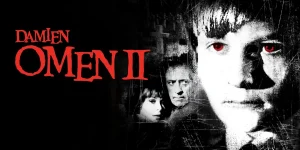
- The Omen (1976)
- Hellraiser (1987)
- Friday the 13th Part VI: Jason Lives (1986)