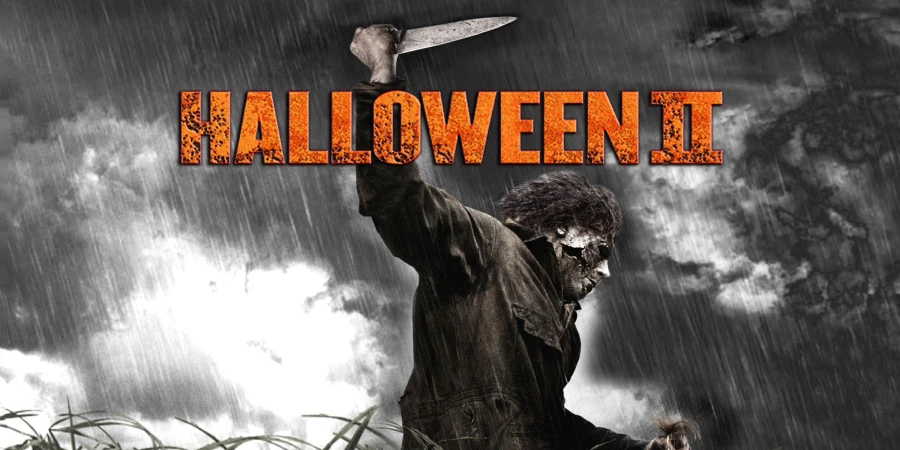

Rob Zombie’s Halloween II (2009) is a brutal, nihilistic sequel that deliberately rejects the traditional slasher formula. Instead of suspense-driven horror, the film dives headfirst into psychological trauma, grief, and obsession, making it one of the most divisive entries in the Halloween franchise.
Detailed Summary
Immediate Aftermath of the Hospital Massacre
The film opens minutes after the ending of Halloween (2007). Laurie Strode is rushed to the hospital, severely injured and mentally shattered. Meanwhile, Sheriff Brackett and law enforcement believe Michael Myers has been killed. This belief is short-lived.
In a violent and chaotic hospital sequence, Michael resurfaces and brutally murders hospital staff while searching for Laurie. The atmosphere is dreamlike and surreal, signaling early on that this sequel will not follow conventional horror logic.
Laurie’s Psychological Collapse
After surviving the hospital attack, Laurie lives with Sheriff Brackett. She is no longer the sarcastic teenager from the first film; instead, she is emotionally unstable, angry, and deeply traumatized. Nightmares, hallucinations, and violent outbursts dominate her daily life.
Laurie’s mental deterioration becomes the emotional core of the film. She struggles with survivor’s guilt, substance abuse, and violent impulses, suggesting that Michael’s evil has psychologically infected her.
Michael’s Journey and Visions
Michael Myers is portrayed less as an unstoppable force and more as a wandering, ghost-like figure. He experiences recurring visions of his mother Deborah Myers and a mysterious white horse, urging him to reunite with his sister.
These visions provide insight into Michael’s fractured psyche, transforming him from a silent killer into a deeply disturbed man driven by delusions and grief.
The Revelation of Laurie’s True Identity
Laurie discovers medical records revealing she is Angel Myers, Michael’s younger sister. This revelation devastates her sense of identity and accelerates her mental breakdown. She becomes increasingly aggressive and disconnected from reality.
This connection reinforces the film’s theme that violence and madness are hereditary and inescapable.
Loomis’ Moral Decline
Dr. Samuel Loomis has abandoned medicine and embraced celebrity. He profits from Michael’s crimes by publishing a book, presenting himself as a victim rather than a failed guardian. His hypocrisy and guilt make him one of the most morally corrupt characters in the film.
Movie Ending
The film’s ending is bleak, violent, and intentionally unsettling.
Michael finally tracks Laurie to an abandoned shack. During their confrontation, Laurie fully accepts her identity as Angel Myers. In a chilling twist, she stabs Michael repeatedly, seemingly killing him. Police arrive, and Sheriff Brackett identifies Michael’s body, only to realize that Laurie is now covered in blood and emotionally broken beyond repair.
Laurie is taken away screaming, while visions of Deborah Myers and the white horse appear once again.
In the theatrical ending, Laurie is institutionalized in a psychiatric hospital. The final scene shows her sitting calmly, smiling faintly as Deborah’s ghost approaches her. This suggests Laurie has fully inherited Michael’s madness, completing the cycle of violence.
In the director’s cut, Laurie escapes the hospital and murders Dr. Loomis, symbolizing her complete transformation into Michael’s psychological successor.
The ending strongly implies that evil does not die; it transfers.
Are There Post-Credits Scenes?
No. Halloween II (2009) does not include any post-credits or mid-credits scenes.
Type of Movie
Halloween II (2009) is a psychological horror slasher that leans heavily into surrealism, trauma-driven storytelling, and brutal violence rather than traditional suspense.
Cast
- Scout Taylor-Compton as Laurie Strode / Angel Myers
- Tyler Mane as Michael Myers
- Malcolm McDowell as Dr. Samuel Loomis
- Brad Dourif as Sheriff Leigh Brackett
- Sheri Moon Zombie as Deborah Myers
- Danielle Harris as Annie Brackett
Film Music and Composer
The score was composed by Tyler Bates, a frequent collaborator of Rob Zombie. The music is oppressive, industrial, and emotionally heavy, reinforcing the film’s sense of despair. The soundtrack also features classic rock tracks that contrast sharply with the film’s brutality.
Filming Locations
The movie was filmed primarily in Los Angeles, California, using abandoned hospitals, rural roads, and industrial areas.
These locations emphasize isolation and decay, reflecting the characters’ mental states. The hospital setting, in particular, symbolizes false safety and the collapse of institutions meant to protect.
Awards and Nominations
The film received no major awards but was nominated for:
- Fangoria Chainsaw Awards (Best Supporting Actor – Brad Dourif)
Despite critical backlash, it has gained a cult following for its uncompromising vision.
Behind the Scenes Insights
- Rob Zombie intentionally wanted to alienate fans of traditional Halloween films.
- The white horse symbolism represents death and Deborah Myers’ unresolved guilt.
- Malcolm McDowell disagreed with Loomis’ characterization but committed fully to the role.
- Brad Dourif has stated this was one of the most emotionally draining performances of his career.
- Zombie later disowned the theatrical cut, preferring the darker director’s cut.
Inspirations and References
- John Carpenter’s Halloween (1978), subverted rather than honored
- Psychological horror films focusing on trauma
- Symbolism drawn from Western mythology and death imagery
- Zombie’s own experiences with grief and loss
Alternate Endings and Deleted Scenes
- The director’s cut includes Laurie killing Loomis, absent from the theatrical version.
- Extended dream sequences involving Deborah Myers were trimmed.
- Additional scenes showing Laurie’s institutionalization were shortened for pacing.
Book Adaptations and Differences
The film is not based on a novel but follows characters originally created by John Carpenter and Debra Hill. Unlike earlier Halloween entries, this film focuses on mental illness rather than pure evil, a major thematic departure.
Memorable Scenes and Quotes
Key Scenes
- The brutal hospital massacre opening
- Laurie’s breakdown after learning her real identity
- Michael’s vision-induced march through rural America
- Sheriff Brackett discovering Annie’s fate
- The final confrontation in the shack
Iconic Quotes
- Dr. Loomis: “Michael Myers is pure evil… and I helped unleash it.”
- Laurie: “I’m not me anymore.”
Easter Eggs and Hidden Details
- The white horse appears subtly before major deaths
- Michael’s mask deteriorates alongside Laurie’s sanity
- Deborah Myers’ appearance mirrors Laurie’s final state
- Hospital room numbers reference the original 1978 film
Trivia
- This is the only Halloween sequel where Michael speaks (briefly, in the director’s cut).
- Rob Zombie considers this his most personal horror film.
- The film deliberately avoids suspenseful stalking scenes.
- The runtime is one of the longest in the franchise.
Why Watch?
If you’re interested in psychological horror, character breakdowns, and a slasher that dares to be uncomfortable, Halloween II (2009) offers a bold, uncompromising experience. It’s not fun—but it is fascinating.
Director’s Other Movies
- House of 1000 Corpses (2003)
- The Devil’s Rejects (2005)
- Halloween (2007)
- Lords of Salem (2012)
- 31 (2016)
- 3 from Hell (2019)
Recommended Films for Fans
- Halloween (1978)
- Halloween (2007)
- The Devil’s Rejects (2005)
- Martyrs (2008)
- The Texas Chainsaw Massacre (2003)