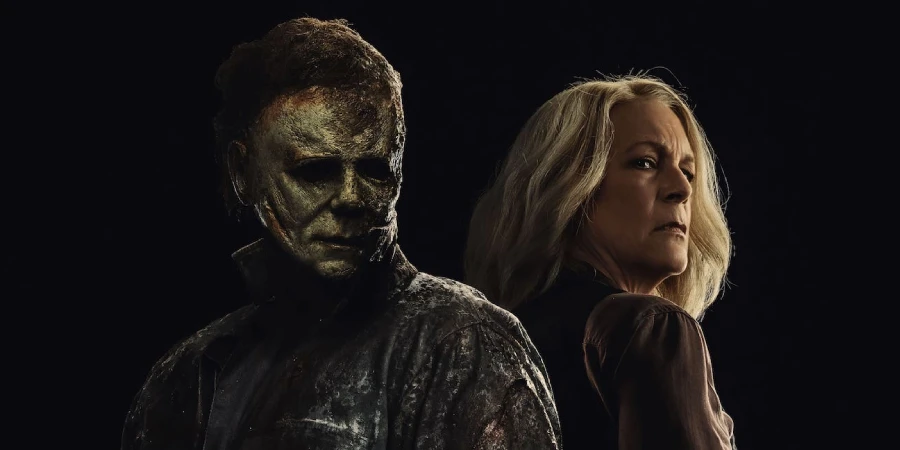

Halloween Ends (2022) is the final chapter of David Gordon Green’s Halloween trilogy, following Halloween (2018) and Halloween Kills (2021). Marketed as the ultimate confrontation between Laurie Strode and Michael Myers, the film surprised audiences by taking bold narrative risks, shifting focus, and challenging what a Halloween movie is supposed to be.
This is a full-spoiler breakdown. Nothing is held back.
Detailed Summary
A Different Beginning: Corey Cunningham
Instead of opening with Michael Myers, the film begins in 2019 with Corey Cunningham, a babysitter accused of killing a child after a tragic accident. Though ruled accidental, Corey becomes a social outcast, bullied and blamed by the town of Haddonfield.
This opening immediately signals that Halloween Ends is not a traditional slasher setup.
Four Years Later: A Changed Haddonfield
The story jumps to 2022, four years after Michael’s massacre. Michael Myers has vanished. Laurie Strode is living a quieter life, writing her memoirs and trying to move on with her granddaughter Allyson.
Despite Michael’s absence, Haddonfield remains traumatized. Evil has not left the town; it has simply changed shape.
Corey and Allyson’s Relationship
Corey meets Allyson, and the two bond over their shared pain and alienation. Laurie senses something is wrong and becomes increasingly concerned about Corey’s influence on Allyson.
This section explores one of the film’s central themes: evil as something that spreads through trauma, resentment, and neglect.
Corey Meets Michael Myers
In one of the film’s most unsettling scenes, Corey is dragged into the sewers and encounters a weakened Michael Myers. Instead of killing Corey, Michael seemingly recognizes something dark within him.
Corey survives and begins to change. He adopts Michael’s mask, commits murders, and becomes a copycat embodiment of Michael’s legacy.
This is the film’s most controversial narrative turn.
Laurie vs Corey
Laurie confronts Corey, realizing that the true danger is no longer just Michael, but the cycle of violence itself. Corey spirals fully into darkness, blaming Laurie for standing in the way of his new identity.
Their confrontation ends with Corey’s death, drawing Michael Myers back into the open.
Movie Ending
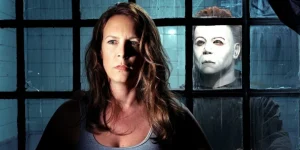
Michael Myers returns to Laurie Strode’s house for their final confrontation. Unlike previous films, Michael is visibly weaker, slower, and mortal. The fight is brutal, intimate, and grounded.
Laurie finally gains the upper hand and kills Michael Myers once and for all, slitting his throat and pinning him down to ensure he cannot rise again.
But the film doesn’t stop there.
To prevent any chance of mythologizing Michael again, Laurie and the townspeople place Michael’s body on a car and conduct a public procession through Haddonfield. The body is taken to a junkyard and destroyed in an industrial shredder, shown on screen in graphic detail.
This moment is crucial:
Michael Myers is not merely defeated — he is erased.
The final scene shows Laurie finishing her memoir and choosing life over fear. Evil may exist, but it does not have to define her anymore.
The ending is definitive, symbolic, and intentionally anti-myth.
Are There Post-Credits Scenes?
No.
Halloween Ends does not include a mid-credits or post-credits scene. The franchise is intentionally closed, and there are no teases for sequels.
Type of Movie
Halloween Ends is a slasher film blended with psychological horror and drama, focusing more on trauma, legacy, and moral decay than nonstop kills. It deliberately subverts expectations of a traditional horror finale.
Cast
- Jamie Lee Curtis – Laurie Strode
- Andi Matichak – Allyson Nelson
- Rohan Campbell – Corey Cunningham
- James Jude Courtney – Michael Myers
- Will Patton – Frank Hawkins
- Kyle Richards – Lindsey Wallace
Film Music and Composer
The score is composed by John Carpenter, Cody Carpenter, and Daniel Davies. While still rooted in the iconic Halloween theme, the music is more restrained and melancholic, reflecting the film’s somber tone and focus on internal horror.

Filming Locations
The film was shot primarily in Savannah, Georgia, which stood in for Haddonfield, Illinois.
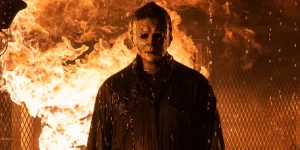
The suburban streets, junkyards, and sewer systems were essential to reinforcing the idea that evil now lives beneath the surface, literally and metaphorically.
Awards and Nominations
- Saturn Awards – Best Horror Film (Nominee)
- Saturn Awards – Best Actress (Jamie Lee Curtis, Nominee)
Critical reception was mixed, but Curtis’s performance was widely praised.
Behind the Scenes Insights
- David Gordon Green intentionally modeled Corey’s arc after classic tragic villain storytelling.
- Jamie Lee Curtis described this film as “the bravest Halloween movie.”
- John Carpenter supported the unconventional narrative direction despite fan backlash.
- The sewer scenes were physically demanding and filmed in tight, uncomfortable sets to enhance realism.
Inspirations and References
- Christine (1983) – another John Carpenter story about corruption and obsession
- Season of the Witch (Halloween III, 1982) – thematic inspiration for breaking franchise norms
- Psychological horror films focusing on community guilt and trauma
Alternate Endings and Deleted Scenes
Early drafts featured more scenes of Michael stalking, but they were removed to preserve the idea of his physical decline. No alternate ending was filmed; the shredder finale was always intended as the final statement.
Book Adaptations and Differences
The novelization expands Corey’s internal thoughts and Michael’s weakened state, making the transformation theme more explicit. The film leaves much of this intentionally ambiguous.
Memorable Scenes and Quotes
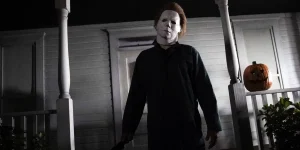
Key Scenes
- Corey’s accidental killing of the child in the opening
- Corey and Michael’s first encounter in the sewer
- Laurie’s staged suicide fake-out
- Michael Myers being destroyed in the shredder
Iconic Quotes
- Laurie Strode: “Evil doesn’t die. It changes shape.”
- Laurie Strode: “I choose life.”
Easter Eggs and Hidden Details
- Laurie’s memoir title references dialogue from Halloween (1978)
- The radio DJ scenes echo Carpenter’s The Fog
- Lindsey Wallace’s presence ties directly back to the original 1978 film
- Corey’s arc mirrors Laurie’s fear-driven transformation in earlier entries
Trivia
- This is Jamie Lee Curtis’s final appearance as Laurie Strode
- The film features fewer kills than Halloween Kills, by design
- Michael Myers speaks zero words across all films, including this one
- The budget was significantly lower than previous entries in the trilogy
Why Watch?
Watch Halloween Ends if you want:
- A bold, unconventional franchise finale
- A horror film about legacy and trauma, not just violence
- Closure to Laurie Strode’s 44-year journey
- A horror movie willing to challenge its own mythology
Director’s Other Movies
- Pineapple Express (2008)
- Stronger (2017)
- Halloween (2018)
- Halloween Kills (2021)
- The Exorcist: Believer (2023)
Recommended Films for Fans
- Halloween (1978)
- Halloween III: Season of the Witch (1982)
- Christine (1983)
- The Invisible Man (2020)
- Hereditary (2018)