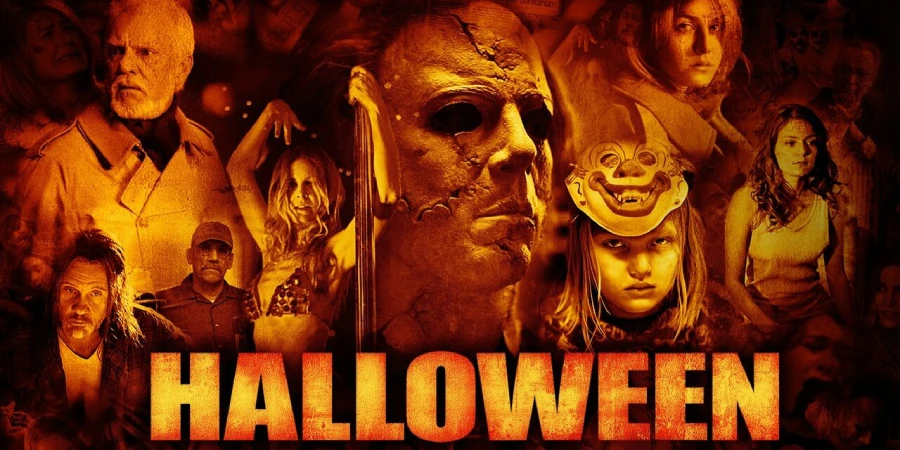

Rob Zombie’s Halloween (2007) is not a remake in the traditional sense; it is a dark psychological reinterpretation of John Carpenter’s 1978 classic. Zombie strips away much of the mystery and replaces it with raw trauma, brutality, and an origin-driven approach to one of cinema’s most iconic killers: Michael Myers.
This write-up fully explains the movie and includes spoilers, so proceed accordingly.
Detailed Summary
Michael Myers’ Childhood: Born or Made?
The film opens in Haddonfield, Illinois, focusing heavily on 10-year-old Michael Myers. He lives in a deeply dysfunctional household: an abusive stepfather, a neglectful mother working long hours as a stripper, and constant emotional isolation. Michael is bullied at school, kills animals, and shows early signs of violent psychopathy.
On Halloween night, after a series of humiliations and emotional breaking points, Michael brutally murders his stepfather, his sister Judith, and her boyfriend. He spares only his baby sister. This sequence establishes Zombie’s core question: Is Michael a monster by nature, or by nurture?
Smith’s Grove and Dr. Loomis
Michael is institutionalized at Smith’s Grove Sanitarium, where he is treated by Dr. Samuel Loomis. Loomis initially believes Michael can be rehabilitated and tries to connect with him through art and conversation.
Over time, Michael becomes increasingly silent and violent. His drawings turn disturbing, his behavior escalates, and eventually Loomis realizes that Michael is no longer human in any meaningful sense. Loomis abandons his attempts to save him, a decision that haunts him later.
Laurie Strode’s Normal Life
Years later, the film shifts focus to Laurie Strode, now a teenager living a seemingly normal life with her adoptive parents. She is grounded, sarcastic, and emotionally stable, a stark contrast to Michael’s childhood.
What Laurie doesn’t know is that she is Michael’s younger sister, given up for adoption after the murders.
Michael’s Escape and Return to Haddonfield
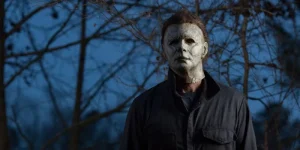
As an adult, Michael Myers escapes Smith’s Grove after killing several guards and returns to Haddonfield on Halloween night. Unlike Carpenter’s silent stalker, Zombie’s Michael is physically massive, feral, and explosively violent.
Michael murders anyone who crosses his path, including Laurie’s friends Annie and Lynda. The violence is graphic and relentless, emphasizing Michael as an unstoppable force rather than a lurking shadow.
The Family Revelation
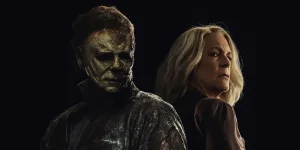
Michael eventually confronts Laurie, triggering suppressed memories of her childhood. Loomis arrives and realizes the truth: Laurie is Michael’s sister, and this entire killing spree is driven by Michael’s obsession with reuniting his “family.”
Movie Ending
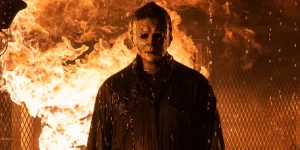
The final act takes place in an abandoned location after a long chase. Michael captures Laurie, placing her in a twisted reenactment of his childhood trauma. He tries to force her to accept her identity and join him, presenting her with his mother’s mask and photos from their past.
Laurie refuses. In a moment of desperation and rage, she shoots Michael in the face, seemingly killing him.
As Michael lies dying, Laurie snaps psychologically. She repeatedly stabs him while screaming uncontrollably, her face covered in blood. The police arrive and restrain her as she laughs hysterically, mirroring the very madness that defined Michael.
The film ends with Laurie institutionalized at Smith’s Grove, catatonic and traumatized, suggesting that Michael’s evil has not been destroyed but transferred. The line between victim and monster becomes disturbingly blurred.
This ending directly challenges the idea of closure and leaves the audience questioning whether survival truly equals victory.
Are There Post-Credits Scenes?
No. Halloween (2007) does not include any post-credits or mid-credits scenes. The story ends definitively with Laurie’s institutionalization.
Type of Movie
Halloween (2007) is a brutal slasher horror film with strong psychological and character-driven elements. It leans heavily into realism, trauma, and violence rather than suspenseful minimalism.
Cast
- Tyler Mane as Michael Myers (adult)
- Daeg Faerch as Michael Myers (child)
- Scout Taylor-Compton as Laurie Strode
- Malcolm McDowell as Dr. Samuel Loomis
- Sheri Moon Zombie as Deborah Myers
- Danielle Harris as Annie Brackett
- Brad Dourif as Sheriff Leigh Brackett
Film Music and Composer
The score was composed by Tyler Bates, a frequent collaborator of Rob Zombie. The music combines atmospheric dread with industrial aggression. The film also prominently uses classic rock tracks from the 1970s to ground the story in a grimy realism.
Filming Locations
The movie was filmed primarily in California, with Haddonfield recreated using suburban neighborhoods in Pasadena and Hollywood. Smith’s Grove was shot in abandoned institutional buildings, enhancing the film’s oppressive and decayed atmosphere. These locations emphasize the grounded, almost documentary-like brutality Zombie was aiming for.
Awards and Nominations
While not a major awards contender, the film received:
- Saturn Award nomination for Best Horror Film
- Recognition at genre-focused festivals for makeup and production design
Behind the Scenes Insights
- Rob Zombie originally wanted a much longer childhood segment; the studio forced cuts.
- Daeg Faerch’s performance as young Michael was widely praised and considered disturbing even by crew members.
- Tyler Mane trained extensively to physically embody Michael as a realistic killing machine, not a supernatural figure.
- John Carpenter publicly stated the film was “not for him,” but respected Zombie’s commitment to his vision.
Inspirations and References
The film is inspired by:
- John Carpenter’s Halloween (1978)
- True-crime case studies of childhood trauma
- Rob Zombie’s fascination with exploitation cinema and grindhouse horror
Alternate Endings and Deleted Scenes
Several deleted scenes expand Laurie’s psychological breakdown and Loomis’ guilt. An alternate ending shows Laurie fully embracing madness, sitting silently in Smith’s Grove with Michael’s mask. These scenes were removed for pacing but later released in extended cuts.
Book Adaptations and Differences
The film is based on the original movie, not a novel. Unlike the 1978 version, this adaptation:
- Explains Michael’s origin in detail
- Makes Laurie’s trauma central to the narrative
- Removes much of the supernatural ambiguity
Memorable Scenes and Quotes
Key Scenes
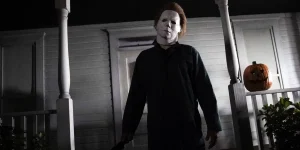
- Young Michael’s first murder on Halloween night
- Michael’s escape from Smith’s Grove
- The chaotic final confrontation between Laurie and Michael
Iconic Quotes
- Dr. Loomis: “I met this six-year-old child with a blank, pale, emotionless face… and the blackest eyes.”
- Laurie: “You don’t know what death is.”
Easter Eggs and Hidden Details
- The mask-making scenes reference real-life serial killer behavior patterns
- Michael’s drawings echo imagery from the original film
- Subtle visual callbacks to Carpenter’s framing appear during stalking scenes
Trivia
- The film was originally rated NC-17 before cuts
- Rob Zombie considers this film his most personal work
- It remains one of the most divisive entries in the franchise
Why Watch?
If you want a raw, unapologetically violent, psychologically heavy take on Michael Myers, this film delivers. It’s not subtle, but it is fearless in reinterpreting horror mythology.
Director’s Other Works
- House of 1000 Corpses (2003)
- The Devil’s Rejects (2005)
- Halloween II (2009)
- Lords of Salem (2012)
- 31 (2016)
Recommended Films for Fans
- The Texas Chainsaw Massacre (2003)
- The Devil’s Rejects (2005)
- Maniac (2012)
- Halloween II (2009)
- The Hills Have Eyes (2006)