
Free to Play is not just a documentary about video games. Directed by Valve Corporation’s in-house team and led by director Valve Corporation producer Gabe Newell’s vision, it chronicles the lives of three professional players competing in the very first The International tournament for Dota 2, where a groundbreaking $1,000,000 prize pool changed esports history forever.
What makes this film powerful is not just the competition — it’s the human cost, the family tension, and the psychological pressure behind the screens.
Detailed Summary
The Birth of a Million-Dollar Dream
The documentary opens by explaining how Dota 2 was still an emerging competitive title in 2011. Valve announces The International at Gamescom, shocking the gaming world with a prize pool no one had seen before.
At that time, professional gaming was still viewed as unstable, risky, even irresponsible. This is the atmosphere surrounding our three protagonists.
Fear: The American Veteran Under Pressure
We follow Clinton “Fear” Loomis from the United States. He’s older than most competitors and carries the weight of experience — and doubt. Years of grinding in esports have earned him respect, but not financial security.
His biggest obstacle isn’t mechanics. It’s stability. He wonders whether chasing a gaming dream is sustainable, especially in a culture that doesn’t yet respect esports.
Fear’s calm, strategic personality contrasts heavily with the explosive personalities around him.
hyhy: The Malaysian Prodigy Battling Expectations
Benedict “hyhy” Lim represents Malaysia. His struggle is deeply cultural. In his family’s eyes, gaming is not a profession — it’s a distraction.
We see intense family conversations where his mother questions his life choices. His internal conflict is one of identity versus duty. He’s not just playing for money. He’s playing to prove legitimacy — to his parents and his country.
The pressure on him feels heavier than the tournament itself.
Dendi: The Charismatic Star Carrying a Region
Danil “Dendi” Ishutin from Ukraine is perhaps the emotional heart of the film. Playing for Natus Vincere (Na’Vi), Dendi is vibrant, expressive, and beloved by fans.
But beneath the smile is someone carrying enormous regional pride. Eastern Europe had long been a powerhouse in Dota, and Na’Vi entered as favorites. Expectations were sky-high.
Unlike Fear and hyhy, Dendi already has momentum — but that makes losing even more devastating.
The Tournament: Pressure Becomes Reality
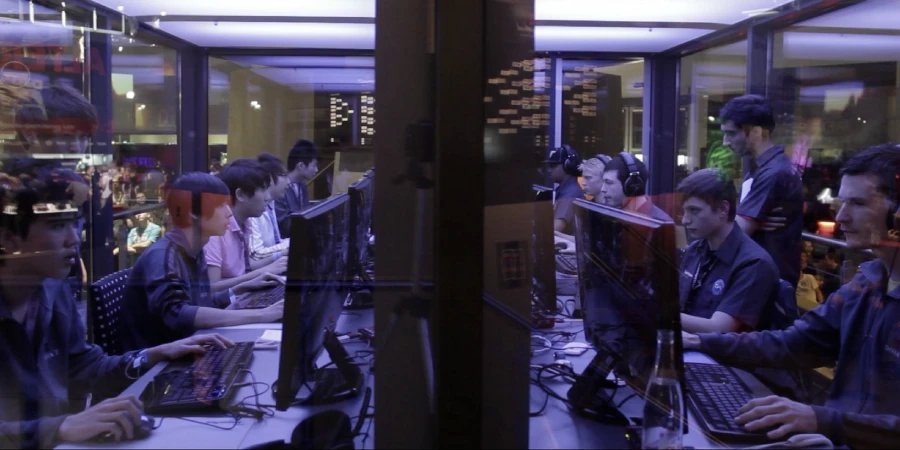
As The International unfolds in Cologne, Germany, the documentary builds tension masterfully. Matches are intense, crowds are roaring, and the prize pool looms over every draft and every team fight.
We see exhaustion, doubt, and flashes of brilliance. Strategies collapse. Underdogs rise. Confidence wavers.
The tournament doesn’t just test skill — it tests emotional endurance.

Movie Ending
The climax focuses on the Grand Finals of The International 2011.
Na’Vi, with Dendi, make a dominant run through the bracket and reach the final stage. The weight of expectation is enormous. For Dendi, this is validation not just for himself but for his team and region.
Fear’s team, Evil Geniuses, falls short earlier than hoped. His run ends without the million-dollar miracle. There’s visible disappointment, but also something more subtle — perspective. He begins to see that the industry is growing. This isn’t the end; it’s the beginning of something bigger.
hyhy’s journey ends painfully as well. His team struggles under pressure, and he leaves without the championship. The emotional scenes with his family resonate even more at this point. The loss isn’t just financial — it’s symbolic.
Na’Vi ultimately wins the championship, taking home the historic $1 million prize. Dendi’s joy is explosive and cathartic. He cries, laughs, celebrates with teammates. The victory represents legitimacy for professional gaming on a global stage.
But the documentary doesn’t end in pure triumphalism. It shows that winning doesn’t erase pressure. It doesn’t simplify life. It simply proves that esports is real — and that these players sacrificed everything for a shot at it.
The final tone is reflective rather than celebratory. We understand that this tournament marked the beginning of a new era.
Are There Post-Credits Scenes?
No. There are no post-credits scenes. Once the film ends, it ends definitively, staying true to its documentary style.
Type of Movie
Free to Play is a sports documentary focused on esports, blending competitive gaming with deeply personal character studies about ambition, sacrifice, and cultural pressure.
Cast
The film features real professional players as themselves:
- Clinton “Fear” Loomis
- Benedict “hyhy” Lim
- Danil “Dendi” Ishutin
- Members of Evil Geniuses
- Members of Natus Vincere
Film Music and Composer
The score was composed by Jeremy Soule, known for his work on the The Elder Scrolls V: Skyrim soundtrack. The music blends orchestral tension with emotional undertones, elevating match sequences into something almost mythic.
Filming Locations and Their Importance
- Cologne, Germany – The main tournament took place at Gamescom. This location is symbolic as it represents the international launch of Dota 2 onto the global esports stage.
- United States – Fear’s home segments highlight Western skepticism toward professional gaming.
- Malaysia – hyhy’s home environment emphasizes cultural pressure and generational conflict.
- Ukraine – Dendi’s segments show regional pride and economic realities in Eastern Europe.
These contrasting locations reinforce that esports is global — but struggles are local and deeply personal.
Awards and Nominations
While not a major awards contender, the documentary was praised within gaming and esports communities for legitimizing the competitive scene. It became one of the first high-quality films to treat esports with cinematic seriousness.
Behind the Scenes Insights
- Valve funded the entire million-dollar prize pool themselves in 2011.
- The documentary was used strategically to promote Dota 2’s launch.
- Players were not yet earning stable salaries at the time of filming.
- The production team aimed to portray esports athletes like traditional sports competitors, not gamers in bedrooms.
- Many emotional family scenes were filmed over extended periods to capture authenticity.
Inspirations and Context
The documentary wasn’t based on a book or prior story. Instead, it was inspired by Valve’s belief that esports deserved mainstream legitimacy, similar to traditional sports documentaries like Hoop Dreams.
Alternate Endings and Deleted Scenes
There are no known alternate endings. Some extended interviews and player background segments were cut for pacing, but the tournament outcome was always the intended narrative climax.
Memorable Scenes and Quotes
Key Scenes
- Valve announcing the $1,000,000 prize pool at Gamescom.
- hyhy’s difficult conversation with his mother.
- Fear discussing the instability of esports as a career.
- Na’Vi lifting the trophy in Cologne.
Iconic Quotes
- “This is our chance to prove this is real.”
- “If we fail, what do we go back to?”
- “One tournament can change everything.”


Easter Eggs and Hidden Details
- Early Dota 2 UI designs visible during tournament footage.
- Subtle foreshadowing in interviews about which teams will crack under pressure.
- Behind-the-scenes glimpses of early esports stage production setups that look modest compared to today’s massive arenas.
- Early branding and logos of teams that later became esports giants.
Trivia
- The $1 million prize pool was unprecedented in esports in 2011.
- Dota 2 was not even fully released at the time of the tournament.
- The International has since grown to tens of millions in prize money.
- Fear would later win The International in 2015 with Evil Geniuses.
- The documentary is available for free on Steam.
Why Watch?
Because it captures the exact moment esports stopped being a niche hobby and started becoming a global industry. Even if you don’t play Dota, the human stories of ambition, doubt, and validation are universally compelling. It’s less about clicking fast and more about risking everything on a dream.
Director’s Other Works
Valve’s documentary unit has not produced many traditional films, as the company focuses primarily on games like:
Recommended Films for Fans
- The King of Kong: A Fistful of Quarters (2007)
- Indie Game: The Movie (2012)
- High Score (2020)
- All Work All Play (2015)