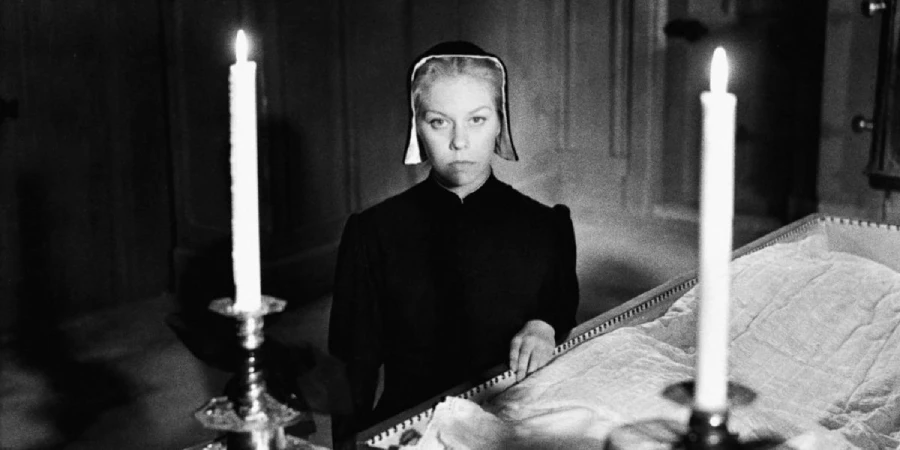

Carl Theodor Dreyer’s Day of Wrath is not a film about witches; rather, it is a chilling examination of how suggestion becomes reality. Set in a 17th-century Danish village drowning in paranoia, the story masterfully blurs the lines between sin, desire, and supernatural power. Consequently, audiences are left questioning not whether magic is real, but how easily the belief in it can condemn a soul.
Detailed Summary
The film unfolds in a slow, deliberate burn. Consequently, every frame feels heavy with unspoken tension and religious dread. Its narrative tracks the downfall of a family ensnared by piety and passion.
The Accusation of Herlofs Marte
The story begins with an old woman, Herlofs Marte, accused of witchcraft. We learn she has been hiding in the home of the aging village pastor, Absalon Pederssøn. It is later revealed that Absalon’s young wife, Anne, has a connection to Marte. Specifically, Anne’s own mother was accused of witchcraft years ago but was spared thanks to Absalon, who then married the much younger Anne. Marte believes Anne should help her, leveraging this dark secret. However, Absalon allows the authorities to take Marte for interrogation.
Anne’s Complicity
During a brutal interrogation, Marte confesses to witchcraft. Just before being burned at the stake, she whispers to Absalon that she knows he saved Anne’s mother only to possess Anne for himself. Furthermore, she curses him and hints that Anne possesses the same dark powers. Anne witnesses the execution, an event that deeply disturbs her. Herlofs Marte’s final words, combined with the grim spectacle, plant a dangerous seed of an idea in Anne’s mind.
Martin’s Arrival
Soon after, Absalon’s son from his first marriage, Martin, returns home from his studies. He is the same age as Anne, his new stepmother. An immediate, unspoken attraction sparks between them. In contrast to the cold and distant Absalon, Martin represents warmth, youth, and the possibility of a life Anne has never known. Their connection grows amidst the stark, oppressive atmosphere of Absalon’s home.
The Forbidden Romance
Anne and Martin eventually succumb to their feelings. Their affair blossoms in secret, offering a brief escape from the puritanical world that confines them. During one of their clandestine meetings, Anne playfully suggests she has supernatural powers. For instance, she tells Martin she wished for his father to be gone, and now he is here with her. While she says it with a smile, the line between jest and belief begins to blur for her. She starts to wonder if she truly can influence events with her will alone.
Absalon’s Death
Meanwhile, Absalon grows suspicious. He confronts Anne one night, and she coldly admits she does not love him and wishes him dead. The emotional weight of this confession, coupled with Marte’s curse, is too much for the old pastor. He clutches his chest, cries out Martin’s name, and collapses, dead from a heart attack or stroke. Anne watches him die without emotion, her face a mask of cold resolve. Consequently, her inaction seals her fate.
The Final Accusation
Absalon’s formidable mother, Meret, has always suspected Anne. After her son’s death, she openly accuses Anne of murdering Absalon with witchcraft. She calls Martin as a witness, expecting him to support her. Initially, Martin defends Anne. However, under the intense pressure of his grandmother and the clergy, and haunted by Anne’s own admission that she “called him dead,” his faith in her wavers. His silence becomes her condemnation.
Movie Ending
The ending of Day of Wrath is famously bleak and ambiguous. In the final scene, Anne is brought before a tribunal of priests. Absalon’s mother, Meret, levels her damning accusation. When Martin refuses to defend her, Anne’s spirit breaks completely. With all hope lost, she looks directly at the judges and confesses to everything. She admits to murdering Absalon and consorting with the Devil.
The crucial question is whether Anne is truly a witch. The film never provides a definitive answer. On one hand, her “powers” only manifest after others suggest she has them. Her confession can be seen as the ultimate act of despair; a society that has decided she is a witch has left her with no other identity to claim. On the other hand, the film subtly aligns events with her wishes, leaving open the terrifying possibility that she did, in fact, will her husband’s death.
Ultimately, her lover’s betrayal is the final blow. Realizing she is utterly alone, she accepts the fate everyone has chosen for her. A new fire is ordered, and Anne is destined for the same death as Herlofs Marte.
Are There Post-Credits Scenes?
No, there are no post-credits scenes in Day of Wrath. The film concludes definitively with Anne’s confession and implied sentence.
Type of Movie
Day of Wrath is a historical psychological drama with strong elements of horror. Its tone is overwhelmingly somber, oppressive, and methodical. The horror does not come from jump scares or monsters, but from the unyielding dread of religious fanaticism and the psychological unraveling of its characters. Consequently, the film creates a claustrophobic atmosphere where hysteria feels both inevitable and terrifyingly real.
Cast
- Thorkild Roose – Absalon Pederssøn
- Lisbeth Movin – Anne Pedersdotter
- Sigrid Neiiendam – Meret, Absalon’s mother
- Preben Lerdorff Rye – Martin
- Anna Svierkier – Herlofs Marte
- Albert Høeberg – The Bishop
Film Music and Composer
The score for Day of Wrath was composed by Poul Schierbeck, a notable Danish composer. However, the film’s most powerful musical element is its incorporation of the “Dies Irae” (“Day of Wrath”) a 13th-century Latin hymn describing the Day of Judgment. This theme is woven throughout the film, serving as a constant, ominous reminder of divine retribution and damnation. The music is sparse, often giving way to long stretches of silence that amplify the tension and starkness of the visuals. This minimalist approach ensures that when music does appear, its emotional impact is profound.



Filming Locations
Director Carl Theodor Dreyer was known for his meticulous control over his film’s environment. As a result, Day of Wrath was shot almost entirely on carefully constructed sets at Palladium Studios in Hellerup, Denmark. Dreyer and his art director, Erik Aaes, designed the sets to be historically accurate but also psychologically expressive. The low ceilings, dark wood interiors, and stark, minimalist decor create a feeling of confinement and oppression. This controlled environment was essential for achieving the film’s distinct visual style, which was heavily inspired by the chiaroscuro lighting found in paintings by artists like Rembrandt and Vermeer.
Awards and Nominations
Upon its release during a tumultuous period in history, Day of Wrath did not receive major international awards. Its reception was initially mixed, especially in its native Denmark. However, over the decades, its critical standing has grown immensely. Today, it is widely considered a masterpiece of world cinema by film historians and critics, though it lacks a list of contemporary awards from its 1943 release.
Behind the Scenes Insights
- The film was produced during the Nazi occupation of Denmark. Many critics and scholars interpret the film as a powerful allegory for the persecution of Jews and other minorities by the Nazi regime, with the witch hunts standing in for modern-day fanaticism.
- Fearing reprisal from the Nazis for the film’s perceived subtext, director Carl Theodor Dreyer went into self-imposed exile in Sweden shortly after its release.
- Dreyer’s directorial style was famously slow and demanding. He insisted on long takes and a deliberate pace to build an atmosphere of authentic dread, a method some actors found challenging.
- Actress Anna Svierkier, who played Herlofs Marte, was a non-professional actress discovered by Dreyer. He believed her weathered face perfectly embodied the suffering of the accused.
Inspirations and References
Day of Wrath is based on the 1908 Norwegian play Anne Pedersdotter by Hans Wiers-Jenssen. The play, in turn, was inspired by the true story of Anne Pedersdotter, a Norwegian woman who was accused of witchcraft and burned at the stake in Bergen in 1590. Her case was one of the most famous in Norwegian history, involving court documents that detailed accusations of her using magic to sicken and kill her husband’s rivals.
Alternate Endings and Deleted Scenes
There are no known alternate endings or significantly different versions of Day of Wrath. Carl Theodor Dreyer had complete artistic control over the final cut, and his methodical, perfectionist approach to filmmaking meant that the version released was his definitive vision. The narrative is intentionally spare, and there is no evidence of major scenes being left on the cutting room floor.
Book Adaptations and Differences
The film is not based on a book but on the play Anne Pedersdotter. While following the general plot of the play, Dreyer’s film makes significant tonal and thematic shifts. The play is often interpreted as being more explicit about Anne’s guilt and her use of magic. In contrast, Dreyer’s adaptation bathes the story in ambiguity. He shifts the focus from a simple case of witchcraft to a complex psychological study of how persecution, suggestion, and desire can create a “witch,” whether or not supernatural forces are actually at play.


Memorable Scenes and Quotes
Key Scenes
- Herlofs Marte’s Interrogation: A harrowing and starkly filmed sequence where the old woman is emotionally and spiritually broken by the clergy until she confesses.
- The First Meeting: Anne and Martin’s first encounter by the river is filled with vibrant, natural light, contrasting sharply with the gloom of Absalon’s home and symbolizing newfound life and desire.
- Absalon’s Death: After Anne coldly tells her husband she wishes him dead, he collapses. Her calm, observant reaction is one of the most chilling moments in cinema.
- The Final Confession: Abandoned by her lover Martin, Anne’s face transforms from defiance to utter desolation as she embraces the identity of a witch that society has forced upon her.
Iconic Quotes
- Herlofs Marte: “You too can make yourself invisible. I know that from your mother. But you must get help from him below.”
- Anne: “I saw him look at me. It’s a sin. He’s my husband’s son.”
- Anne: “Is it so terrible to be happy?”
- Anne (to Absalon): “I wished you dead. And you fell dead at my feet.”
- Anne (confessing): “I have killed your son. I have lured his son into my power. I have leagued myself with the Prince of Darkness.”
Easter Eggs and Hidden Details
- Painterly Compositions: Many shots are intentionally composed to resemble 17th-century Dutch and Danish paintings, particularly the work of Rembrandt and Vilhelm Hammershøi, using chiaroscuro (strong contrast between light and dark).
- Symbolism of Light: Natural light often floods scenes between Anne and Martin, symbolizing their life, passion, and freedom. In contrast, the interiors of the church and Absalon’s home are dark and shadowy, representing oppression and death.
- Cross Motifs: The shape of the cross appears repeatedly in the background architecture, window frames, and shadows, serving as a constant reminder of the oppressive religious judgment that governs the characters’ lives.
Trivia
- The film was a commercial and critical failure in Denmark upon its 1943 release. Many Danes, living under occupation, found its slow, grim style to be unbearable at the time.
- Its international reputation began to soar after World War II, when critics like André Bazin championed it as a cinematic masterpiece.
- The deliberate, almost glacial pacing of the film, known as “Dreyer’s tempo,” became a hallmark of his late-career style.
- Preben Lerdorff Rye, who played Martin, would later collaborate with Dreyer again, famously playing the resurrected Johannes in the 1955 film Ordet.
Why Watch?
This film is a masterclass in atmospheric tension. Through haunting visuals and psychological depth, it explores the terrifying power of suggestion. Ultimately, its slow-burn horror will stay with you long after the credits roll, making it essential viewing for any serious film lover.
Director’s Other Movies
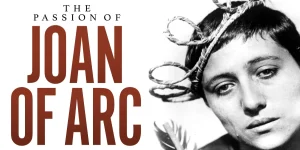
- The Passion of Joan of Arc (1928)
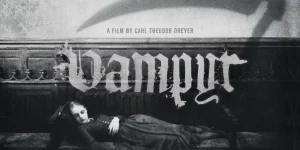
- Vampyr (1932)
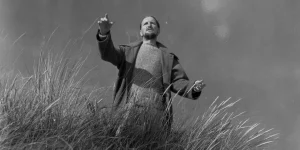
- Ordet (1955)
- Gertrud (1964)
Recommended Films for Fans
- Häxan (1922)
- The Seventh Seal (1957)
- The Crucible (1996)
- The Witch (2015)
- The Passion of Joan of Arc (1928)