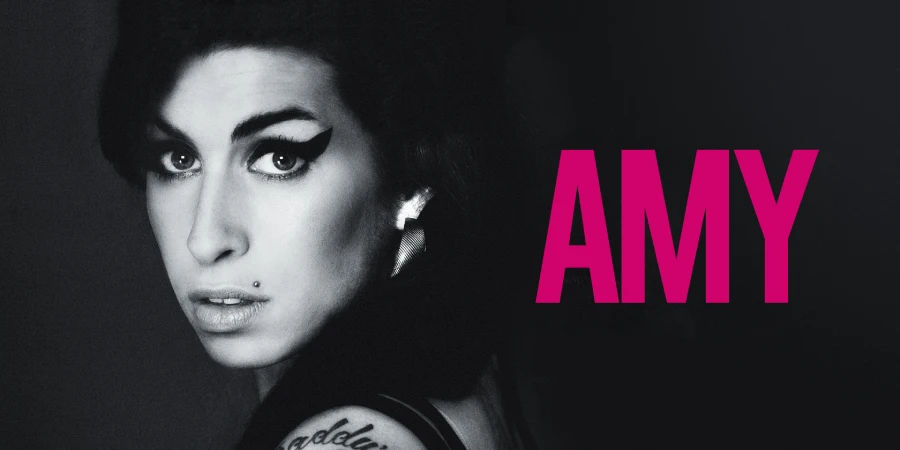

Asif Kapadia’s Amy is more than a documentary; it is a heart-wrenching autopsy of fame. The film wields raw home-video footage to chronicle the life and death of Amy Winehouse. Consequently, it poses a deeply uncomfortable question. Were we, the audience, complicit in her tragic downfall?
Detailed Summary
Early Life and Raw Talent
The film opens with charming, grainy footage of a teenage Amy. She is goofy, charismatic, and already possesses a jaw-droppingly powerful jazz voice. Her close friends, Juliette Ashby and Lauren Gilbert, provide early narration. Subsequently, we meet her first manager, Nick Shymansky, who discovered her at 16. The footage from this era is intimate and happy. Indeed, it showcases a young woman full of life, completely unaware of the storm brewing on the horizon.
The Rise of Frank
Amy signs a record deal and releases her debut album, Frank. Despite its critical success, she immediately expresses discomfort with the music industry. For instance, she complains about compromises made on the album and hates doing promotional work. This section astutely establishes a core conflict. Specifically, Amy loves making music but despises the business of being a star. Her battle with bulimia, which she developed as a teenager, also becomes more pronounced during this period.
Blake and the Tumultuous Spiral
In a Camden pub, Amy meets Blake Fielder-Civil. Their connection is instant and intense. However, their relationship quickly becomes a toxic cocktail of passion and self-destruction. When Blake leaves her to go back to an ex-girlfriend, a heartbroken Amy channels her pain into writing her masterpiece, Back to Black. He later returns, and they marry in Miami. In addition, it is Blake who introduces her to hard drugs like crack cocaine and heroin, accelerating her tragic decline.
Global Stardom and Public Scrutiny
Back to Black catapults Amy to global superstardom. The film jarringly contrasts her creative triumph with her personal implosion. As a result, paparazzi begin hounding her relentlessly. Every public stumble and private argument becomes front-page news. Her father, Mitch Winehouse, also becomes a more prominent and controversial figure in her life.
Notably, the film highlights a moment where he brings a reality TV crew to her St. Lucia retreat, much to her dismay. Amy’s health deteriorates visibly under the immense pressure.
Failed Interventions and the Final Years
Friends and management attempt interventions. However, the film controversially suggests her father thwarted an early effort, believing she didn’t need rehab. This is the moment immortalized in her hit song “Rehab.” Eventually, she does go, but her sobriety is fragile.
The documentary’s climax is the footage from her disastrous 2011 Belgrade concert. Here, a clearly intoxicated and distressed Amy cannot perform, booed by a massive crowd. This public humiliation is devastating. Not long after, she is found dead in her Camden home.


Movie Ending
The ending of Amy is profoundly somber and moving. After the harrowing Belgrade footage, the film cuts to black. Text on the screen announces her death on July 23, 2011, from alcohol poisoning. We hear voicemails from Amy to Nick Shymansky, sounding optimistic just before her death. Consequently, this makes the outcome even more heartbreaking.
The film concludes with footage from her final recording session with her idol, Tony Bennett, for the song “Body and Soul.” In this scene, she appears nervous but delivers a stunning performance. Bennett speaks glowingly of her talent, a poignant final testament to the artist the world lost.
Are There Post-Credits Scenes?
No, there are no post-credits scenes in Amy. The final tribute from Tony Bennett serves as the definitive end to the film.
Type of Movie
Amy is a biographical documentary. It uses archival footage, home videos, and audio interviews to construct its narrative. The tone is overwhelmingly tragic and intimate. Furthermore, it acts as a cautionary tale about the destructive nature of modern celebrity culture and addiction, while simultaneously celebrating an immense musical talent.
Cast
- Amy Winehouse – Herself (archive footage)
- Mitch Winehouse – Himself
- Janis Winehouse – Herself
- Nick Shymansky – Himself
- Juliette Ashby – Herself
- Lauren Gilbert – Herself
- Blake Fielder-Civil – Himself
- Yasiin Bey (Mos Def) – Himself
- Tony Bennett – Himself
- Mark Ronson – Himself
- Salaam Remi – Himself
Film Music and Composer
The score was composed by Brazilian composer Antonio Pinto, who previously worked with director Asif Kapadia on Senna. Pinto’s score is subtle and melancholic, providing an emotional undercurrent. However, the film’s primary musical force is, of course, the music of Amy Winehouse herself. The filmmakers brilliantly use her own lyrics, often displayed on screen, to narrate her feelings and experiences. As a result, songs like “Rehab,” “Back to Black,” and “Love Is a Losing Game” function as Amy’s own diary entries throughout the film.


Filming Locations
As a documentary composed of archival footage, Amy does not have traditional filming locations. Instead, it features real places that were central to her life. London is the most prominent, especially her beloved and chaotic neighborhood of Camden Town. Her childhood home in Southgate, North London, also appears frequently in early home videos. In addition, the film includes footage from her retreat in St. Lucia, her wedding in Miami, and various tour locations worldwide, which collectively map her journey from local talent to global, hounded superstar.
Awards and Nominations
Amy was met with widespread critical acclaim and received numerous awards. Its most significant win was the Academy Award for Best Documentary Feature in 2016. Moreover, the film also won the BAFTA Award for Best Documentary and the Grammy Award for Best Music Film. It earned dozens of other accolades from critics’ associations and film festivals around the world.
Behind the Scenes Insights
- Director Asif Kapadia employed a unique interview technique. He conducted over 100 interviews as audio-only sessions, believing subjects would be more candid without a camera pointed at them.
- The Winehouse family, particularly Mitch Winehouse, initially cooperated with the production. However, they later publicly condemned the film, stating it presented a misleading and untruthful portrayal of Amy and her father.
- The film’s editors, Chris King and Gregers Sall, had to sift through thousands of hours of archival footage to construct the narrative.
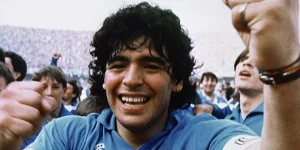
- Kapadia sees Amy as the second part of a trilogy about fame and its consequences, sitting between Senna (2010) and Diego Maradona (2019).
Inspirations and References
The primary inspiration for Amy is the real life of Amy Winehouse herself. The film’s narrative structure and visual style, however, are heavily influenced by director Asif Kapadia’s previous work, especially the critically acclaimed documentary Senna. Both films avoid traditional talking-head interviews on screen. Instead, they rely exclusively on archival footage, with audio interviews layered over the top to create a visceral, immersive experience that puts the audience directly into the subject’s world.
Alternate Endings and Deleted Scenes
With thousands of hours of material available, the final cut of Amy is a highly curated version of the story. Director Asif Kapadia has mentioned that many painful scenes were left out, as the final film was already emotionally taxing. While no specific “alternate ending” has been released, the sheer volume of unused interview audio and archival footage means countless alternative narrative paths existed. The filmmakers ultimately chose to focus on the arc of talent versus celebrity, addiction, and media complicity, meaning any footage that didn’t serve this central theme was likely cut.
Book Adaptations and Differences
Amy is not based on a book. It is an original documentary constructed from primary source material, including hundreds of hours of home videos, performance clips, newsreels, and original audio interviews conducted specifically for the film.



Memorable Scenes and Quotes
Key Scenes
- Recording Back to Black: In the studio with producer Mark Ronson, Amy lays down the vocals for the title track in one take. It is a moment of pure, unadulterated genius.
- The Grammy Win: Amy wins the Grammy for Record of the Year and watches via satellite from London, sober and surrounded by her team. Her look of genuine shock and a quiet, vulnerable aside to her mother (“I’m no good without my man”) is heartbreaking.
- The Belgrade Concert: The agonizing footage of Amy’s final performance, where she is too intoxicated to sing and is relentlessly booed by the crowd. It is nearly impossible to watch.
- “Body and Soul” with Tony Bennett: Her final recording. She is nervous and seeks approval from her idol, but delivers a flawless vocal performance, showing the artist was still there beneath the turmoil.
Iconic Quotes
- “I don’t think I’m gonna be at all famous. I don’t think I could handle it. I would probably go mad.”
- “The thing is, I don’t think I’m a singer. I think I’m a jazz singer. My main function is to sing.”
- “Life is short. Anything could happen, and it usually does, so there is no point in sitting around thinking about all the ifs, ands and buts.”
- “I fell in love with someone who I would’ve died for. And that’s like a real drug, isn’t it?”
Easter Eggs and Hidden Details
- Lyrical Foreshadowing: The film masterfully uses Amy’s own lyrics, often displayed on screen, to foreshadow events in her life. The lyrics serve as a running commentary, a hidden-in-plain-sight diary of her struggles.
- The Opening Scene: An early scene shows a 14-year-old Amy singing “Happy Birthday” with a vocal maturity far beyond her years. This immediately establishes her raw, innate talent before any fame.
- Mitch’s Cameo: In a clip from an old talk show, Amy mentions her dad always told her she couldn’t sing. The film later contrasts this with his actions as her fame grew, adding a layer of complexity to his portrayal.
- Subtle Visuals of Addiction: Pay close attention to the background of her flat in later scenes. The clutter, drug paraphernalia, and general state of disarray serve as a stark visual metaphor for her internal chaos.
Trivia
- The film was made without the final approval of Amy’s father, Mitch Winehouse, who is portrayed in a controversial light. He has since promoted his own book and a potential biopic to counter the film’s narrative.
- Amy’s close friend Juliette Ashby, who appears throughout the film, is also a singer and songwriter.
- The film’s title is simply Amy, a deliberate choice by the director to focus on the person rather than the famous caricature of “Amy Winehouse.”
- Many of Amy’s friends and collaborators had never spoken publicly about her death before participating in this documentary.
Why Watch?
This is a devastatingly intimate portrait of a generational talent. It moves beyond tabloid headlines to honor her genius. Consequently, the film serves as a powerful indictment of the media and celebrity culture that consumed her. It remains an essential, heartbreaking watch.
Director’s Other Movies
- The Warrior (2001)
- Senna (2010)
- Diego Maradona (2019)
- Creature (2021)
Recommended Films for Fans
- Kurt Cobain: Montage of Heck (2015)
- What Happened, Miss Simone? (2015)
- Senna (2010)
- 20 Feet from Stardom (2013)
- Searching for Sugar Man (2012)