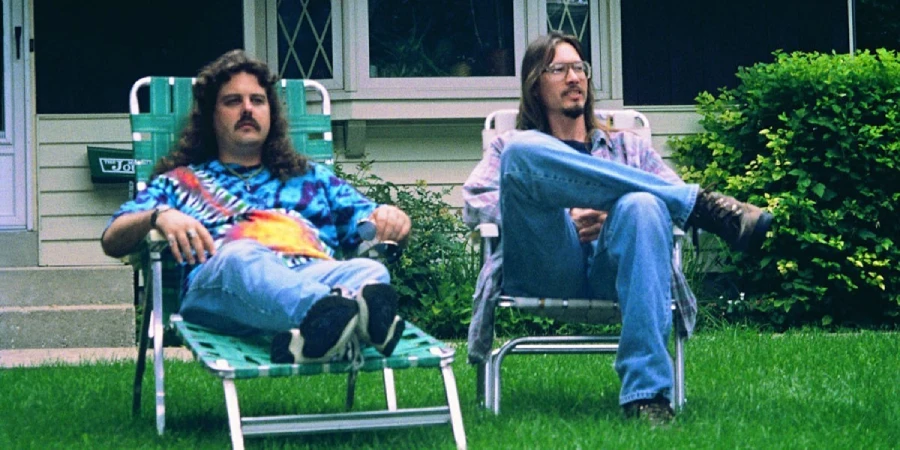

American Movie is one of the most honest, tragicomic, and unexpectedly emotional documentaries ever made about filmmaking. Released in 1999 and directed by Chris Smith, the film follows an aspiring independent filmmaker whose dreams are far bigger than his budget, talent, or circumstances. What begins as a behind-the-scenes documentary slowly transforms into a deeply human portrait of obsession, friendship, addiction, and artistic stubbornness.
Detailed Summary
The Dream of Becoming a Filmmaker
The documentary centers on Mark Borchardt, a filmmaker from Milwaukee, Wisconsin, who has dreamed of becoming a famous director since childhood. His ultimate goal is to make a low-budget horror feature titled Northwestern, which he believes will launch his career.
Mark lives with his elderly uncle Bill, works sporadic minimum-wage jobs, struggles with alcoholism, and has virtually no financial support. Despite this, his belief in his own destiny as a filmmaker is unshakable.
From the very beginning, the film establishes its central tension:
an unstoppable dream colliding with very real life problems.
The Broken Production of Northwestern
Mark has already started shooting Northwestern years earlier, but the project is in chaos. Actors have quit, footage has been lost, money has vanished, and production has stalled repeatedly.
He realizes that without completing a shorter film first, he will never secure funding. His solution is to make a 30-minute black-and-white horror short called Coven (pronounced “COH-ven,” not “CUH-ven,” a running joke throughout the movie).
This smaller film becomes the immediate focus of the documentary.
Enter Mike Schank
One of the most unforgettable elements of American Movie is Mike Schank, Mark’s best friend and longtime collaborator.
Mike is soft-spoken, socially anxious, recovering from substance abuse, and deeply loyal to Mark. While Mark is explosive, argumentative, and often manipulative, Mike quietly supports him emotionally and financially.
Their relationship becomes the emotional backbone of the film.
Mike believes in Mark long after logic says he shouldn’t.
Funding Problems and Desperation
Mark scrambles for money in increasingly desperate ways:
- He borrows from friends and family
- He works briefly as a gravedigger
- He sells personal belongings
- He pressures his uncle Bill into investing
Every attempt leads to conflict.
Mark frequently alienates the very people trying to help him. His temper, perfectionism, and drinking habits repeatedly derail progress. Scenes of screaming matches are followed immediately by heartfelt apologies and renewed optimism.
The documentary never mocks Mark, but it never hides his flaws either.
Filmmaking Chaos
As Coven enters production, nearly everything goes wrong:
- Actors forget lines
- Equipment fails
- Sound recording is unusable
- Locations fall through
- Money runs out mid-shoot
Yet Mark pushes forward, convinced that greatness is just one more sacrifice away.
Some scenes are unintentionally hilarious. Others are painfully uncomfortable. Together they show how filmmaking can be both magical and brutally unforgiving.
The Emotional Core Emerges
Halfway through the documentary, American Movie shifts from being about making a horror film to being about why people cling to dreams.
Mark speaks openly about:
- Feeling like a failure
- Being afraid of becoming “nothing”
- Believing filmmaking is the only thing that gives his life meaning
This vulnerability reframes everything that came before it. What once seemed delusional now feels tragic and deeply human.
Movie Ending
The film’s final act focuses on whether Mark will finally finish Coven.
After years of delays, arguments, and near-collapse, the short film is completed. It premieres at a local screening attended by friends, family, and supporters.
The moment is small. There is no Hollywood producer in the audience. No distribution deal. No sudden fame.
But the screening happens.
Mark watches his movie play in front of an audience, hearing laughter, applause, and reactions for the first time. For him, this is a victory.
The documentary closes by revealing what happened afterward:
- Coven is accepted into the Sundance Film Festival
- Mark attends Sundance, fulfilling a lifelong dream
- Despite this achievement, his career does not immediately take off
The final scenes make it clear that success does not magically fix Mark’s life. He remains financially unstable, still chasing Northwestern, still struggling personally.
Yet the ending refuses cynicism.
The film concludes with the idea that finishing something, against impossible odds, may itself be success.
The audience is left asking an uncomfortable question:
Is the dream foolish—or is giving up the real tragedy?
Are There Post-Credits Scenes?
No, American Movie does not include any post-credits or mid-credits scenes. The documentary ends traditionally, allowing the emotional weight of the story to settle without additional footage.
Type of Movie
American Movie is a documentary that blends biography, dark comedy, and slice-of-life realism. While often funny, it is ultimately a deeply personal character study rather than a comedy film.
Cast
- Mark Borchardt – Himself
- Mike Schank – Himself
- Uncle Bill Borchardt – Himself
- Joan Borchardt – Herself
- Chris Smith – Director (off-camera)
Film Music and Composer
The film’s music was composed by Mike Schank, who also performs several original songs featured throughout the documentary. His acoustic tracks add emotional warmth and melancholy, becoming inseparable from the film’s tone.
Filming Locations
The documentary was shot almost entirely in:
- Milwaukee, Wisconsin
- Surrounding rural Wisconsin towns
- Local homes, bars, basements, and abandoned buildings
These locations are essential to the film’s authenticity. The modest Midwestern settings emphasize how far Mark’s dreams extend beyond his environment, reinforcing the film’s central conflict between ambition and reality.
Awards and Nominations
American Movie received major critical recognition, including:
- Grand Jury Prize – Documentary, Sundance Film Festival (1999)
- Best Documentary – New York Film Critics Circle
- Independent Spirit Award nomination
- Numerous critics’ top-ten lists of 1999
Over time, it has become widely regarded as one of the greatest documentaries ever made.
Behind the Scenes Insights
- The film was shot over several years, not months
- Director Chris Smith initially intended a short documentary
- Mark Borchardt had complete creative freedom during filming
- Much of the humor was unintentional and emerged naturally
- The filmmakers never intervened financially
- Mike Schank’s music was recorded specifically for the documentary
- Many scenes were captured during real emotional breakdowns
Inspirations and References
The documentary was not based on another work, but it draws thematic inspiration from:
- Independent filmmaking culture of the 1990s
- DIY horror cinema of the 1980s
- The American Dream mythos
- Cinema verité documentary traditions
Mark himself frequently references classic horror films and directors as his inspiration.
Alternate Endings and Deleted Scenes
There are no known alternate endings. However, several hours of unused footage exist, including:
- Extended arguments over money
- Additional Northwestern test scenes
- Longer interviews with family members
Some of this material later appeared in DVD bonus features.
Book Adaptations and Differences
The film is not based on a book. No official novelization or written adaptation exists.

Memorable Scenes and Quotes
Key Scenes
- Mark screaming about missing money during production
- Mike quietly lending Mark money he cannot afford
- The infamous pronunciation argument over “Coven”
- The emotional Sundance acceptance reveal
- Mark watching his film with a live audience
Iconic Quotes
- “It’s all right here, man. It’s all in the mind.”
- “I’m not lazy. I just don’t like working.”
- “I could have been a contender.”
- “This is my destiny.”
Easter Eggs and Hidden Details
- The spelling of Coven intentionally mimics old exploitation horror posters
- Several background props are reused across different “sets”
- Mark’s childhood drawings appear briefly on walls
- Some audio imperfections were intentionally left uncorrected
- The film subtly mirrors the structure of a classic three-act narrative
Trivia
- The documentary cost less than most student films
- Mike Schank later became a cult figure among indie film fans
- The film influenced countless DIY filmmakers
- It is frequently shown in film schools worldwide
- Roger Ebert called it “funny, sad, and inspiring at the same time”
Why Watch?
You should watch American Movie if you appreciate:
- Raw, unfiltered human storytelling
- Honest portrayals of ambition and failure
- Independent cinema culture
- Documentaries that feel more real than fiction
It is not about filmmaking success.
It is about why people refuse to stop trying.
Director’s Other Works (Movies)
- Home Movie (2001)
- The Yes Men (2003)
- The Pool (2007)
- Collapse (2009)
- Jim & Andy: The Great Beyond (2017)
Recommended Films for Fans
- Hearts of Darkness: A Filmmaker’s Apocalypse (1991)
- Overnight (2003)
- Lost in La Mancha (2002)
- Burden of Dreams (1982)
- Side by Side (2012)