
All Quiet on the Western Front (1930) is one of the most powerful anti-war films ever made. Adapted from Erich Maria Remarque’s novel, it strips war of heroism and replaces it with fear, loss, and psychological collapse. Even nearly a century later, its impact remains devastatingly relevant.
Detailed Summary
Youthful Idealism and Enlistment
The story begins in Germany during World War I, where a group of enthusiastic schoolboys, led by Paul Bäumer, are inspired by their teacher’s fiery nationalist speeches. He glorifies war as noble and heroic, persuading them to enlist. This early optimism is crucial because it will later be completely dismantled. Their smiles and confidence contrast brutally with what awaits them.
Training and the First Cracks in Illusions
Military training introduces the recruits to harsh discipline and humiliation, especially from Corporal Himmelstoss. What initially feels like preparation soon becomes dehumanization. The men learn that obedience matters more than individuality, foreshadowing how easily soldiers become expendable.
Arrival at the Front
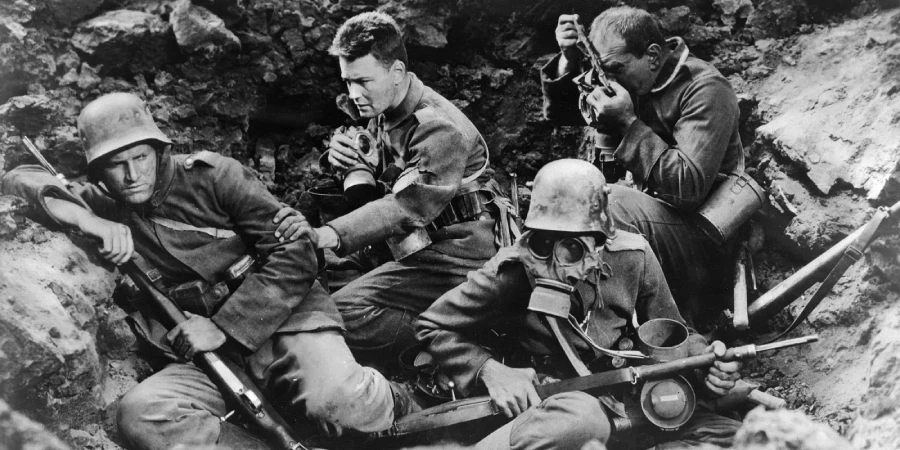
The front line is chaos incarnate. Explosions, mud, rats, and constant fear dominate daily life. Veteran soldier Katczinsky (Kat) becomes a father figure to Paul, teaching him how to survive rather than how to fight. The soldiers quickly realize that bravery means nothing against artillery.
Death Becomes Routine
One by one, Paul’s classmates die in increasingly senseless ways. A particularly harrowing scene shows a comrade screaming for hours after being fatally wounded because medics prioritize others. The film emphasizes how war erases individuality, reducing men to bodies and statistics.
Paul Kills a Man Face-to-Face
During a shelling, Paul stabs a French soldier who falls into his crater. Trapped with the dying man, Paul is overwhelmed by guilt and horror. He apologizes repeatedly, recognizing the enemy as a human being with a family and a life. This moment marks a complete moral collapse and is one of the film’s most emotionally crushing scenes.
Home Leave and Alienation
Paul returns home on leave, expecting comfort. Instead, he feels completely disconnected. Civilians romanticize the war, and his former teacher still preaches sacrifice. Paul realizes that he no longer belongs to civilian life, nor can he explain the truth of war to those who haven’t lived it.
The Final Losses
Back at the front, conditions worsen. Food shortages, exhaustion, and constant attacks take their toll. Kat is wounded by shrapnel and later killed by a meaningless bullet while Paul carries him to safety. This loss leaves Paul emotionally empty, with no close friends remaining.

Movie Ending
The final moments of All Quiet on the Western Front are quiet, ironic, and devastating. It is October 1918, just weeks before the war will end. Paul, now emotionally numb and physically worn down, notices a butterfly resting near the trench. In a rare moment of calm and innocence, he reaches out to touch it.
At that exact moment, a sniper shoots him.
The army report that follows states: “All quiet on the Western Front.” The phrase implies nothing of importance happened that day. Paul’s death, like millions of others, is treated as insignificant. The ending reinforces the film’s central message: war consumes lives without meaning, glory, or justice, and even survival until the end offers no reward.
Are There Post-Credits Scenes?
No. All Quiet on the Western Front (1930) ends definitively with no post-credits scenes. The silence after the final image is intentional and thematically essential.
Type of Movie
This is a war drama and anti-war film that focuses on psychological trauma rather than battlefield heroics. It deliberately rejects patriotic narratives and exposes the emotional and moral destruction caused by war.
Cast
- Lew Ayres as Paul Bäumer
- Louis Wolheim as Katczinsky
- John Wray as Himmelstoss
- Arnold Lucy as the Schoolteacher
- Ben Alexander as Kemmerich
Film Music and Composer
The film uses a minimal musical score, composed by David Broekman, relying heavily on silence and sound effects. This choice enhances realism and forces the audience to confront the brutality without emotional manipulation.

Filming Locations
Most of the film was shot on large outdoor sets in California, designed to resemble the Western Front. Realistic trenches and battlefield environments were constructed to immerse actors and viewers alike. The physical authenticity of these locations contributed greatly to the film’s raw impact.
Awards and Nominations
- Academy Award for Best Picture (1930) – Winner
- Academy Award for Best Director (Lewis Milestone) – Winner
- Academy Award for Best Writing (Adaptation) – Nominee
At the time, this was a bold recognition for such a politically charged film.
Behind the Scenes Insights
- Many extras were real World War I veterans, bringing authenticity to the battlefield scenes.
- Director Lewis Milestone used moving cameras in trenches, a groundbreaking technique at the time.
- The film was banned or censored in several countries, including Nazi Germany.
- Lead actor Lew Ayres later became a conscientious objector in World War II, influenced by the film’s message.
Inspirations and References
- Based on the novel All Quiet on the Western Front (1929) by Erich Maria Remarque
- Inspired by Remarque’s own experiences as a German soldier
- Influenced later anti-war works such as Paths of Glory and Platoon
Alternate Endings and Deleted Scenes
No known alternate ending exists. However, several scenes were trimmed due to censorship concerns in different countries, particularly those emphasizing German suffering or criticizing military leadership.
Book Adaptation and Differences
The film stays remarkably faithful to the novel but simplifies Paul’s internal monologues. The book offers deeper philosophical reflections, while the film relies on visual trauma and silence to convey meaning. Some secondary characters are less developed onscreen.


Memorable Scenes and Quotes
Key Scenes
- The first bombardment in the trenches
- Paul trapped with the dying French soldier
- Kemmerich’s slow death and the boots being passed on
- Kat’s sudden, meaningless death
Iconic Quotes
- “We are no longer youth. We don’t want to take the world by storm.”
- “The war has ruined us for everything.”
Easter Eggs and Hidden Details
- The recurring boots symbolize the cycle of death, passed from soldier to soldier
- The teacher’s early speech mirrors real propaganda used in Germany during WWI
- The butterfly in the final scene represents lost innocence
Trivia
- One of the first major sound-era war films
- The movie shocked audiences in 1930 with its graphic realism
- Hitler personally ordered it banned in Germany
- Considered one of the earliest true anti-war films
Why Watch?
If you want to understand why war should never be romanticized, this film is essential. It is emotionally exhausting, brutally honest, and historically important. All Quiet on the Western Front doesn’t entertain you—it confronts you.
Director’s Other Works
- Two Arabian Knights (1927)
- The Front Page (1931)
- Of Mice and Men (1939)
- A Walk in the Sun (1945)