
Alien Nation (1988) is a sci-fi crime drama that blends a classic buddy-cop formula with social commentary about racism, immigration, and coexistence. Set in a near future where humans and aliens share the same cities, the film uses genre storytelling to ask surprisingly serious questions.
Detailed Summary
First Contact and a Changed Earth
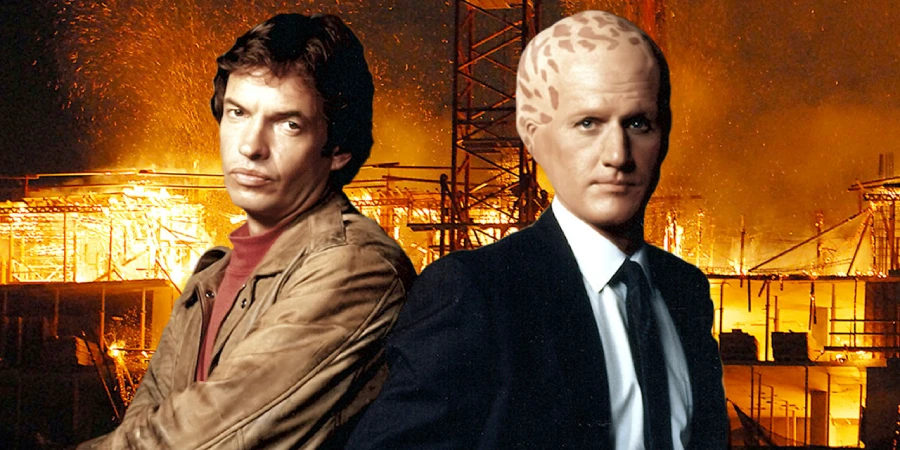
The film is set in Los Angeles, 1991, a few years after a spaceship carrying an alien species called the Newcomers lands on Earth. These aliens are physically stronger than humans, bald, hairless, and biologically different (they get drunk on spoiled milk and are harmed by salt water). After a period of internment, they are integrated into society, but discrimination is widespread.
A Cop Is Killed
Detective Matthew Sykes (James Caan) is a tough, old-school cop whose partner is killed during a violent robbery involving Newcomers. This incident fuels Sykes’ resentment toward aliens and sets up the emotional core of the story. When Sykes returns to duty, he is assigned a new partner: Detective Samuel “George” Francisco (Mandy Patinkin), the first alien detective in the LAPD.
Uneasy Partnership
Sykes and Francisco clash immediately. Sykes is bitter, aggressive, and openly racist, while Francisco is calm, polite, and deeply committed to proving that Newcomers belong in human society. Their dynamic mirrors real-world racial tensions and workplace prejudice. Slowly, through police work and shared danger, mutual respect begins to form.
The Drug at the Center of It All
The detectives investigate a powerful narcotic called Jabroka, a drug that is harmless to humans but lethal and addictive to Newcomers. The case leads them into the criminal underworld, revealing corruption among both humans and aliens. Jabroka becomes a metaphor for exploitation and systemic abuse within marginalized communities.
Digging Deeper
As Sykes and Francisco follow the trail, they uncover a conspiracy involving former alien slaves who were genetically engineered to serve and obey. The drug trade is linked to a darker history of oppression within Newcomer society itself, complicating the simple “us vs. them” narrative.



Movie Ending
In the final act, Sykes and Francisco confront Quint, a powerful and wealthy Newcomer who is revealed to be behind the Jabroka trade. Quint represents the old alien ruling class that once enslaved his own people and now exploits them again on Earth.
During the climax, Francisco is seriously wounded while trying to arrest Quint. Sykes, now fully committed to protecting his partner, chases Quint to a saltwater pier. Knowing that salt water is fatal to Newcomers, Quint attempts to escape by swimming. Sykes allows him to enter the water, effectively letting nature deliver justice. Quint dissolves and dies, ending the drug operation.
Francisco survives his injuries, and the film closes with a sense of earned trust and partnership between the two detectives. Sykes has moved beyond his hatred, and Francisco has proven his place as both a cop and a citizen. The ending does not suggest that racism is solved, but it makes clear that change begins on a personal level.
Are There Post-Credits Scenes?
No. Alien Nation does not include any post-credits or mid-credits scenes. The story concludes definitively before the credits roll.
Type of Movie
Alien Nation is a science-fiction crime drama that combines police procedural elements with social allegory. It uses futuristic concepts to explore very real human issues like prejudice, assimilation, and moral responsibility.
Cast
- James Caan as Detective Matthew Sykes
- Mandy Patinkin as Detective Samuel “George” Francisco
- Terence Stamp as William Harcourt
- Melinda Dillon as Susan Francisco
- Leslie Bevis as Cassandra
- Peter Jason as Detective Black
Film Music and Composer
The score was composed by Curtis Mayfield, blending electronic tones with urban rhythms. The music reinforces the film’s neo-noir atmosphere and emphasizes its gritty, street-level perspective rather than a grand sci-fi sound.



Filming Locations
The film was shot primarily in Los Angeles, California, using real urban locations rather than elaborate futuristic sets. This choice grounds the science-fiction elements in a familiar environment, reinforcing the idea that this story is not about distant worlds but about our own society, slightly altered.
Awards and Nominations
While not a major awards contender, Alien Nation gained critical attention for its concept and performances. Over time, it developed a cult following, especially among fans of socially conscious science fiction.
Behind the Scenes Insights
- James Caan was initially skeptical of the sci-fi premise but embraced the script’s social themes.
- Mandy Patinkin spent hours in makeup daily to create the Newcomer look.
- The film was originally conceived as a television pilot before being reworked into a feature film.
- Studio expectations were modest, which gave the filmmakers more creative freedom.
Inspirations and References
- Influenced by buddy-cop films like 48 Hrs. (1982)
- Heavy thematic inspiration from real-world immigration debates
- Parallels to apartheid and post-slavery societies
- Echoes of In the Heat of the Night (1967) in its racial tension narrative
Alternate Endings and Deleted Scenes
No fully alternate ending was filmed, but several deleted character moments were removed to tighten pacing. Some scenes expanded on Newcomer culture and family life, later explored in the TV series adaptations.
Book Adaptations and Differences
The film was novelized after release, staying largely faithful to the movie. Expanded materials focus more deeply on Newcomer history and social structure, areas the film only briefly touches.



Memorable Scenes and Quotes
Key Scenes
- Sykes meeting Francisco for the first time at the precinct
- The discovery of Jabroka’s lethal effects
- Francisco’s family dinner, showing alien domestic life
- The final confrontation at the pier
Iconic Quotes
- “I’m not human. I’m a cop.” — Francisco
- “This city was tough enough before you showed up.” — Sykes
- “Different doesn’t mean dangerous.” — Francisco
Easter Eggs and Hidden Details
- Newcomer names subtly reference historical immigrant naming patterns
- Police background dialogue includes coded racial slurs adapted for aliens
- Alien advertisements mirror real-world minority marketing stereotypes
Trivia
- The film spawned five TV movies and a short-lived TV series in the 1990s.
- The Newcomer language was partially developed for consistency.
- Saltwater as a weakness was chosen to avoid typical sci-fi clichés.
Why Watch?
If you enjoy science fiction that actually has something to say, Alien Nation is worth your time. Beneath the prosthetics and police action lies a thoughtful, still-relevant story about fear, trust, and shared humanity.
Director’s Other Works (Movies)
- The Final Conflict (1981)
- Impure Thoughts (1986)
- Cyborg Cop (1993)