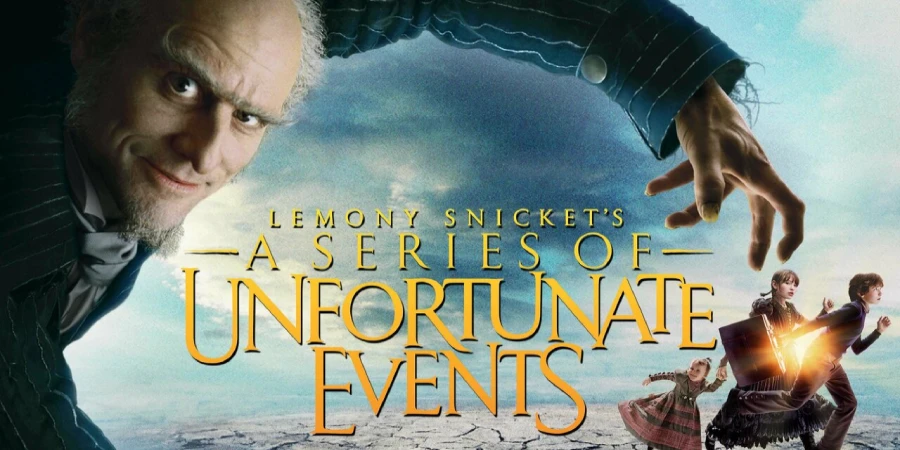

A Series of Unfortunate Events (2004) is a darkly whimsical fantasy film adapted from the first three books of Lemony Snicket’s beloved (and deliberately depressing) book series. Directed by Brad Silberling and starring Jim Carrey, the movie blends gothic humor, tragedy, and exaggerated villainy into a story that repeatedly warns you: this will not end well.
Detailed Summary
The Baudelaire Orphans and a Very Bad Beginning
The story follows Violet, Klaus, and Sunny Baudelaire, three intelligent and resourceful siblings whose lives are shattered when their parents die in a mysterious house fire. Suddenly orphaned, they are placed under the care of their closest living relative: Count Olaf, a failed actor with a theatrical flair and absolutely no moral compass.
From the moment Olaf appears, it’s clear he is not interested in parenting. His only goal is to steal the Baudelaires’ enormous fortune, which Violet will inherit when she turns eighteen. Until then, Olaf must technically keep them alive, which he finds deeply inconvenient.
Count Olaf’s Elaborate and Dangerous Schemes
Olaf subjects the children to emotional abuse, forced labor, and dangerous living conditions. When the Baudelaires try to warn adults about Olaf’s intentions, they are consistently ignored. Olaf hides his schemes behind disguises, fake personas, and theatrical nonsense, exploiting the fact that adults either trust him or underestimate the children.
One of Olaf’s most elaborate plans involves marrying Violet in a stage play that turns out to be legally binding. The children realize too late that the wedding scene is real, not theatrical, and that Olaf plans to claim the fortune through marriage.
The Children Fight Back
Using Violet’s engineering skills, Klaus’s research abilities, and Sunny’s surprising strength (and teeth), the Baudelaires manage to sabotage Olaf’s plan at the last possible moment. Violet signs the marriage document with her left hand, making it legally invalid since she is right-handed.
This moment establishes one of the film’s core themes: intelligence and teamwork are the children’s only real weapons in a world that refuses to protect them.
New Guardians, Same Misfortune
Despite Olaf’s arrest, the children’s nightmare does not end. They are sent to live with Uncle Monty, a kind-hearted herpetologist who plans to take them to Peru. For the first time, hope appears. Unfortunately, Olaf returns in disguise and murders Uncle Monty before the trip can happen.
Next, the Baudelaires are placed with Aunt Josephine, a terrified woman obsessed with grammar and irrational fears. Olaf infiltrates her life as well, forcing her into a fatal mistake. Once again, the children are blamed or dismissed, while Olaf escapes.
Throughout these events, Olaf repeatedly alters his appearance, demonstrating how easily adults are fooled and how invisible children’s voices can be.

Movie Ending
In the final act, the Baudelaires finally confront Count Olaf after realizing that all his schemes rely on technicalities and manipulation of rules. Olaf attempts one last escape by disguising himself and pretending to be innocent, but the children outsmart him by using the same legal logic he weaponized against them.
Olaf is arrested, and for the first time, adults begin to acknowledge the Baudelaires’ intelligence and bravery. However, the ending deliberately avoids a traditional happy resolution. The children are not reunited with loving parents, their trauma is not erased, and their future remains uncertain.
The final scenes emphasize that justice does not fix everything, and some losses are permanent. The narrator, Lemony Snicket, reminds the audience that while this chapter has ended, the Baudelaires’ story is far from over. The tone is bittersweet, reinforcing the film’s central message: life is unfair, and courage doesn’t guarantee happiness.
Are There Post-Credits Scenes?
There are no post-credits scenes. The film ends definitively, maintaining its melancholic tone and resisting any attempt to tease sequels or comic relief after the conclusion.
Type of Movie
A Series of Unfortunate Events is a dark fantasy adventure with strong elements of black comedy and family drama. It balances gothic aesthetics with absurd humor while addressing themes of grief, neglect, and resilience.
Cast
- Jim Carrey as Count Olaf
- Emily Browning as Violet Baudelaire
- Liam Aiken as Klaus Baudelaire
- Kara and Shelby Hoffman as Sunny Baudelaire
- Meryl Streep as Aunt Josephine
- Billy Connolly as Uncle Monty
- Jude Law as the voice of Lemony Snicket
Film Music and Composer
The score was composed by Thomas Newman, whose music adds emotional depth and eerie elegance. The soundtrack blends melancholic piano themes with whimsical, slightly off-kilter compositions that perfectly match the film’s unsettling tone.

Filming Locations
The movie was primarily shot in Los Angeles studios, with extensive use of practical sets rather than digital environments. This decision gave the film its storybook-gothic atmosphere. The exaggerated architecture and weather-heavy settings visually reinforce the children’s constant sense of dread and instability.
Awards and Nominations
- Won Academy Award for Best Makeup (2005)
- Nominated for Best Art Direction
- Nominated for Best Costume Design
The film was widely praised for its production design, makeup, and visual storytelling.
Behind the Scenes Insights
- Jim Carrey spent up to three hours a day in makeup for Count Olaf.
- Director Brad Silberling worked closely with the author to preserve the books’ dark tone.
- The child actors were encouraged to improvise reactions to Carrey’s performances.
- Many sets were built with forced perspective to make adults appear more imposing.
Inspirations and References
The film is based on The Bad Beginning, The Reptile Room, and The Wide Window by Lemony Snicket (Daniel Handler). Visually, it draws inspiration from Tim Burton-style gothic aesthetics and classic silent-era villain performances.
Alternate Endings and Deleted Scenes
Several deleted scenes expanded Aunt Josephine’s backstory and Olaf’s theatrical failures. No alternate ending was filmed, as the creative team wanted to stay true to the unresolved nature of the books.
Book Adaptations and Differences
The movie condenses three books into one storyline, which simplifies character arcs and removes some subplots. The books are more episodic and even darker in tone, while the film adds emotional warmth and visual spectacle.


Memorable Scenes and Quotes
Key Scenes
- Olaf’s disastrous stage play wedding
- Uncle Monty’s optimistic farewell speech
- Aunt Josephine’s grammatically perfect suicide note
Iconic Quotes
- Lemony Snicket: “If you are interested in stories with happy endings, you would be better off reading some other book.”
- Count Olaf: “The world is quiet here.”
- Violet: “We’re not lucky. We’re smart.”
Easter Eggs and Hidden Details
- Olaf’s ankle tattoo is a recurring symbol from the books.
- Reptile species names reference famous authors.
- Weather patterns subtly mirror the children’s emotional state.
Trivia
- This was Jim Carrey’s first major villain role in a family film.
- The baby Sunny was portrayed by twin actresses.
- The narrator never physically appears on screen.
Why Watch?
If you appreciate dark humor, clever children, theatrical villains, and stories that refuse to lie to you about life, this film is a standout. It respects young audiences by not talking down to them and trusts that sadness can coexist with wit and imagination.
Director’s Other Works (Movies)
- Casper (1995)
- City of Angels (1998)
- Moonlight Mile (2002)
- Land of the Lost (2009)
Recommended Films for Fans
- The Addams Family (1991)
- Matilda (1996)
- Coraline (2009)
- Miss Peregrine’s Home for Peculiar Children (2016)
- Paddington 2 (2017)