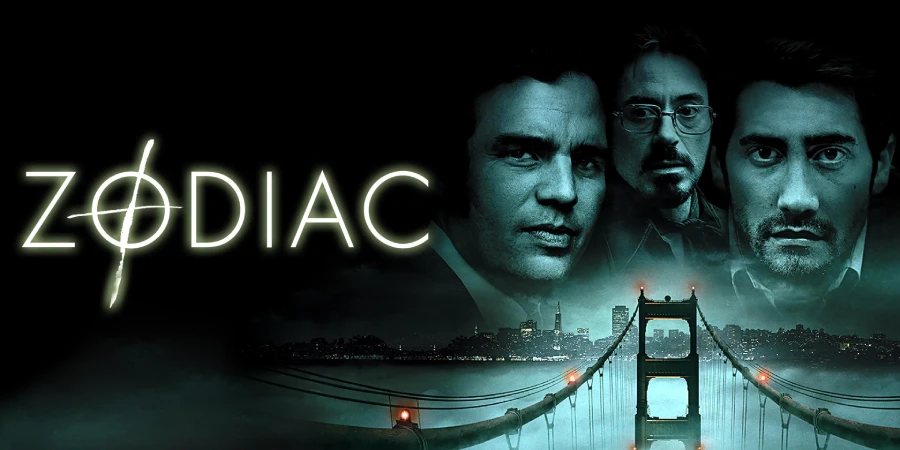
Zodiac (2007) is not a typical serial killer movie. Directed by David Fincher, it is a slow-burning, deeply obsessive, and chilling exploration of uncertainty, obsession, and the human need for closure. Based on real events, the film deliberately avoids easy answers and instead focuses on how an unsolved mystery corrodes the lives of those who chase it.
Detailed Summary
The Murders Begin (1968–1969)
The film opens with a brutal double murder on July 4, 1969, in Vallejo, California. A masked man executes a young couple, then later contacts the police and newspapers, claiming responsibility. He calls himself “Zodiac.”
Soon after, cryptic letters arrive at major San Francisco newspapers, each containing coded messages. The killer demands publication, threatening further murders if ignored. The press, law enforcement, and the public are pulled into a shared nightmare.
Enter the Investigators
Three central figures gradually take over the narrative:
- Paul Avery (Robert Downey Jr.), a crime reporter hungry for the truth
- Dave Toschi (Mark Ruffalo), a homicide detective working the case
- Robert Graysmith (Jake Gyllenhaal), a quiet political cartoonist with an unusual fascination for puzzles
As the Zodiac continues to taunt authorities with letters, symbols, and ciphers, the investigation becomes fragmented. Jurisdictional conflicts and lack of forensic technology cripple progress.
The Cipher Obsession
Graysmith becomes increasingly obsessed with decoding the Zodiac’s messages. While Avery initially leads the investigation journalistically, Graysmith’s fixation grows quietly but relentlessly.
The film meticulously reconstructs known Zodiac attacks, including the infamous Lake Berryessa stabbing, where the killer speaks calmly to his victims before attacking. These scenes are staged with unsettling realism, emphasizing fear and randomness rather than spectacle.
Suspects, Theories, and Dead Ends
Several suspects emerge, most notably Arthur Leigh Allen, whose behavior and background raise alarming red flags. However, evidence is circumstantial, witnesses are unreliable, and hard proof never materializes.
As years pass:
- Avery descends into alcoholism and paranoia
- Toschi grows frustrated and emotionally exhausted
- Graysmith sacrifices his marriage, career stability, and peace of mind
The case becomes less about catching a killer and more about what obsession does to people.
Movie Ending
The final act takes place years after the Zodiac murders have seemingly stopped. Officially, the case goes cold.
Graysmith, now estranged from his family and financially struggling, continues his private investigation. He becomes convinced that Arthur Leigh Allen is the Zodiac, despite the lack of conclusive proof.
The film’s most haunting moment occurs when Graysmith visits a hardware store where Allen once worked. The scene is quiet, almost mundane, yet terrifying. Graysmith locks eyes with a man he believes to be the Zodiac. No confession. No violence. Just silence.
Later, a surviving victim from an earlier attack identifies Allen from a lineup, but this identification comes too late and is not legally sufficient.
The film closes with text explaining:
- Arthur Leigh Allen died in 1992
- DNA evidence later excluded him from some Zodiac letters
- The Zodiac killer was never officially identified
The ending offers no catharsis. Instead, it leaves the audience with lingering doubt, reflecting the real-life frustration of an unsolved case. The mystery survives everyone who tried to solve it.
Are There Post-Credits Scenes?
No. Zodiac has no post-credits or mid-credits scenes. The film ends definitively, reinforcing its theme of unresolved truth.
Type of Movie
Zodiac is a procedural crime thriller blended with psychological drama. Rather than focusing on action, it emphasizes realism, time, obsession, and institutional failure.
Cast
- Jake Gyllenhaal – Robert Graysmith
- Mark Ruffalo – Inspector Dave Toschi
- Robert Downey Jr. – Paul Avery
- Anthony Edwards – Inspector Bill Armstrong
- John Carroll Lynch – Arthur Leigh Allen
- Chloe Sevigny – Melanie Graysmith
Film Music and Composer
The score was composed by David Shire, using minimal, unsettling compositions. Fincher also integrates period-accurate songs from the late 1960s and 1970s, grounding the film in realism while amplifying dread.
Filming Locations
The movie was filmed extensively in San Francisco and Northern California, often at or near the actual crime locations. Fincher used digital effects to recreate historical cityscapes with extreme accuracy. This realism reinforces the film’s documentary-like tone and blurs the line between cinema and true crime.
Awards and Nominations
While not heavily awarded at the Oscars, Zodiac received:
- Multiple critics’ awards for Best Film
- Nominations from the Saturn Awards and Online Film Critics Society
- Retrospective acclaim, now widely considered one of the best films of the 2000s
Behind the Scenes Insights
- Fincher insisted on extreme factual accuracy, down to street signs and weather conditions
- The stabbing scenes were rehearsed extensively to avoid exploitation
- Jake Gyllenhaal studied Graysmith’s writings obsessively to mirror his mindset
- Many scenes were shot digitally to allow precise control over lighting and atmosphere
Inspirations and References
- Based on the books “Zodiac” and “Zodiac Unmasked” by Robert Graysmith
- Influenced by 1970s investigative journalism films like All the President’s Men
- Fincher intentionally avoided stylistic glamor to maintain emotional detachment
Alternate Endings and Deleted Scenes
No alternate ending was filmed. However, several investigative subplots were removed to reduce runtime. Fincher later stated that the theatrical cut already reflected his preferred ending: ambiguity over closure.
Book Adaptations and Differences
Graysmith’s books strongly assert Arthur Leigh Allen’s guilt. The film, however, is more cautious. Fincher deliberately distances the movie from definitive accusations, emphasizing uncertainty and conflicting evidence.
Memorable Scenes and Quotes
Key Scenes
- The Lake Berryessa stabbing sequence
- The basement scene with the film poster enthusiast
- Graysmith’s silent confrontation at the hardware store
Iconic Quotes
- “I need to look him in the eye and know that it’s him.”
- “People don’t just disappear.”
- “The truth is, he’s still out there.”
Easter Eggs and Hidden Details
- Zodiac symbols subtly appear in background signage
- The killer’s letters are recreated word-for-word from real documents
- Camera angles often mirror actual crime scene photos
Trivia
- Fincher shot some scenes dozens of times to achieve emotional neutrality
- The film avoids showing Zodiac’s face clearly to maintain mystery
- Many actors met real investigators or family members before filming
Why Watch?
If you are interested in true crime without sensationalism, Zodiac is essential viewing. It respects intelligence, embraces discomfort, and refuses to lie to the audience with false answers.
Director’s Other Works (Movies)
- The Game (1997)
- Panic Room (2002)
- Se7en (1995)
- Fight Club (1999)
- The Social Network (2010)
- Gone Girl (2014)
- Mank (2020)