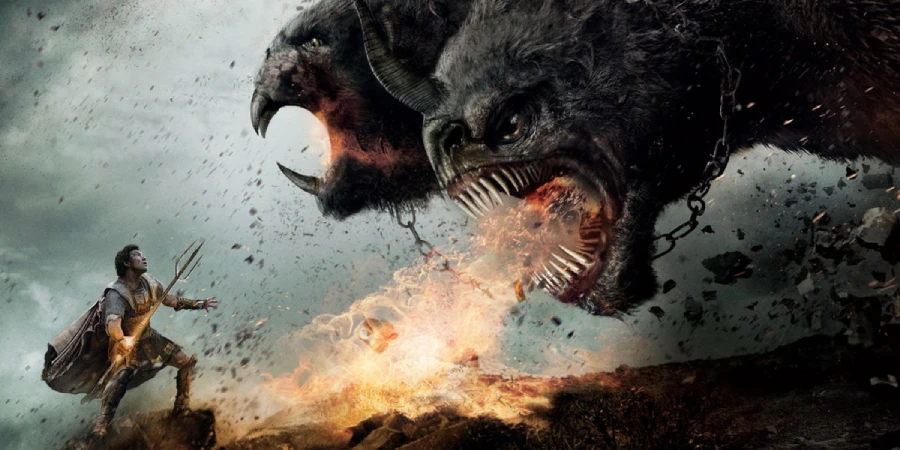

Wrath of the Titans is the sequel to Clash of the Titans (2010) and continues its mythological epic with bigger monsters, angrier gods, and a darker tone. Directed by Jonathan Liebesman, the film leans heavily into Greek mythology while delivering large-scale action and visual spectacle.
Detailed Summary
The World After the Gods Begin to Fall
Ten years after defeating the Kraken, Perseus is living a quiet life as a fisherman and single father to his son, Helius. The gods, however, are weakening because humans have stopped praying to them. Zeus, Hades, and Poseidon realize that without worship, they are losing their immortality and their control over the Titans imprisoned in Tartarus.
This decline creates tension among the gods and opens the door for betrayal.
The Betrayal of Zeus
A desperate Zeus asks Perseus to help prevent the release of Kronos, father of the gods. Perseus refuses, choosing mortal life over divine responsibility. Shortly after, Hades and Ares betray Zeus, imprisoning him and stealing his thunderbolt to free Kronos.
This betrayal is the turning point of the film, shifting the story from divine politics to an all-out race against time.
Journey Into the Underworld
Realizing the consequences of his refusal, Perseus agrees to rescue Zeus. He teams up with Queen Andromeda, Poseidon’s demigod son Agenor, and the fallen god Hephaestus. Their quest takes them through dangerous mythological locations including the Labyrinth and the Underworld.
Along the way, Perseus must confront creatures like the Chimera and face the growing realization that the gods’ era is ending.
The Labyrinth and the Rise of Kronos
The Labyrinth serves as both a physical and symbolic trap, constantly shifting and disorienting its victims. As Zeus grows weaker, Kronos begins to rise, fueled by the stolen powers of the gods.
Hephaestus sacrifices himself to save Perseus, reinforcing one of the film’s recurring themes: even gods must pay a price for past sins.
Movie Ending
In the final act, Kronos fully emerges from Tartarus, forming a colossal being made of lava and stone. Zeus, barely alive, reunites with Perseus, and together with Poseidon, they combine their remaining divine powers.
Poseidon is killed during the battle, leaving Zeus and Perseus to face Kronos alone. Zeus transfers the last of his power to Perseus, allowing him to wield the thunderbolt as a mortal. Perseus strikes the final blow, destroying Kronos once and for all.
Zeus dies shortly afterward, reconciled with his son. With the gods effectively gone or powerless, humanity is left to shape its own destiny. Perseus returns to his village, embracing a fully mortal life with his son, symbolizing the end of the age of gods and the beginning of human independence.
The ending deliberately closes the mythological arc by emphasizing choice over destiny and mortality over divine privilege.
Are There Post-Credits Scenes?
No. Wrath of the Titans does not include a post-credits or mid-credits scene. The story concludes definitively with no direct setup for another sequel.
Type of Movie
Wrath of the Titans is a mythological action-adventure fantasy film that blends Greek legends with modern blockbuster spectacle, focusing heavily on combat, monsters, and epic-scale conflicts.
Cast
- Sam Worthington – Perseus
- Liam Neeson – Zeus
- Ralph Fiennes – Hades
- Edgar Ramírez – Ares
- Rosamund Pike – Queen Andromeda
- Toby Kebbell – Agenor
- Bill Nighy – Hephaestus
- Danny Huston – Poseidon
Film Music and Composer
The score was composed by Javier Navarrete, replacing Ramin Djawadi from the first film. The music is darker and more tragic, emphasizing the fall of the gods and the apocalyptic tone of the story rather than pure heroism.
Filming Locations
The film was shot primarily in Wales, England, and Iceland, with extensive use of CGI environments.
- Iceland’s volcanic landscapes were used to inspire Tartarus and Kronos’ lava-filled design
- Wales provided rugged terrain for battle sequences and labyrinth exteriors
These locations reinforced the film’s harsh, collapsing-world atmosphere and grounded the fantasy in real, imposing geography.
Awards and Nominations
The film received nominations mainly in technical categories:
- Saturn Awards – Best Fantasy Film (Nominated)
- Visual Effects Society Awards – Outstanding Visual Effects (Nominated)
While not critically acclaimed, it was recognized for its large-scale visual ambition.
Behind the Scenes Insights
- The film was converted to native 3D after criticism of the first movie’s rushed 3D conversion
- Liam Neeson described Zeus in this film as “a tired king watching his empire fall”
- The Kronos character required one of the most complex CGI builds of its time
- Jonathan Liebesman emphasized practical sets combined with CGI to improve realism
Inspirations and References
- Greek mythology, especially stories of Kronos and the Titanomachy
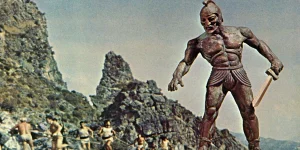
- Classic sword-and-sandal epics like Jason and the Argonauts (1963)
- Modern fantasy action films such as The Lord of the Rings trilogy
Alternate Endings and Deleted Scenes
Several deleted scenes involved extended god politics on Olympus and additional moments between Perseus and Andromeda. These were removed to keep the runtime focused on action rather than mythology-heavy exposition. No alternate ending was officially released.
Book Adaptations and Differences
The film is not a direct adaptation of a single book. It loosely draws from Greek myths but significantly alters timelines, character motivations, and outcomes. For example, Kronos’ defeat and Zeus’ death do not align with traditional mythology.
Memorable Scenes and Quotes
Key Scenes
- The gods physically weakening as temples collapse
- The Chimera ambush in the narrow canyon
- The Labyrinth constantly reshaping itself
- Zeus transferring his power to Perseus
Iconic Quotes
- Zeus: “The gods need prayer like mortals need air.”
- Perseus: “I live in the world you created. But I choose how I live in it.”
Easter Eggs and Hidden Details
- Kronos’ design subtly resembles classical Greek statues of fallen gods
- The Labyrinth structure mirrors ancient Greek maze artwork
- Zeus’ thunderbolt bears markings referencing earlier Titan wars
Trivia
- The film grossed over $300 million worldwide
- Bill Nighy’s Hephaestus makeup took over four hours daily
- Sam Worthington performed many of his own stunts
- The sequel was written to serve as a potential franchise conclusion
Why Watch?
If you enjoy mythology-driven action, massive creature battles, and stories about gods losing relevance in a changing world, Wrath of the Titans offers a darker, more focused follow-up that fully commits to epic destruction and emotional closure.
Director’s Other Works
- Darkness Falls (2003)
- The Texas Chainsaw Massacre: The Beginning (2006)
- Battle: Los Angeles (2011)
- Teenage Mutant Ninja Turtles (2014)
Recommended Films for Fans
- Clash of the Titans (2010)
- Immortals (2011)
- 300 (2006)
- Hercules (2014)
- Gods of Egypt (2016)