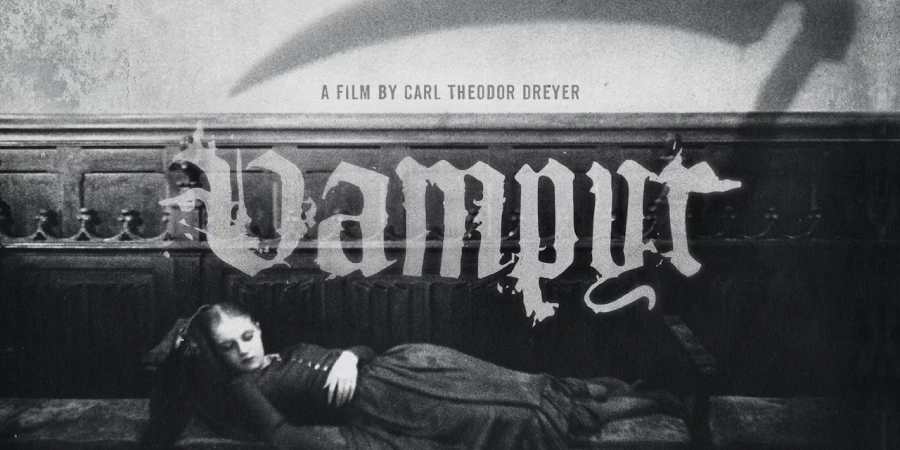

Carl Theodor Dreyer’s Vampyr is less a movie and more a waking nightmare captured on celluloid. It drifts through its narrative like a ghost, prioritizing unsettling atmosphere over a straightforward plot. Consequently, the film immerses viewers in a world where the line between the living and the dead has profoundly dissolved.
Detailed Summary
The Arrival at Courtempierre
The film opens with Allan Gray, a student of the occult, arriving at the isolated village of Courtempierre. He checks into a rustic inn, however, his rest is promptly interrupted by strange, supernatural occurrences. Disembodied shadows dance on the walls, and a man with a scythe appears and disappears, setting a deeply unsettling tone. Gray is clearly an outsider in a place governed by unseen forces.
The Shadowy Intrusion
In the middle of the night, an old man enters Gray’s room. He leaves a small, wax-sealed package on the table with a cryptic message: “To be opened upon my death.” Soon after, Gray follows the man’s shadow out of the inn. The shadow leads him to an old manor, where he witnesses the man being shot and killed. This man, as it turns out, is the Lord of the Manor.
The Ailing Léone and the Book of Vampires
Inside the manor, Gray meets the Lord’s two daughters, Gisèle and the gravely ill Léone. He also encounters the sinister village doctor and an old woman. Following the instructions on the package, Gray opens it to find a book titled The Strange History of Vampires. The book describes how vampires can control humans, drain their life force, and walk among them. It notably explains that a vampire can be defeated only by a stake through the heart or by the curse of a willing suicide victim.
Meanwhile, Léone suffers from a mysterious ailment, marked by bite wounds on her neck. The village doctor suggests a blood transfusion, and Gray volunteers. However, Gray soon realizes the doctor is an accomplice, a “soldier” of the vampire, who is helping it prey on Léone. The primary vampire is revealed to be Marguerite Chopin, the old woman Gray saw earlier. Her grave is located in a nearby cemetery.
Gray’s Out-of-Body Experience
Exhausted from the blood loss and the psychological terror, Allan Gray collapses. He then experiences a terrifying out-of-body sequence. In this dreamlike state, he sees through his own eyes from within a coffin. He witnesses his own burial, watching Gisèle and a servant mourn as the coffin is sealed and carried away. This iconic point-of-view shot represents Gray’s complete descent into the world of the dead, blurring the lines between reality and nightmare.
The Final Confrontation
Waking from his horrific vision, Gray is spurred into action. One of the Lord of the Manor’s old servants, having also read the vampire book, heads to the cemetery to deal with Marguerite Chopin. He unearths her coffin and drives a large metal spike through her heart. Instantly, her curse over Léone breaks, and Léone begins to recover. In the meantime, the villainous doctor attempts to kidnap Gisèle, but Gray intervenes. The doctor flees and hides in an old flour mill. The servant, seeking revenge for his master’s death, traps the doctor inside the mill and activates the machinery. The doctor is slowly, horrifically, buried alive in flour and suffocates.

Movie Ending
The climax of Vampyr is twofold and happens almost simultaneously. Firstly, the servant finds Marguerite Chopin’s grave and impales her corpse with a metal stake, which permanently kills the vampire and frees Léone from her influence. Secondly, the evil village doctor meets a just, though terrifying, end. After being trapped in the flour mill, the machinery grinds to life, filling the room with flour until he is completely engulfed and suffocates. This punishing demise serves as a form of divine or karmic retribution for his complicity.
Ultimately, Allan Gray and Gisèle escape the horrors of Courtempierre. The final shots show them emerging from a shadowy forest into a bright, sunlit landscape, symbolizing their survival and return to the world of the living. The oppressive nightmare has finally ended for them.
Are There Post-Credits Scenes?
No, there are no post-credits scenes in Vampyr. The film ends definitively with Allan Gray and Gisèle’s escape into the light. The concept of post-credits scenes was not a common cinematic practice in the 1930s.
Type of Movie
Vampyr is a supernatural horror film with strong elements of surrealism and German Expressionism. Unlike later vampire movies, its focus is not on jump scares or overt violence. Instead, the film cultivates a pervasive sense of dread through its dreamlike logic, ambiguous narrative, and ethereal visuals. The tone is consistently somber and melancholic, making the viewer feel as disoriented and trapped as the protagonist.
Cast
- Julian West – Allan Gray
- Maurice Schutz – The Lord of the Manor
- Rena Mandel – Gisèle
- Sybille Schmitz – Léone
- Jan Hieronimko – The Village Doctor
- Henriette Gérard – Marguerite Chopin
Film Music and Composer
The score for Vampyr was composed by Wolfgang Zeller. It is one of the film’s most crucial elements, especially given the sparse dialogue. Zeller’s music is not a traditional, melodic score; conversely, it is a dissonant and atmospheric soundscape that enhances the film’s nightmarish quality. The eerie compositions blur the line between music and sound design, contributing significantly to the feeling of unease that permeates every scene.


Filming Locations
Director Carl Theodor Dreyer filmed Vampyr on location in and around the village of Courtempierre, France. He deliberately chose real, dilapidated locations to create an authentic sense of decay and isolation. Key sites included a derelict castle, an abandoned flour mill, and a plaster factory. For instance, Dreyer believed that shooting in these genuinely haunted-looking places would imbue the film with a ghostly realism that could not be replicated on a studio set.
Awards and Nominations
Upon its release, Vampyr was a critical and commercial failure and, therefore, received no awards or major nominations. However, its reputation has grown immensely over the decades. Today, critics and film scholars widely regard it as a masterpiece of early horror cinema and a landmark of atmospheric filmmaking, celebrated for its artistic innovation rather than for contemporary accolades.
Behind the Scenes Insights
- Director Carl Theodor Dreyer primarily self-financed the film after struggling to find studio backing. The film’s subsequent box office failure left him in financial ruin for years.
- The lead actor, credited as Julian West, was actually Baron Nicolas de Gunzburg, a wealthy socialite who was the film’s main financial backer. He agreed to fund the production on the condition that he could star in it.
- Dreyer and his cinematographer, Rudolph Maté, achieved the film’s signature hazy look by shooting through a thin layer of gauze stretched over the lens. This technique created the ethereal, dream-like quality.
- There was very little dialogue recorded on set. Most sound, including dialogue, music, and effects, was dubbed in post-production. Dreyer shot three separate versions in German, French, and English, with actors sometimes mouthing lines in different languages.
Inspirations and References
The film is loosely based on the 1872 collection of supernatural stories In a Glass Darkly by Irish author Sheridan Le Fanu. While it draws atmospheric elements from several stories in the collection, its main inspiration comes from the novella Carmilla. However, Dreyer took significant creative liberties, focusing on the story’s mood and parasitic themes rather than its specific plot or the overt lesbian subtext of the source material.
Alternate Endings and Deleted Scenes
There are no known alternate endings for Vampyr. However, due to the complicated production—which involved shooting three different language versions—several variations of the film exist. Some cuts made for censorship reasons in different countries resulted in trimmed scenes, particularly those considered too horrific. It is believed that some footage, especially from the doctor’s death sequence, was removed from certain prints to appease censors, but no full alternate ending sequences have ever surfaced.
Book Adaptations and Differences
Vampyr is not a direct adaptation of Sheridan Le Fanu’s Carmilla. Dreyer was more interested in capturing the essence of Le Fanu’s ghostly world than in retelling a specific narrative. For example, Carmilla features a female protagonist named Laura and a female vampire who develops a romantic and parasitic relationship with her. In contrast, Vampyr shifts the focus to a male protagonist, Allan Gray, and makes the vampire an old woman, Marguerite Chopin. The film discards the book’s narrative structure in favor of a fragmented, dream-logic approach.
Memorable Scenes and Quotes
Key Scenes
- The Burial POV: Gray’s out-of-body experience where he watches his own funeral from inside the coffin remains one of the most terrifying and technically innovative sequences in horror history.
- The Dancing Shadows: A scene where disembodied shadows detach from their owners and dance to music in the manor perfectly captures the film’s surreal and supernatural logic.
- Death in the Flour Mill: The village doctor’s slow, agonizing suffocation under a mountain of white flour is a brilliant and unforgettable sequence of poetic justice.
Iconic Quotes
- “She must not die!” – Allan Gray’s desperate plea.
- “There are certain beings… whose souls are so tied to the earth that they are unable to free themselves from it, even after death.” – A passage from the vampire book.
- “Her curse is on your sister, Léone… her first victim here.” – A passage from the vampire book explaining the danger.
Easter Eggs and Hidden Details
- The Scythe: The man with the scythe who appears throughout the film is never explained. He can be interpreted as a personification of Death or a psychopomp guiding souls.
- The Bell Ringer: A one-legged man is seen ringing a bell. His shadow, however, has two legs, another example of the film’s dreamlike and unsettling visual logic.
- Allan Gray’s Name: The protagonist’s name may be a subtle nod to the master of macabre literature, Edgar Allan Poe.
- Real Tombs: Dreyer used real tombs and gravestones in the cemetery sequence, adding to the film’s authentic sense of mortality and decay.
Trivia
- The film’s initial premiere in Berlin was a disaster. The audience booed so loudly that Dreyer, in a panic, cut nearly ten minutes from the film right there in the projection booth.
- Lead actor Sybille Schmitz, who played Léone, had a tragic life that mirrored her tormented on-screen character. She struggled with morphine addiction and depression, eventually taking her own life in 1955.
- Dreyer had wanted to make a vampire film for years, but Universal’s Dracula (1931) and its immense popularity forced him to create something stylistically different to avoid comparisons.
Why Watch?
Watch Vampyr not for a conventional horror story, but for a hypnotic visual poem. Its power lies in its haunting atmosphere and surreal imagery. This film is essential viewing for anyone interested in the artistic potential and history of horror cinema.
Director’s Other Movies
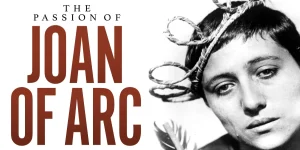
- The Passion of Joan of Arc (1928)
- Day of Wrath (1943)
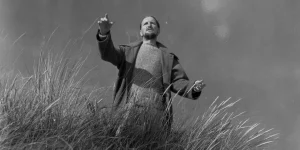
- Ordet (1955)
- Gertrud (1964)
Recommended Films for Fans
- Nosferatu (1922)
- The Cabinet of Dr. Caligari (1920)
- Eraserhead (1977)
- Hour of the Wolf (1968)
- Häxan (1922)