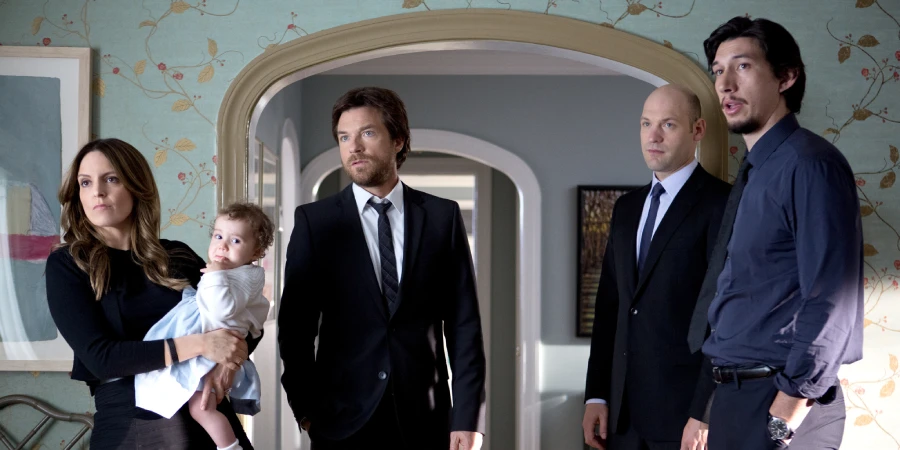

Shawn Levy’s This Is Where I Leave You looks, at first glance, like a light family comedy. It is not. It’s a sharp, emotionally messy, painfully honest story about grief, resentment, regret, and the strange intimacy that only family can force upon you. Adapted from Jonathan Tropper’s novel, the film traps four wildly different siblings under one roof for seven days of Jewish mourning (shiva) after their father’s death — and lets decades of unresolved issues explode.
Detailed Summary
The Opening Shock: Betrayal Before Bereavement
The movie begins with Judd Altman (Jason Bateman) discovering that his wife has been cheating on him with his boss. Before he can even process this humiliation, he receives news that his father has died. Emotional overload sets the tone immediately. Judd is already broken before the family drama even begins.
The Return Home: Old Roles, Old Wounds
Judd returns to his childhood home where he reunites with his siblings:
- Paul (Corey Stoll), the responsible eldest brother struggling with infertility.
- Wendy (Tina Fey), the only sister, trapped in a joyless marriage.
- Phillip (Adam Driver), the reckless youngest, bringing his much older therapist girlfriend.
Their mother, Hillary (Jane Fonda), insists they sit shiva together for seven days as their father requested. Being forced to stay under one roof reactivates every unresolved childhood dynamic. Everyone reverts to who they used to be.
Old Loves, New Regrets
Judd runs into Penny (Rose Byrne), his high school sweetheart who never really got over him. At the same time, he reconnects with Quinn (Abigail Spencer), a neighbor who always had a crush on him. These interactions force Judd to confront the kind of man he has been and the kind of life he accidentally built.
Marriages Falling Apart in Real Time
Wendy rekindles an inappropriate closeness with her ex-boyfriend Horry (Timothy Olyphant), who suffered brain damage years ago in an accident. Her current marriage is hollow, and this emotional backslide reveals how deeply unhappy she is.
Paul becomes increasingly resentful as he suspects Phillip may have slept with his wife in the past. His bottled-up anger starts leaking out in passive-aggressive ways that eventually erupt.
Phillip, beneath his jokes and immaturity, reveals he carries guilt and insecurity from always being the family disappointment.
The Family Dinner Explosion
A tense dinner turns into a full emotional brawl where years of resentment spill out. This is the emotional centerpiece of the film. No one is right. No one is innocent. Everyone is hurting.


Movie Ending
The final stretch of the film brings emotional resolution without neat closure.
Judd finally confronts his cheating wife and ends the relationship with clarity rather than bitterness. He sleeps with Penny, but instead of it being a romantic reunion, it feels like closure for both of them. He begins to understand that he must move forward rather than backward.
Wendy admits to herself that her marriage is dead. After sharing an intimate moment with Horry, she realizes she deserves more than emotional numbness. She leaves her husband, choosing uncertainty over quiet misery.
Paul discovers that his wife is pregnant. The timing makes him suspect the child may be Phillip’s. Instead of exploding, Paul makes a mature decision: he chooses to believe the child is his and decides to move forward as a father. It’s not about certainty. It’s about choice.
Phillip, for the first time, acts like an adult. He lets go of his therapist girlfriend and stops running from responsibility.
The siblings scatter after shiva ends, but something fundamental has shifted. They understand each other more honestly now. They are still flawed, still messy, but less alone in their mess.
The final scene shows Judd returning home months later, now calmer, more grounded. He reconnects with Quinn, suggesting the possibility of a healthier relationship. The grief, the betrayals, and the chaos have forced him to reset his life.
The movie ends not with happiness, but with emotional clarity.
Are There Post-Credits Scenes?
No. The film ends definitively without any post-credits or mid-credits scenes.
Type of Movie
This Is Where I Leave You is a family dramedy that blends comedy and emotional realism, using grief as a catalyst to explore marriage, sibling rivalry, regret, and personal growth.
Cast
- Jason Bateman as Judd Altman
- Tina Fey as Wendy Altman
- Corey Stoll as Paul Altman
- Adam Driver as Phillip Altman
- Jane Fonda as Hillary Altman
- Rose Byrne as Penny Moore
- Timothy Olyphant as Horry Callen
- Abigail Spencer as Quinn Altman
Film Music and Composer
The score was composed by Michael Giacchino, whose subtle and warm compositions support the film’s emotional tone without overpowering it.



Filming Locations
The movie was filmed primarily in New York State, especially in suburban neighborhoods that reflect the Altman family’s upper-middle-class background. The house used for filming becomes almost a character itself. Its tight spaces and shared rooms amplify the feeling of emotional suffocation and forced proximity that defines the story.
Awards and Nominations
The film did not receive major awards attention but was appreciated for its ensemble cast performances. Jane Fonda received praise for her bold and humorous portrayal of the unconventional mother.
Behind the Scenes Insights
- The cast reportedly bonded quickly, mirroring the sibling chemistry on screen.
- Jason Bateman and Tina Fey improvised several arguments to make them feel more authentic.
- Jane Fonda pushed for Hillary to be less stereotypical and more unapologetically sexual and modern.
- Adam Driver’s performance was noted for balancing comedy with vulnerability.
Inspirations and References
The film is based on Jonathan Tropper’s novel of the same name. Tropper also wrote the screenplay, which explains the strong emotional continuity between book and film.
Alternate Endings and Deleted Scenes
Some deleted scenes involved extended backstories for Wendy’s marriage and more moments between Judd and Penny, which were cut to keep the pacing tight and focused on the family dynamic.
Book Adaptation and Differences
The novel is darker, more cynical, and more sexually explicit. The film softens several edges, especially Judd’s internal monologue, which is much harsher in the book. Certain conflicts are more intense in the novel, while the movie leans slightly more toward warmth and reconciliation.



Memorable Scenes and Quotes
Key Scenes
- The disastrous family dinner where years of resentment erupt
- Judd catching his wife cheating in the opening scene
- Wendy’s quiet moment with Horry in the hospital
- The siblings sitting together late at night after everyone else sleeps
Iconic Quotes
- Judd: “There’s no such thing as family. There’s just people you’re forced to be around.”
- Hillary: “You don’t get to choose your family, but you do get to choose how much you let them ruin your life.”
Easter Eggs and Hidden Details
- Hillary’s book in the movie is a running joke about exploiting personal trauma for profit.
- The childhood photos in the house are actual photos of the cast altered to look younger.
- The cramped hallway shots are intentionally framed to make arguments feel more suffocating.
Trivia
- Jonathan Tropper appears briefly in a cameo.
- Much of the dialogue stays very close to the novel.
- Several emotional scenes were shot in a single take to preserve raw performances.
Why Watch?
Because it shows how grief doesn’t just make you sad — it makes you honest. The film is relatable, uncomfortable, funny, and painfully human. Anyone with siblings or complicated family history will see themselves somewhere in this story.
Director’s Other Works (Movies)
- Night at the Museum (2006)
- Real Steel (2011)
- The Internship (2013)
- Free Guy (2021)
Recommended Films for Fans
- Little Miss Sunshine (2006)
- August: Osage County (2013)
- The Family Stone (2005)
- Marriage Story (2019)