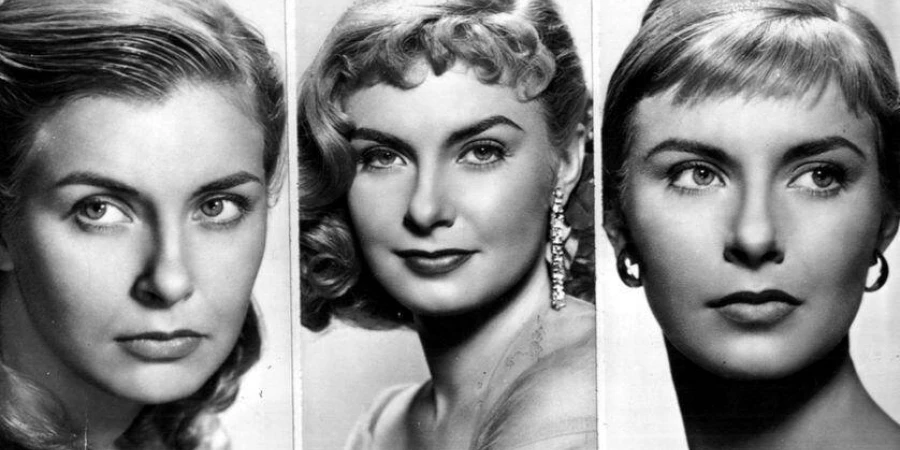

A quiet housewife’s descent into madness becomes one of cinema’s most gripping psychological studies. The Three Faces of Eve presents a haunting portrait of a fractured mind. It bravely explores Dissociative Identity Disorder long before it was a common term. Joanne Woodward’s legendary performance consequently anchors this unforgettable true story.
Detailed Summary
Introducing Eve White
The film begins with Eve White, a timid and overwhelmed wife and mother in Georgia. She suffers from severe headaches and distressing memory blackouts. Worried for her sanity, she and her husband, Ralph, seek help from psychiatrist Dr. Curtis Luther.
Eve describes incidents where she finds herself with unexplained possessions, like expensive dresses she cannot recall buying. Ralph, on the other hand, is dismissive and unsympathetic. He cares more about the social embarrassment her behavior causes.
The Emergence of Eve Black
During a therapy session, Eve White becomes distressed. Suddenly, her entire demeanor shifts. Her posture changes, her voice deepens, and a mischievous smirk appears on her face. She introduces herself as Eve Black.
This new personality is the complete opposite of Eve White. Eve Black is a flirtatious, hedonistic party girl who despises Eve White’s boring life and husband. She reveals that she is the one responsible for the blackouts, “coming out” to have fun whenever Eve White is stressed.
Life with Two Eves
Dr. Luther and his colleague, Dr. Francis Day, begin treating the two distinct personalities. They use hypnosis to switch between them. Eve Black freely discusses her antics, which include going out dancing and acting recklessly. Meanwhile, Eve White remains oblivious, only experiencing the confusing aftermath.
Eve Black’s actions escalate. For example, she attempts to strangle Eve’s daughter, Bonnie, because she finds the child annoying. This horrifying act forces Eve White to leave both her husband and daughter, moving into a rented room to ensure their safety while she undergoes intensive therapy.
A Third Face Appears
As therapy progresses, both personalities begin to show signs of strain. Neither Eve White nor Eve Black is a whole, functional person. During one hypnosis session, a new, more stable personality emerges unexpectedly. She is calmer and more mature than the other two.
This third personality calls herself Jane. Unlike the others, Jane possesses a unique sense of balance and awareness. She lacks the fear of Eve White and the recklessness of Eve Black, representing a potential for a healthy, integrated self.
Uncovering the Trauma
Dr. Luther realizes that Jane is the key to a cure. He believes that a single traumatic event in Eve’s childhood caused her personality to fracture. He therefore uses hypnosis to delve deeper into her subconscious, searching for the source of her pain.
He guides Jane back through her memories. She ultimately recalls a deeply disturbing event. As a small child, her grandmother died, and her family forced her to kiss the corpse at the viewing, a moment that shattered her young psyche.



Movie Ending
The climax unfolds during a harrowing hypnosis session. Dr. Luther regresses Eve back to the traumatic moment of being forced to kiss her dead grandmother. The overwhelming terror causes both Eve White and Eve Black to manifest simultaneously, screaming and writhing in agony.
In that moment of profound emotional release, the fragmented personalities shatter completely. When she awakens, all three faces are gone. In their place is a single, integrated individual who identifies as Jane. She now holds all the memories of Eve White and Eve Black, finally made whole.
Jane divorces the unsupportive Ralph. The film concludes with Jane meeting a kind man named Earl, whom she marries. With her daughter Bonnie back in her life, she finally finds the peace and stability that had eluded her for so long. The narrator, Alistair Cooke, confirms this is based on a true case history.
Are There Post-Credits Scenes?
No, there are no post-credits scenes in The Three Faces of Eve. The film ends after the final shot of Jane with her new family.
Type of Movie
The Three Faces of Eve is a psychological drama and mystery. Its tone is largely clinical and serious, adopting a documentary-like feel with its narration and focus on psychiatric procedure. However, it also functions as a powerful character study, full of empathy for its protagonist’s struggle.
Cast
- Joanne Woodward – Eve White / Eve Black / Jane
- Lee J. Cobb – Dr. Curtis Luther
- David Wayne – Ralph White
- Alistair Cooke – Narrator
- Edwin Jerome – Dr. Francis Day
- Nancy Kulp – Mrs. Black
Film Music and Composer
The film’s score was composed by Robert Emmett Dolan, a veteran composer known for his work on numerous musicals and dramas. His music for The Three Faces of Eve is intentionally understated. It avoids melodrama, instead creating a subtle, atmospheric tension that underscores the psychological drama.
There are no famous standalone tracks from the score. Its primary function is to support the narrative and Woodward’s performance without overwhelming them. Consequently, it works as a quiet, effective sonic backdrop to the internal turmoil on screen.

Filming Locations
The Three Faces of Eve was filmed almost entirely on soundstages at 20th Century Fox Studios in Century City, California. While the story is set in Augusta, Georgia, no actual location filming took place there.
The production used controlled studio environments to maintain the film’s clinical, focused atmosphere. This allowed director Nunnally Johnson to concentrate on the performances, particularly the subtle shifts in Woodward’s portrayal of the three personalities.
Awards and Nominations
The film’s most significant recognition went to its lead actress. Joanne Woodward’s tour-de-force performance earned her several major awards.
Notably, she won the Academy Award for Best Actress and the Golden Globe Award for Best Actress in a Motion Picture – Drama. This role solidified her status as one of Hollywood’s premier dramatic talents.
Behind the Scenes Insights
- Joanne Woodward developed distinct walks, postures, and vocal tones for each of the three personalities to keep them separate in her own mind and for the audience.
- Her husband, actor Paul Newman, was immensely supportive during production. He often ran lines with her to help her switch between the difficult roles.
- The real “Eve,” Chris Costner Sizemore, was not consulted during the film’s production and only saw it after its release. She later expressed complex feelings about its portrayal of her life.
- Director and screenwriter Nunnally Johnson kept a copy of the source book on set at all times to ensure the psychiatric details were as accurate as possible for a 1950s film.
Inspirations and References
The film is a direct adaptation of the 1957 non-fiction book of the same name, The Three Faces of Eve. The book was written by psychiatrists Corbett H. Thigpen and Hervey M. Cleckley about their real-life patient, Chris Costner Sizemore.
Sizemore’s case was one of the first extensively documented instances of what was then called Multiple Personality Disorder, now known as Dissociative Identity Disorder (DID). The film, therefore, draws its entire narrative from her documented experiences in therapy.
Alternate Endings and Deleted Scenes
No official alternate endings or significant deleted scenes from The Three Faces of Eve are known to exist. The film’s final cut presents a complete and self-contained story that aligns with the conclusion of the source book. The narrative was designed to offer a clean resolution, and no other versions have surfaced.
Book Adaptations and Differences
The film is largely faithful to the book by Drs. Thigpen and Cleckley. It accurately portrays the emergence of Eve Black and Jane, the key therapy sessions, and the traumatic childhood memory that caused the split. However, the film simplifies the story for a cinematic conclusion.
A major difference is what happened after the events depicted. In reality, Chris Sizemore’s integration as “Jane” was not permanent. She went on to manifest over 20 other personalities before achieving a final, stable integration in the 1970s. The film omits this for a more hopeful and tidy ending, a common practice for Hollywood adaptations of the era.


Memorable Scenes and Quotes
Key Scenes
- Eve Black’s Debut: In Dr. Luther’s office, Eve White clutches her head in pain before her entire personality shifts. The sudden, shocking arrival of the sassy and defiant Eve Black is a classic cinematic moment.
- The Appearance of Jane: During a hypnosis session, when Dr. Luther expects to speak with either Eve White or Eve Black, a new, calm voice responds. This introduction of Jane signals a turning point in the therapy and the narrative.
- The Final Integration: The climactic hypnosis scene where Eve relives her childhood trauma is raw and powerful. The visual and emotional chaos of the personalities colliding before merging into one is the film’s dramatic peak.
Iconic Quotes
- Eve Black: “Hi, Doc. Well, the little lady’s having herself a time, ain’t she?” – Eve Black’s first words, immediately establishing her personality.
- Dr. Luther: “She’s not pretending. That girl is sick.” – Dr. Luther defending Eve to her skeptical husband.
- Jane: “I’m Jane.” – The simple, calm introduction of the third and final personality.
- Eve Black: “When she’s out, I’m in. We’re never out at the same time… one of us is always home.” – Her explanation of how the personalities coexist.
Easter Eggs and Hidden Details
The Three Faces of Eve is a straightforward psychological drama and does not contain traditional easter eggs or hidden references. Its focus remains squarely on the narrative and the central performance, with little room for playful, hidden details.
Trivia
- The film is framed by narration from British-American journalist Alistair Cooke, which gives it a documentary-style authority.
- Joanne Woodward was only the second actress to win an Oscar for portraying three different characters in the same film. The first was Fredric March for Dr. Jekyll and Mr. Hyde (1931).
- Before filming, Joanne Woodward spent time observing patients in a mental hospital to better understand psychological distress.
- The real-life Chris Sizemore wrote her own autobiography, I’m Eve, which detailed the further complexities of her life that the movie omitted.
Why Watch?
Watch for one of history’s great screen performances. Joanne Woodward’s seamless shift between three distinct personalities is a masterclass in acting. The film remains a compassionate and groundbreaking look at mental illness that still resonates with audiences today.
Director’s Other Movies
- The Man in the Gray Flannel Suit (1956)
- Oh, Men! Oh, Women! (1957)
- The Angel Wore Red (1960)
Recommended Films for Fans
- Sybil (1976)
- Gaslight (1944)
- Split (2016)
- Primal Fear (1996)
- A Woman Under the Influence (1974)