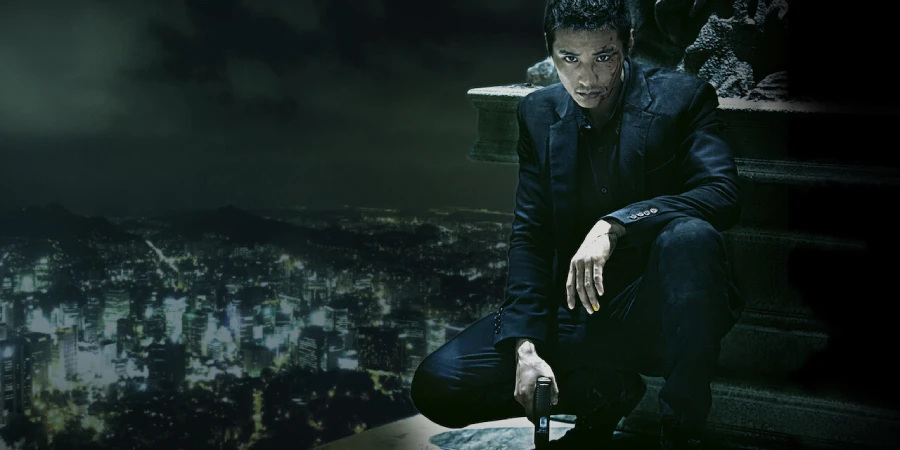

The Man from Nowhere is a South Korean action–thriller that quietly starts as a somber character drama and escalates into one of the most emotionally intense and brutally efficient revenge films of the 2010s. Directed by Lee Jeong-beom and starring Won Bin, the film is often compared to Léon: The Professional, but it ultimately carves out its own darker, more tragic identity.
Detailed Summary
A Quiet Man with a Locked Past
Cha Tae-sik lives an isolated life, running a small pawnshop and barely interacting with the world. His only human connection is So-mi, a neglected young girl living next door. Their bond is subtle but sincere, built on shared loneliness rather than overt warmth. From the beginning, the film hints that Tae-sik’s calm exterior hides something dangerous.
Crime Enters the Picture
So-mi’s mother becomes entangled with a violent drug and organ trafficking ring after stealing from them. When the criminals realize something valuable is missing, they retaliate brutally. So-mi is kidnapped, and her mother is murdered, pulling Tae-sik into a nightmare he desperately tried to leave behind.
The Mask Comes Off
As Tae-sik searches for So-mi, it is revealed that he is a former elite government operative, trained in assassination and intelligence work. The pawnshop owner persona collapses, replaced by a man who knows exactly how criminal organizations function and how to dismantle them piece by piece.
A Descent into the Underworld
The film shifts into a relentless hunt through South Korea’s criminal underbelly. Tae-sik interrogates, fights, and kills his way up the hierarchy, encountering child trafficking, organ harvesting, and extreme violence. These scenes are not glorified; they are intentionally uncomfortable, reinforcing the film’s grim moral tone.
The Final Confrontation
The story builds toward a showdown with the crime syndicate’s leaders, culminating in one of the most famous knife-fight sequences in modern Korean cinema. Tae-sik’s efficiency contrasts sharply with his emotional desperation, making the violence feel purposeful rather than indulgent.



Movie Ending
In the final act, Tae-sik reaches the true leaders of the criminal organization. After eliminating the last remaining threats, he finds So-mi alive but traumatized. The film deliberately prolongs the tension, forcing both Tae-sik and the audience to confront the possibility that he may have arrived too late.
Tae-sik ensures So-mi’s physical safety and personally delivers her to the authorities, refusing to let her see him as a monster. Believing that his past crimes and recent actions have finally caught up with him, he attempts suicide, choosing punishment over escape.
However, the police intervene just in time. In the final scene, So-mi visits Tae-sik in custody. She holds up a notebook where she has written her name, showing him that she remembers who she is and, more importantly, who he was to her. The ending is quietly devastating and hopeful at the same time: Tae-sik survives, not redeemed, but no longer alone.
Are There Post-Credits Scenes?
No. The Man from Nowhere does not include a post-credits or mid-credits scene. The story ends definitively with its final emotional beat.
Type of Movie
The Man from Nowhere is a neo-noir action thriller with strong elements of crime drama and psychological tragedy. While it contains intense action, its emotional core is rooted in loss, guilt, and redemption.
Cast
- Won Bin as Cha Tae-sik
- Kim Sae-ron as So-mi
- Kim Hee-won as Man-seok
- Kim Sung-kyun as Jong-seok
- Song Young-chang as Oh Myung-gyu
Film Music and Composer
The score was composed by Shim Hyeon-jeong, using restrained, atmospheric music rather than bombastic themes. The soundtrack emphasizes silence and tension, allowing emotional moments to breathe and violent moments to feel abrupt and unsettling.


Filming Locations
The film was shot primarily in Seoul and surrounding urban areas, using real streets, apartments, and industrial spaces. These grounded locations reinforce the realism of the story, making the criminal world feel uncomfortably close rather than stylized or distant.
Awards and Nominations
- Winner: Best Actor (Won Bin) – Korean Film Awards
- Nominated: Best Film, Best Director, Best Cinematography
- One of the highest-grossing South Korean films of 2010
Behind the Scenes Insights
- Won Bin trained extensively in knife combat and close-quarters fighting to avoid excessive stunt doubles.
- The knife fight choreography was designed to look fast and lethal, not flashy.
- Director Lee Jeong-beom deliberately minimized dialogue to let body language carry emotional weight.
- Kim Sae-ron’s performance was praised for its realism, especially given her young age.
Inspirations and References
- Inspired partly by Léon: The Professional (1994), though darker in tone
- Influenced by real-world concerns about human trafficking and organ trade
- Draws from Korean noir cinema traditions rather than Hollywood revenge tropes
Alternate Endings and Deleted Scenes
Some deleted scenes reportedly expanded Tae-sik’s government past but were removed to maintain mystery. No alternate ending has been officially released; the director stated the existing ending best represented the film’s emotional intent.
Book Adaptations and Differences
The film is not based on a book. It is an original screenplay written specifically for cinema, which allows its pacing and structure to remain tightly controlled.


Memorable Scenes and Quotes
Key Scenes
- Tae-sik silently sharpening knives before the final battle
- The first interrogation scene revealing his true identity
- The final notebook scene between Tae-sik and So-mi
Iconic Quotes
- “I told you… not to touch the child.”
- “You don’t know how far I’ll go.”
Easter Eggs and Hidden Details
- Tae-sik’s pawnshop items subtly hint at his past life as an operative
- His fighting style changes depending on the opponent’s skill level
- The recurring use of mirrors emphasizes fractured identity
Trivia
- This was Won Bin’s last film role before stepping away from acting
- The knife fight scene is frequently ranked among the best in action cinema
- The film was remade in India as Rocky Handsome (2016)
Why Watch?
If you want an action film that respects emotional weight, avoids unnecessary exposition, and delivers unforgettable intensity, this is essential viewing. It’s not just about revenge; it’s about what remains after violence is over.
Director’s Other Works
- Bleak Night (2010) – Screenwriter
- No Tears for the Dead (2014) – Director