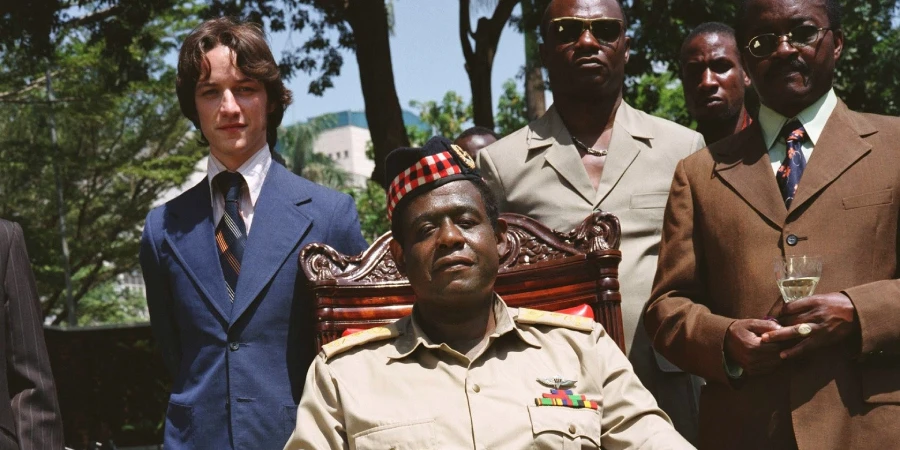
The Last King of Scotland is a powerful political drama that blends historical reality with fictional storytelling to portray the rise and fall of one of Africa’s most infamous dictators. Directed by Kevin Macdonald, the film is unsettling, gripping, and anchored by an unforgettable performance from Forest Whitaker.
Detailed Summary
Arrival in Uganda: Idealism Meets Reality
The story begins in the early 1970s with Nicholas Garrigan, a young Scottish doctor who travels to Uganda seeking adventure and purpose. Uganda has just undergone a political shift, and the charismatic new leader Idi Amin has taken power. Garrigan’s initial impression is one of hope and excitement, as Amin presents himself as a man of the people.
A chance encounter leads Garrigan to become Amin’s personal physician, placing him dangerously close to the center of power.
Friendship with a Dictator
As Garrigan grows closer to Amin, he is seduced by luxury, influence, and false loyalty. Amin treats him as a confidant, even calling him a son. At the same time, Garrigan begins to notice disturbing signs: disappearances, whispered rumors, and fear among Ugandan citizens.
Amin’s mood swings become more violent, revealing a man driven by paranoia and obsession with betrayal.
Moral Complicity and Guilt
Garrigan’s internal conflict intensifies as he realizes that by staying silent, he has become complicit in Amin’s crimes. His affair with one of Amin’s wives becomes a critical turning point, placing him directly in the dictator’s line of vengeance.
This section of the film shifts from political drama to psychological horror, emphasizing how power corrupts not only rulers but those who enable them.
The Descent into Terror
As international pressure mounts and Amin’s regime grows more brutal, Garrigan tries to escape Uganda. However, Amin’s surveillance and control tighten, leading to one of the film’s most harrowing sequences involving imprisonment, torture, and near execution.


Movie Ending
The final act unfolds during Idi Amin’s planned escape to attend a UN conference, while Uganda descends into chaos. Garrigan is captured and brutally tortured as punishment for his betrayal. In a chilling display of power, Amin alternates between affection and cruelty, reinforcing his unpredictability.
With the help of Dr. Junju, Garrigan manages a daring escape. In a shocking and disturbing moment, Garrigan survives by using a dead body as a decoy to bypass airport security, symbolizing the moral and physical cost of his involvement.
The film ends with text on screen revealing the real historical aftermath: Idi Amin was responsible for the deaths of an estimated 300,000 people and lived in exile until his death in 2003. Garrigan’s fictional journey concludes as a witness who survived—but will never be untouched by what he saw.
The ending leaves the audience unsettled, forcing reflection on how easily charisma can mask cruelty and how silence enables evil.
Are There Post-Credits Scenes?
No. The Last King of Scotland does not include post-credits or mid-credits scenes. The film ends definitively, reinforced by historical text to ground the story in real-world consequences.
Type of Movie
The film is a historical political drama with strong psychological thriller elements. It focuses less on large-scale events and more on the personal experience of living under a brutal dictatorship.
Cast
- Forest Whitaker as Idi Amin
- James McAvoy as Dr. Nicholas Garrigan
- Kerry Washington as Kay Amin
- Gillian Anderson as Sarah Merrit
- Simon McBurney as Stone
Film Music and Composer
The score was composed by Alex Heffes, who blends traditional African rhythms with tense orchestral elements. The music subtly reinforces the growing sense of dread and instability rather than overwhelming the narrative.
Filming Locations
The film was shot primarily in Uganda, including Kampala and surrounding rural areas. This decision adds significant authenticity, grounding the story in real environments affected by Amin’s rule. Some scenes were filmed in Scotland to represent Garrigan’s background, emphasizing the contrast between his naïve origins and the brutality he later faces.
Awards and Nominations
- Academy Awards (2007)
- Won: Best Actor (Forest Whitaker)
- Golden Globe Awards
- Won: Best Actor – Drama (Forest Whitaker)
- BAFTA Awards
- Won: Best Actor in a Leading Role
- Multiple nominations for screenplay and supporting performances
Behind the Scenes Insights
- Forest Whitaker learned Swahili and Idi Amin’s distinct accent to prepare for the role.
- Whitaker studied real footage extensively and reportedly stayed in character between takes.
- Some Ugandan extras had personal or family connections to the historical events depicted.
- Director Kevin Macdonald emphasized emotional truth over strict historical documentation.
Inspirations and References
The film is based on the novel The Last King of Scotland by Giles Foden, which itself draws inspiration from real historical events but uses fictional characters to explore them. The title comes from Idi Amin’s self-proclaimed admiration for Scotland and British imperial symbolism.
Alternate Endings and Deleted Scenes
No alternate endings were officially released. Several deleted scenes reportedly expanded Garrigan’s relationship with Ugandan civilians, but these were removed to maintain narrative focus and pacing.
Book Adaptations and Differences
While the film closely follows the novel’s structure, the book delves deeper into Garrigan’s internal monologue and moral ambiguity. The film streamlines these elements, relying more on performance and visual storytelling. Some characters are simplified or combined for cinematic clarity.
Memorable Scenes and Quotes
Key Scenes
- Garrigan’s first meeting with Amin during a rural medical visit
- Amin’s sudden violent outbursts during casual conversations
- The torture sequence revealing the full cost of Garrigan’s choices
- The airport escape using a corpse as cover
Iconic Quotes
- Idi Amin: “I am the father of this nation.”
- Nicholas Garrigan: “I thought I was helping.”
Easter Eggs and Hidden Details
- Amin’s uniforms subtly change color and decoration as his paranoia increases.
- Scottish symbolism appears repeatedly in Amin’s dialogue and decor.
- Radio broadcasts in the background often contradict Amin’s public speeches.
Trivia
- Forest Whitaker gained significant weight for the role to physically resemble Amin.
- Idi Amin reportedly admired Scotland despite never visiting.
- The real Idi Amin saw parts of the novel adaptation concept before his death.
Why Watch?
If you are interested in true-history-inspired dramas, unforgettable performances, and morally complex storytelling, this film is essential viewing. Forest Whitaker’s portrayal alone makes it a landmark cinematic experience.
Director’s Other Works (Movies)
- Touching the Void (2003)
- State of Play (2009)
- The Eagle (2011)
- Black Sea (2014)
- The Mauritanian (2021)